
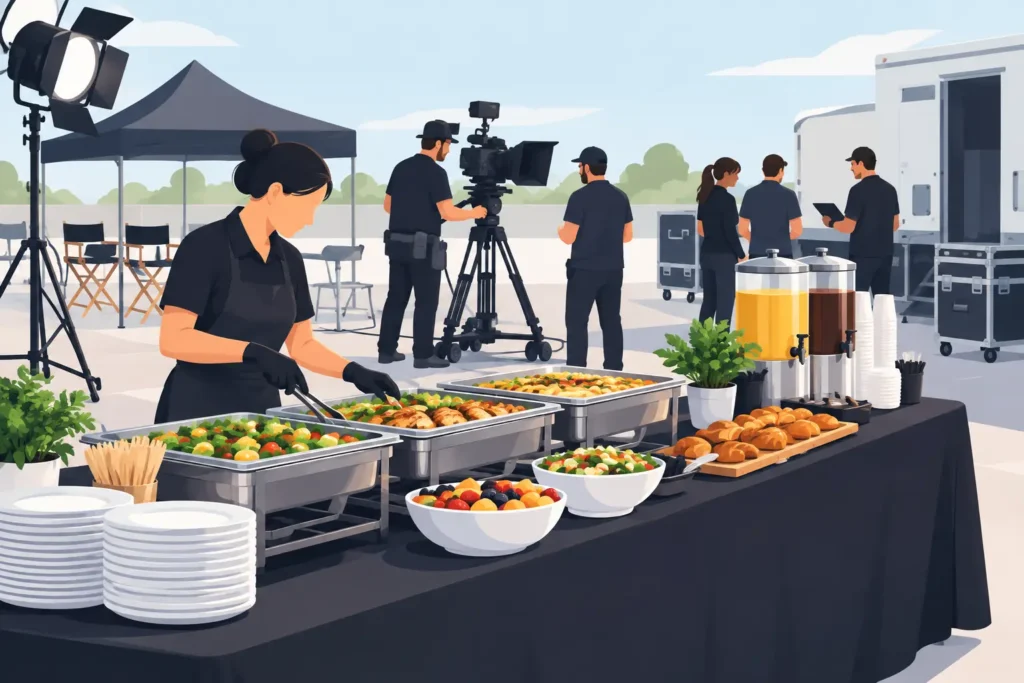
A 5 a.m. call time, a unit base with limited power, 180 hungry people arriving in waves, and a shooting schedule that cannot wait for lunch are not unusual production conditions. Large crew catering for film productions needs to do far more than serve good food. It must protect the schedule, support crew welfare and give every department confidence that meals will be ready when they are needed.
For line producers, production co-ordinators and location managers, the right catering partner removes pressure from an already demanding day. That means fresh, flavoursome food, yes, but also realistic service plans, clear dietary labelling, safe working practices and a team that understands what happens when a scene overruns.
Large crew catering for film productions starts with the schedule
Crew numbers matter, but timings matter more. A catering plan for 150 people on a studio floor looks very different from one for 150 people spread across a city location, a night shoot and a remote unit base. The first questions should cover the call sheet: when do departments arrive, when is the main break, will talent require separate service, and where are the likely pinch points?
A well-planned service accounts for staggered arrivals rather than assuming everyone will appear at one table at the same minute. Early call teams may need hot breakfast before dawn, while camera, lighting and art departments could arrive later. On a long shooting day, a substantial lunch is only part of the answer. Craft catering, replenished snacks, proper coffee, chilled drinks and portable options help people stay focused between set-ups.
The schedule also dictates the format. A hot buffet can work brilliantly where there is a stable unit base and a defined meal break. Hot boxes may be the smarter choice for departments working away from the main catering area, moving units or short turnaround periods. For tight windows, individually packed meals can keep service moving, provided the packaging remains practical, clearly labelled and conscious of waste.
Feed the whole crew, not an imaginary average
Large productions bring together people with different dietary needs, cultural preferences and working patterns. A generic vegetarian option at the end of a buffet is not enough, particularly when the crew includes vegans, people avoiding gluten, dairy or allergens, and those who need a meal that genuinely sustains them through physical work.
The best approach is to gather requirements early and build them into the menu from the beginning. This gives the kitchen room to create dishes that feel like proper food rather than an afterthought. Think fragrant curries with rice and fresh accompaniments, hearty plant-based stews, vibrant salads, grilled proteins, warming pasta bakes and satisfying breakfast choices. Creative and flavoursome dishes from around the globe give crews variety, while familiar favourites can provide welcome comfort on a difficult day.
Allergen management must be handled with care. Clear menu information, separate utensils where required and a service team that knows exactly what has been prepared all help reduce risk. There is a trade-off here: the more complex the menu, the more important it becomes to protect separation and clarity. A smaller, well-executed selection is often safer and more popular than a long menu that creates confusion at the serving point.
Keep energy steady through long shooting days
A crew meal should not lead to an afternoon slump. Rich dishes have their place, especially on cold location days, but balance is key. Include lighter options alongside warming mains, offer fruit and protein-led snacks at craft, and make water easy to access. The aim is not to police what people eat. It is to make good choices convenient when people are tired, working fast and nowhere near a high street lunch spot.
Night shoots need their own thinking. Serving a heavy evening meal at the wrong point can leave a crew sluggish when concentration matters most. A catered night schedule often works better with a substantial early meal, regular hot drinks and lighter food later on. The plan depends on the shoot, the weather and the working hours, which is why a call sheet should shape every service decision.
Location logistics can make or break the meal service
Good food does not help if it arrives late, cold or inaccessible. Location catering requires a practical assessment before the first tray is loaded. Is there vehicle access? Where can the mobile kitchen park? Is there enough power and water? Will food need to travel up stairs, across a field or through a controlled studio entrance? What happens if rain turns the access route into mud?
On a large film production, these details are not minor. They determine staffing levels, equipment, delivery times and contingency plans. A caterer may need insulated hot holding, refrigerated storage, gazebos, serving stations, tables, hand-washing facilities and waste points. At a constrained central London location, the answer may be timed deliveries and compact service equipment. At a remote site, a self-contained mobile kitchen can be the better option.
Space is another common challenge. A dining area should allow crew to collect food without blocking corridors, equipment routes or essential access. When space is limited, staggered service, multiple collection points or grab-and-go stations can reduce queues. The goal is simple: people should eat properly without the meal break creating a new logistical problem for the production.
Build the menu around the budget without cutting crew welfare
Catering budgets are under scrutiny on every production, and the cheapest quote rarely tells the full story. A low headline price can exclude staffing, equipment, dietary alternatives, delivery constraints, hot holding or the additional service needed for a split unit. Comparing quotes means comparing the operational plan behind them.
There are sensible ways to manage cost. A well-designed buffet is usually more efficient than a fully plated service for a large crew. Seasonal ingredients can offer better value and better flavour. Serving one strong hot main with generous sides, a plant-based equivalent and a fresh dessert may be more effective than trying to offer too many separate dishes. It also helps to confirm accurate numbers as early as possible, while allowing a realistic margin for day players, visitors and late additions.
What should not be cut is food quality, safe handling or enough staff to run service properly. A delayed lunch or a queue that eats half the break can cost more in lost time and frustrated departments than a properly resourced catering team. Production catering is an operational investment as much as a hospitality expense.
The service team needs production awareness
The difference between event catering and on-set catering is often the ability to adapt quietly. A set may be called back early. A scene may run over. Talent may need food at a different time or in a different place. Access may change with little notice. The catering team must respond without adding noise, confusion or pressure to the floor.
That requires a clear point of contact, regular communication with the production office and staff who understand the pace of a working set. It means arriving ready, setting up efficiently, monitoring stock through service and keeping the catering space clean, calm and welcoming. It also means having practical answers when the plan changes – extra hot boxes, a delayed service, replenished craft tables or a revised collection point.
D’Lights Event Catering plans each production around these real conditions, from early call-time breakfasts and crew lunches to mobile kitchens, backstage hospitality and late-night service. The focus is always on food that feels generous and freshly prepared, backed by the detail that keeps a busy production moving.
Plan early, then leave room for change
The strongest catering brief includes crew numbers, dates, locations, access details, service times, dietary requirements, budget guidance and any special requests for cast or clients. Share the call sheet as soon as it is available, then keep the caterer updated as the shooting plan develops. Early information allows better menu planning and avoids expensive last-minute workarounds.
Even with excellent planning, production days change. Build in a little flexibility for additional covers, weather disruption, delayed breaks and the occasional department that cannot leave its position. A catering partner that asks the right questions before the shoot is far more likely to handle those moments well on the day.
When the food is hot, the coffee is flowing and every crew member has an option they can eat, people notice. Request a menu and catering plan that works around your call times, location and crew – then let the meal break do what it should: give the whole production the energy to make great work.