
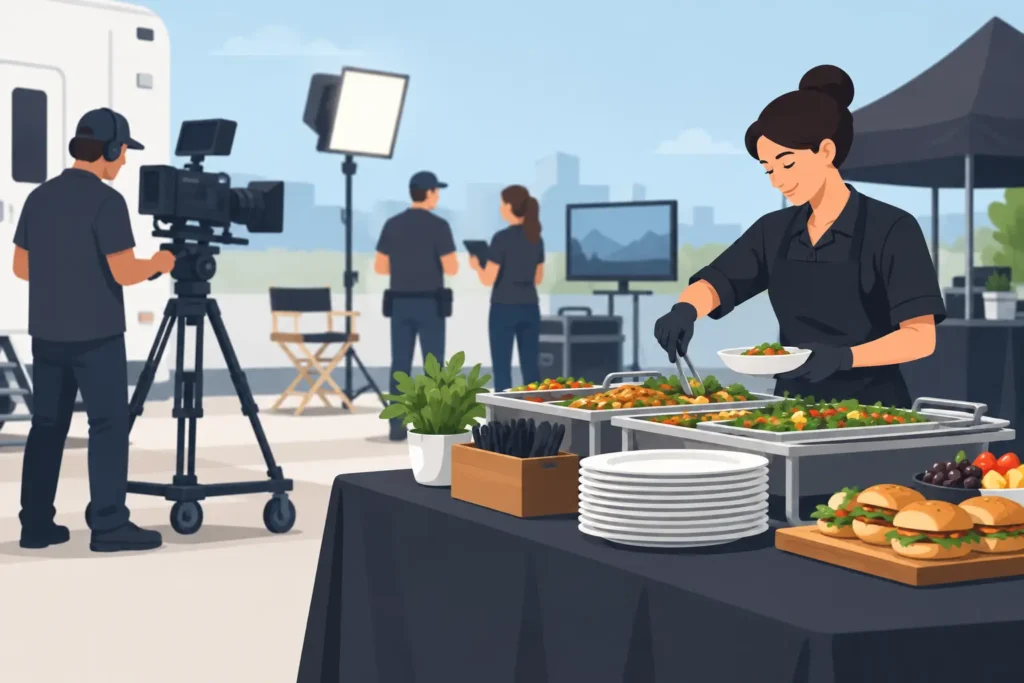
A 5.30am call time, a location with limited power, a crew split across two units and a cast member with a last-minute dietary request: that is not the moment to gamble on food. When you search for tv production caterers near me, you need more than a supplier that can drop off sandwiches. You need a catering team that understands the pace, pressure and moving parts of a working set.
For television productions across London and beyond, catering is crew welfare, schedule protection and a key part of keeping the day on track. Good food gives people a proper break. Reliable service means the AD team is not chasing lunch while a camera unit waits. The right caterer plans around the call sheet, not around a standard restaurant service.
What TV Production Catering Needs to Deliver
Production catering has to work wherever the shoot takes place: a studio floor, a busy London street, a remote country house, a stadium, a backstage holding area or a cramped unit base. Each comes with different access, power, parking, waste and service challenges. A capable caterer asks about these details early, then builds a practical plan around them.
Timing comes first. Your catering partner should be able to work to first call, pre-rig, rehearsal, shooting breaks, turnarounds and wrap. On a large job, that can mean staggered meals for different departments rather than one crowded lunch service. On a commercial with a compact crew, it may mean hot breakfast at base, a quick but satisfying lunch, and quality snacks that keep the team going through the final set-up.
Food also has to travel well and hold safely. A menu that looks excellent on paper is no use if it loses heat in transit or cannot be served efficiently in the available space. Freshly prepared hot meals, insulated hot boxes, mobile kitchen capability and well-planned grab-and-go options give productions flexibility without compromising on flavour.
The standard should still feel generous. A crew meal should not be an afterthought. Creative and flavoursome dishes from around the globe, proper comfort food, bright salads, warming curries and satisfying plant-based mains all help people feel looked after during a demanding day.
How to Choose TV Production Caterers Near Me
Local availability matters, particularly when the schedule changes at short notice. But proximity alone is not enough. The best TV production caterers near me are the ones with the systems, people and equipment to deliver confidently under production conditions.
Ask how they plan around the call sheet
Share your schedule before requesting a final quote. An experienced caterer will want to know the first call, anticipated meal breaks, number of shooting units, site address, access times and likely wrap. They should also ask whether timings are fixed or likely to move.
This conversation reveals a great deal. A production-aware team will not promise a vague “lunchtime delivery”. They will agree a service window, explain how food will be held safely, and make a contingency plan if the shoot runs over. If breakfast has to be ready before the crew arrives, or lunch needs to be served in waves, that should be part of the proposal from the beginning.
Check the meal formats, not just the menu
There is no single right format for TV catering. It depends on crew size, location, budget and the rhythm of the shoot. A studio production may benefit from a staffed hot buffet and a dedicated craft table. A fast-moving location day may need portable hot boxes, individually packed options and a compact set-up that can be cleared quickly.
For long days, a combination often works best: breakfast or pastries with good coffee on arrival, a proper hot meal at the main break, then fruit, baked treats, cold drinks and savoury snacks available through the afternoon. Talent and senior production may require separate service arrangements, but the food should still feel consistent in quality and care.
Be cautious of menus that are too fixed. The strongest catering partners can tailor portions, service style and dishes to your production rather than forcing every crew into the same package.
Put dietary requirements into the production plan
Dietary needs are not an optional extra to deal with at the serving table. They need clear planning, labelling and communication before food reaches set. Gather requirements as early as possible, including vegetarian, vegan, halal, gluten-free, dairy-free and allergy-related requests.
A professional caterer will explain what can be safely provided and how dishes will be labelled or separated. This is particularly important where severe allergies are involved. Honest communication matters: some menus and mobile locations have limitations, so the right answer is not always to promise everything. It is to create a safe, appetising alternative with clear handling procedures.
The aim is simple. Nobody should have to hunt for something they can eat, settle for a side salad, or wonder whether a dish is suitable halfway through a 12-hour day.
Look for practical site experience
A production caterer should be comfortable asking logistical questions that other caterers may overlook. Is there a water supply? Where can vehicles park? Is there a loading bay, lift access or a long carry from unit base? Can a mobile kitchen be positioned safely? What are the rules for generators, gas, noise, waste and cleaning?
These questions are not complications. They prevent complications. On a central London location, for example, delivery restrictions and limited parking can shape the entire service plan. At a rural shoot, the challenge may be power, weather and distance from local facilities. A catering team that has thought through the practicalities helps location managers and production coordinators avoid unwelcome surprises.
Health and safety should be equally clear. Ask how hot and cold food is transported, stored and served, who is responsible for clearing the area, and what happens to packaging and food waste. Waste-conscious packaging is valuable, but it still needs to be fit for purpose when people are eating quickly in changing conditions.
Getting the Brief Right Before You Book
A clear brief helps your caterer return a useful quote quickly and prevents avoidable changes later. You do not need to have every detail locked down, but a few essentials make a real difference: the date or date range, London borough or location, crew and cast numbers, anticipated dietary requirements, service times, access notes, available facilities and your working budget.
It is also worth being upfront about the nature of the production. A scripted drama, factual shoot, live television job, music video and TV commercial can have very different demands. Tell the caterer if you are working around night shoots, child performers, a split unit, restricted brand activity, talent riders or a location where food cannot be served close to set.
Budget is part of the conversation, not a reason to compromise on crew welfare. If the original menu is beyond the available spend, a good caterer can recommend smarter changes. That might mean choosing a hot boxed meal instead of a staffed buffet, simplifying the dessert offer, or using a more focused menu with excellent portions and strong dietary coverage. The best value comes from food and service that fit the day properly, not simply the lowest per-head price.
What a Strong Catering Day Looks Like
When catering is well managed, it is almost invisible to the people trying to keep the production moving. Breakfast appears ready for the first arrivals. Coffee stays flowing. Lunch is served where and when it was promised. Dietary meals are clearly identified. The service area stays tidy, and the team is approachable without getting in the way.
That calm result usually comes from careful work behind the scenes: confirming numbers, preparing fresh food, loading the right equipment, checking routes, arriving with time to set up, and staying responsive when the schedule shifts. It is why production catering should be booked as an operational partner, not treated as a last-minute order.
D’Lights Event Catering supports TV crews with tailored menus, hot on-set meals, portable options, craft catering and hands-on coordination built around your schedule. Whether you are feeding a small commercial crew or a major studio production, share the call sheet, the location and the challenge. A capable catering team can turn all three into a service plan that keeps your people well fed and your production moving.