
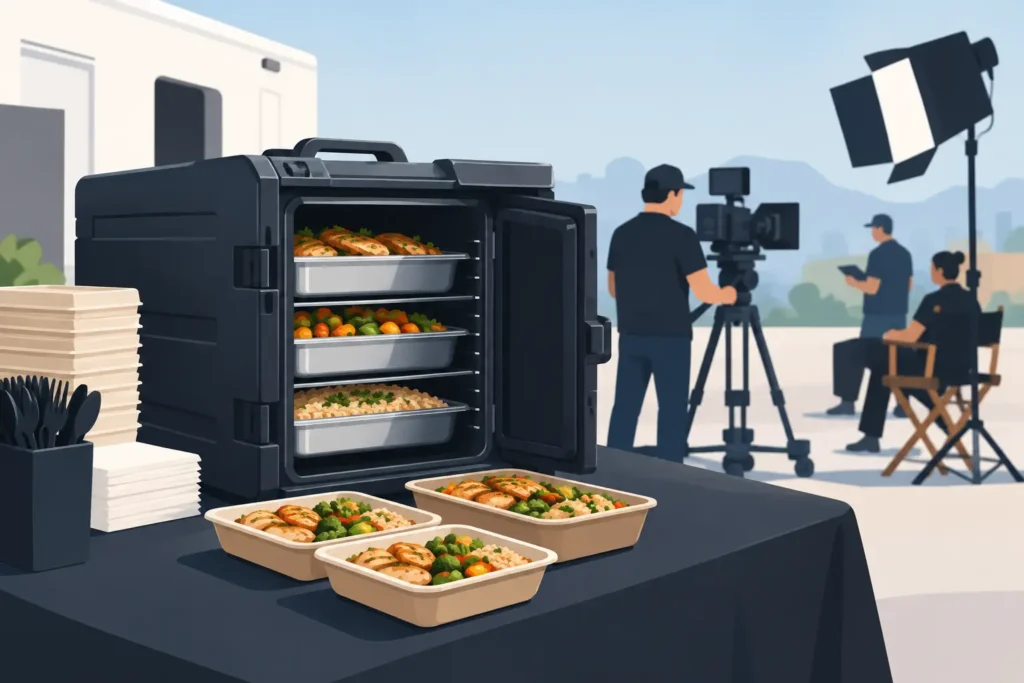
A call sheet can change before the first coffee has been poured. A scene overruns, a location becomes inaccessible, rain closes in, or a night shoot pushes lunch far beyond its original slot. That is exactly where hot box catering for film productions earns its place: proper, freshly prepared food that reaches cast and crew hot, labelled and ready to eat when the production needs it.
For location managers, production coordinators and line producers, the value is not simply a hot meal. It is a catering solution that protects the schedule, supports crew welfare and works around the realities of filming. No long queues at an off-site restaurant. No cold trays arriving after the unit has moved. No guessing which dish is safe for the vegan camera operator or the cast member avoiding allergens.
Why Hot Box Catering for Film Productions Works
A well-planned hot box gives each person a complete meal in a portable, secure format. It is particularly effective when a production is working across several units, filming at a remote location, moving between setups, or operating with staggered breaks. Rather than holding everyone in one catering area at one time, meals can be distributed precisely where they are needed.
That flexibility matters on set. The lighting team may break at a different time from wardrobe. A second unit may be filming several streets away. Talent may need food delivered discreetly to a holding area rather than joining the main crew queue. Hot boxes allow the catering plan to follow the working day rather than asking the working day to bend around lunch.
They also provide a reliable standard of presentation. Each meal can be clearly labelled with the guest’s name, dish and dietary information, making service quicker and reducing the risk of mix-ups. When people have been on their feet since an early call time, clarity is a small detail with a big impact.
A Hot Box Should Feel Like a Meal, Not a Compromise
Portable does not have to mean predictable. The best hot box menus bring the flavour and generosity of a properly catered meal into a format that travels well. Think slow-cooked curries with fragrant rice, grilled chicken with colourful seasonal sides, rich vegetarian tagines, jerk-spiced dishes, comforting pasta bakes, or global street-food favourites built to hold their quality.
The menu needs to suit the schedule as much as the cuisine. A heavier winter meal may be exactly right for an outdoor night shoot, while a lighter grain bowl or grilled fish dish can work better during a summer studio day. It depends on the weather, physical demands of the crew, access to eating space and the length of the shift.
Good production catering also considers what happens after the meal is packed. Sauces need secure containers. Crispy elements should stay separate where possible. Hot and cold components should not compromise each other. Portions need to satisfy a grip carrying equipment all day without leaving people sluggish for the next setup. These details are part of the catering, not an afterthought.
Dietary Requirements Need Proper Planning
Film crews are diverse, and dietary requirements are not a side request to be handled at the end. Vegan, vegetarian, halal, gluten-free and dairy-free meals should be as considered and flavoursome as the main menu. Allergens must be managed with care, from ingredient checks and kitchen procedures through to clear labelling at delivery.
The practical approach is to collect dietary information early, confirm it against the final crew list and allow for late additions. Productions are fluid, so a caterer should also be ready for the assistant who joins for the day, a visiting client or an unexpected cast change. A small contingency can prevent a stressful service issue later.
For severe allergies, the conversation needs to be direct. The production team and caterer should agree what can safely be supplied, how food will be packaged and how it will be identified on site. Confidence comes from clear information, not vague assurances.
Delivery Timing Is Part of the Service
A hot box that tastes excellent at 1.30 pm is no use if the crew needed it at 12.15 pm. On a film production, delivery timing has to be built around call times, planned breaks, travel restrictions, site access and the possibility that the day will move at speed.
Before service, a capable catering team will establish the delivery point, parking arrangements, named on-site contact, gate or security process, lift access where relevant and the best place for food to be held. On a busy London location, those arrangements can be the difference between a calm handover and a driver circling the block while lunch goes cold.
It also helps to decide whether boxes should arrive all at once or in waves. A smaller shoot may need one delivery for the whole team. A large production with separate departments, a split unit or rolling meal breaks may benefit from staggered drops. There is no one-size-fits-all answer, which is why the schedule should guide the catering plan from the start.
Temperature, Packaging and Food Safety
Hot food must be transported and delivered with food safety at the forefront. Insulated equipment, controlled handling and sensible dispatch timing all protect quality. Once on location, the production needs a practical plan for distribution, especially if the unit is spread across a large site.
Packaging deserves the same attention. It needs to be strong enough for a crowded production van, easy to open during a short break and suitable for responsible disposal. Waste-conscious packaging is a worthwhile choice, but it still has to perform under pressure. A flimsy lid or leaking container can quickly turn a crew meal into an avoidable clean-up job.
Where possible, keeping cutlery, napkins and condiments organised with each box makes service faster. For a team eating in a car park, on a soundstage or between takes, convenience is not a luxury. It keeps people fed and gets them back to work without delay.
When Hot Boxes Are the Best Choice – and When They Are Not
Hot boxes are especially useful for commercials, music videos, overnight shoots, remote locations, recce days, small-to-mid-sized crews and productions without room for a full catering setup. They are also a strong option when weather makes an outdoor food station impractical or when department breaks cannot happen at the same time.
That said, they are not always the complete answer. A major studio production with a large crew, a dedicated dining area and a predictable lunch break may be better served by a hot buffet, mobile kitchen or full canteen-style setup. Many productions combine formats: hot boxes for cast, runners and a satellite unit, with a staffed service for the main crew.
Craft catering should not disappear from the conversation either. A well-stocked station with quality coffee, cold drinks, fruit, snacks and grab-and-go options helps maintain energy before the main meal and through long resets. The strongest catering plans look at the whole day, from breakfast call through to wrap, rather than treating lunch as the only moment that matters.
Build the Menu Around Your Shoot Day
The most effective brief is specific. Share your crew number, location, call time, proposed meal window, access restrictions, dietary list, budget and whether the schedule is likely to shift. If the team is working outdoors in February, say so. If the director expects a late wrap, include it. If there is a high-profile guest who requires discreet service, that shapes the plan too.
D’Lights Event Catering creates hot box catering around these real production requirements, serving creative and flavoursome dishes from around the globe while keeping timing, dietary needs and practical site logistics firmly in view. The aim is straightforward: food that arrives looking good, tasting great and ready to support the people making the production happen.
A successful shoot depends on hundreds of moving parts. Give your crew a meal service that can move with them. Share the call sheet early, confirm the details that matter, and book hot boxes that keep the day on track even when the plan changes.