
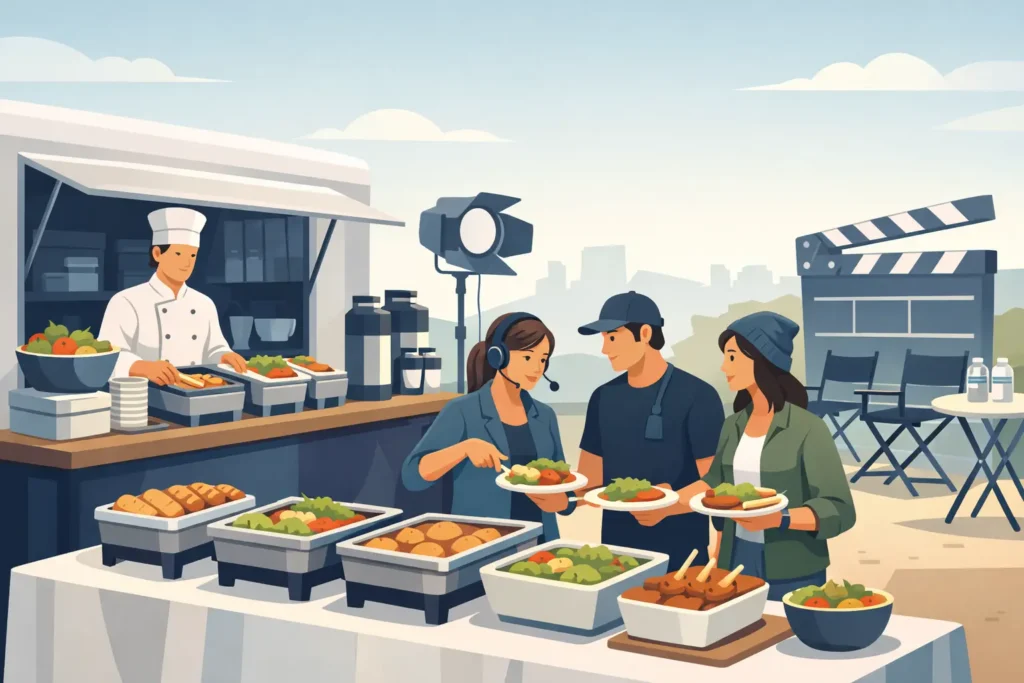
A crew can work around a delayed prop, a weather change or a last-minute script amendment. They should not have to work around lunch. TV and film catering in Reading for professional crew and production catering needs to keep people fuelled, focused and ready for the next setup, whether the day starts before sunrise or runs into a night shoot.
For production teams, food is not an add-on. It is part of the working day. A well-timed breakfast gives an early unit a proper start; a hot lunch creates a genuine reset; and accessible snacks help departments stay sharp through long stretches between takes. Get it wrong and the effects are felt quickly: queues build, dietary needs are missed, the schedule tightens and morale drops.
D’Lights Event Catering provides fresh, flavoursome food with the operational discipline a live production requires. From a compact commercial crew to a large television or film unit, the job is to put the right food in the right place at the right time – without creating another problem for the production office to solve.
TV and film catering in Reading that works to the schedule
A location in Reading can mean almost anything: a town-centre unit base with restricted access, a corporate site standing in for an office, a private house, a studio, or a rural location with limited facilities. Each comes with its own loading rules, parking constraints, power availability and space for service. Catering has to be planned around those realities, not simply delivered and hoped for.
The first conversation should cover call times, crew numbers, unit moves, meal breaks, access windows and the likely end of day. It should also establish whether food is needed from one central point, taken to multiple departments, or available in portable hot boxes for a crew working away from base. These details determine the kitchen setup, staffing, service format and menu.
A 6am call, for example, calls for more than a tray of pastries. Proper breakfast options, hot drinks and food that can be picked up quickly help people start the day well. If lunch must be served in a narrow window between scenes, a service plan designed to keep queues moving matters as much as the menu itself. On a split unit, staggered drops can be more effective than trying to pull every department to one location.
Proper crew meals, not an afterthought
Production catering has to satisfy a broad range of appetites without making service slow or repetitive. The strongest menus combine familiar, comforting choices with creative and flavoursome dishes from around the globe. Think generous hot mains, fresh salads, warming sides and desserts that feel like a treat after a demanding morning.
Variety is valuable, but it needs to be practical. Food must hold well, travel safely and remain appealing when a scene overruns by twenty minutes. A beautifully plated dish that cannot cope with a delayed lunch is not the right answer for a working set. Equally, a meal should be substantial enough for grips, runners, camera, cast and production teams who may be on their feet all day.
A balanced service might include a hearty meat option, a satisfying plant-based main, fresh vegetable-led sides and clearly separated salads. Breakfast could range from hot baps and egg dishes to lighter fruit, yoghurt and pastry options. For late finishes, hot boxes and grab-and-go choices can prevent the familiar scramble for food when local options have closed.
Craft catering deserves the same thought. It is often the point people return to throughout the day, so it needs regular attention rather than one early delivery left to fade. Good coffee, cold drinks, fruit, biscuits, sandwiches and savoury snacks should be refreshed around the production rhythm. This is especially useful when meal breaks shift, as they often do.
Dietary requirements need clear planning
Dietary catering is not a separate corner of the table with an uncertain label. It is a core part of menu planning. Vegan, vegetarian, gluten-free, dairy-free, halal and allergen-aware choices should be considered before the day, with ingredients, separation and labelling handled carefully.
The distinction matters. A vegetarian option may not work for a vegan crew member; a gluten-free dish can become unsuitable through cross-contact; and someone with a serious allergy needs confidence in the process, not a vague assurance at service. Production coordinators should share requirements as early as possible, including cast-specific needs and any requests for individually packaged meals.
There is a practical balance to strike. Very short-notice additions can sometimes be accommodated, but the safest, most enjoyable and best-presented result comes from accurate numbers in advance. A caterer that understands this will ask the right questions, confirm the plan clearly and make sure the crew know what is available when they reach the serving point.
The logistics behind a calm service
When catering appears effortless on set, there is usually careful preparation behind it. That includes food safety, temperature control, clean service areas, appropriate waste handling and a team that knows how to work respectfully around an active production.
For some shoots, a mobile kitchen is the sensible answer, giving the operation the ability to prepare and serve hot food on location. For others, delivered meals, insulated hot boxes or a staffed buffet provide a better fit. There is no single format that suits every Reading shoot. The right choice depends on location facilities, budget, meal duration, crew movement and how much flexibility the schedule demands.
Waste-conscious packaging can also make a meaningful difference, particularly on sites where bins are limited or the unit is trying to reduce disposable materials. The goal is not to create extra washing-up or clutter for the assistant directors and runners. It is to provide packaging and collection arrangements that suit the location while keeping service clean and efficient.
Professional presentation still matters in a production environment. A tidy, clearly organised catering area helps crews find what they need quickly and shows that welfare has been taken seriously. It is equally important that catering staff are adaptable. They may need to pause service for a take, move a station at short notice, work around noise restrictions or deliver food quietly to a department that cannot leave position.
What a production team should confirm before booking
The best catering brief is specific, but it does not need to be complicated. Confirm the estimated headcount and whether it includes cast, crew, drivers, security and visitors. Share the call sheet timings, location address, parking and loading instructions, plus any restrictions on gas, generators, noise or access.
It also helps to be clear about the service you actually need. A full breakfast, hot lunch and afternoon craft table is different from a lunch-only order. A crew of 25 on a controlled studio day has different needs from 120 people working across a location with changing call times. Being upfront about the available budget allows the menu and setup to be designed intelligently rather than cut back at the last moment.
Ask how dietary meals will be recorded and labelled, whether food can be held for late call times, and what happens if the schedule moves. A dependable catering partner will be direct about what is possible, where advance notice is needed and how contingencies can be managed. That clarity protects the production as much as it protects the meal service.
Keep Reading crews fed, moving and looked after
Reading is well placed for productions moving between London, the Thames Valley and wider Berkshire locations, but proximity alone does not make catering reliable. The service has to understand the pressure of a live shoot: the early calls, the sudden changes, the limited access and the fact that every delay has a cost.
Professional crew catering brings calm to one of the busiest parts of the day. With fresh hot meals, considered dietary options, flexible delivery formats and a service plan built around the call sheet, food becomes one less thing for the production team to chase. Share your dates, location, crew numbers and timings early, then request a menu and booking plan that is built for the way your production will actually run.