
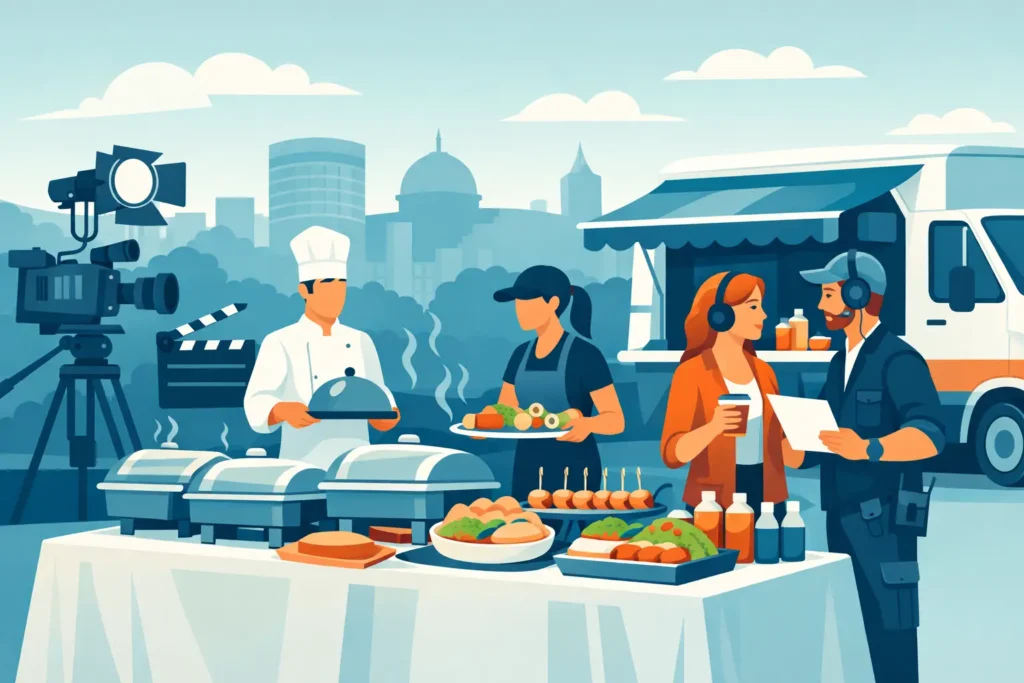
A delayed lunch can put far more than hungry people behind schedule. When a crew is working through changing call times, a remote unit base and a tight turnaround, food needs to arrive hot, labelled, safe and ready to serve. That is what TV AND FILM CATERERS BIRMINGHAM productions need: more than good cooking, but catering that keeps the day moving.
For line producers, production co-ordinators and location managers, the right caterer becomes part of the operational plan. They understand that a breakfast call at 5am, a unit move at lunchtime and a late wrap are not exceptions. They are the job. The aim is straightforward: give cast and crew fresh, satisfying food exactly where it is needed, without creating another problem for the production team to solve.
What TV and Film Caterers in Birmingham Must Handle
Birmingham offers everything from city-centre studios and commercial locations to warehouses, industrial estates, historic venues and rural sites beyond the ring road. Each comes with a different set of access, parking, power, water and service challenges. A catering plan that works in a fitted studio kitchen may not work from the back of a mobile unit on a narrow location road.
Production catering has to be built around the shooting schedule, not a standard lunchtime booking. That can mean staggered service for separate departments, hot boxes for a crew unable to leave set, or an early breakfast station that is fully stocked before the first arrival. It may also require a grab-and-go offering for runners, drivers and artists moving between locations.
A capable team will ask practical questions early: How many people are expected at each service? Is there a secure service area? Are there restrictions on generators, gas or vehicle access? When does the unit move? Who needs meals held back? Those details prevent the familiar on-set scramble where food is ready but nobody can get to it.
Crew Food That People Actually Look Forward To
Crew welfare is not just a line on a call sheet. Long shooting days demand food with proper substance, variety and flavour. A plate that looks generous but leaves everyone sluggish by mid-afternoon does not do the job. The strongest menus balance comforting hot meals with lighter choices, fresh salads, satisfying carbohydrates and protein that suits a physically demanding day.
Creative and flavoursome dishes from around the globe keep repeat shoot days interesting. One service might centre on slow-cooked curries with fragrant rice, roasted vegetables and fresh sides; another could offer hearty pasta dishes, vibrant grain bowls, grilled chicken or plant-based mains with a real sense of occasion. Breakfast deserves the same attention, whether that means hot rolls, eggs, fruit, pastries, porridge or a proper cooked option for an early call.
There is a commercial case for doing this well. Well-fed teams are better placed to stay focused, keep energy steady and feel looked after during a demanding production. It is not about turning a working lunch into a restaurant sitting. It is about serving quality food efficiently, in portions that make sense for the people doing the work.
Dietary Requirements Need Proper Planning
Dietary needs are one of the quickest ways an apparently simple catering brief becomes complicated. Vegan, vegetarian, halal, gluten-free, dairy-free and allergen-conscious meals should not be an afterthought or a tray of uninspiring substitutes placed to one side.
The best approach is to collect requirements before the shoot, confirm numbers close to service and label every dish clearly. Separate preparation and service procedures matter where allergens are involved, as does clear communication with the production contact. If a named cast member or crew member has a serious allergy, the caterer needs to know in advance, not when the lunch queue forms.
There will always be late additions and changing requirements. That is normal on productions. The difference is whether the catering team can respond calmly, provide a safe alternative and keep service running for everyone else.
Mobile Kitchens, Hot Boxes and Craft Catering
Not every job needs the same set-up. For a major location shoot with long days, a mobile kitchen can provide the flexibility to cook and serve fresh food on site. For a smaller commercial crew working in a hired location, hot delivered meals and portable hot boxes may be the more efficient choice. Both can work brilliantly when the timings, equipment and holding conditions are right.
Craft catering serves a different but equally important role. A well-managed station with quality coffee, cold drinks, fruit, snacks, cakes and savoury bites gives people somewhere to refuel between takes. On a busy shoot, it can be the difference between a team feeling supported and a team relying on whatever is available at the nearest petrol station.
The decision should be driven by the schedule, location and headcount rather than habit. A production with 20 people and limited access may benefit from a compact delivery-led service. A 150-person shoot over several days may need a staffed kitchen, full meal service and continuous craft provision. Ask your caterer to explain what is realistic, rather than simply agreeing to a brief that will be difficult to deliver safely.
Timing Is the Service
A beautiful menu is wasted if it arrives 40 minutes after the meal break. In television and film, punctuality is part of the product. Caterers must work from the call sheet, build in travel and loading time, understand the service window and have a plan for inevitable changes.
That includes setting up quietly where filming is under way, keeping walkways clear, managing food temperatures and clearing down without disrupting the next scene. It also means knowing when to be flexible. A delayed shot may push lunch back; an actor may be called early; weather may force an outdoor service into a smaller indoor space. Good production caterers do not make these issues disappear, but they deal with them without adding pressure to the floor team.
D’Lights Event Catering approaches this with hands-on co-ordination from the first inquiry, matching menus, staffing and equipment to the realities of the day. The goal is confident service, whether the brief is a compact crew meal, a full unit base or a high-pressure backstage operation.
Questions to Ask Before You Book
Before confirming TV and film caterers Birmingham teams should establish exactly what the service includes. Is the quote based on confirmed numbers or a minimum spend? Are delivery, staff, equipment, disposables and clearance included? Can meals be held safely for late-shift crew? What happens if the call time changes the evening before?
It is also worth checking how the caterer manages waste. Reusable serviceware may suit some locations, while responsibly chosen, waste-conscious packaging is often essential for fast-moving shoots. The priority is a practical system that protects food quality and leaves the location tidy.
Finally, ask for menu options that fit the budget without treating crew food as an afterthought. A clear, tailored package is more useful than an impressive-looking generic menu. The right partner will be honest about what can be delivered at the available spend, then make it feel generous, organised and properly considered.
A successful shoot rarely pauses to celebrate its catering because everything has worked as it should. Meals arrive when promised, every diet is covered, the tea keeps flowing and the team gets back to work ready for the next set-up. That quiet reliability is exactly what a Birmingham production should expect from its caterer.