
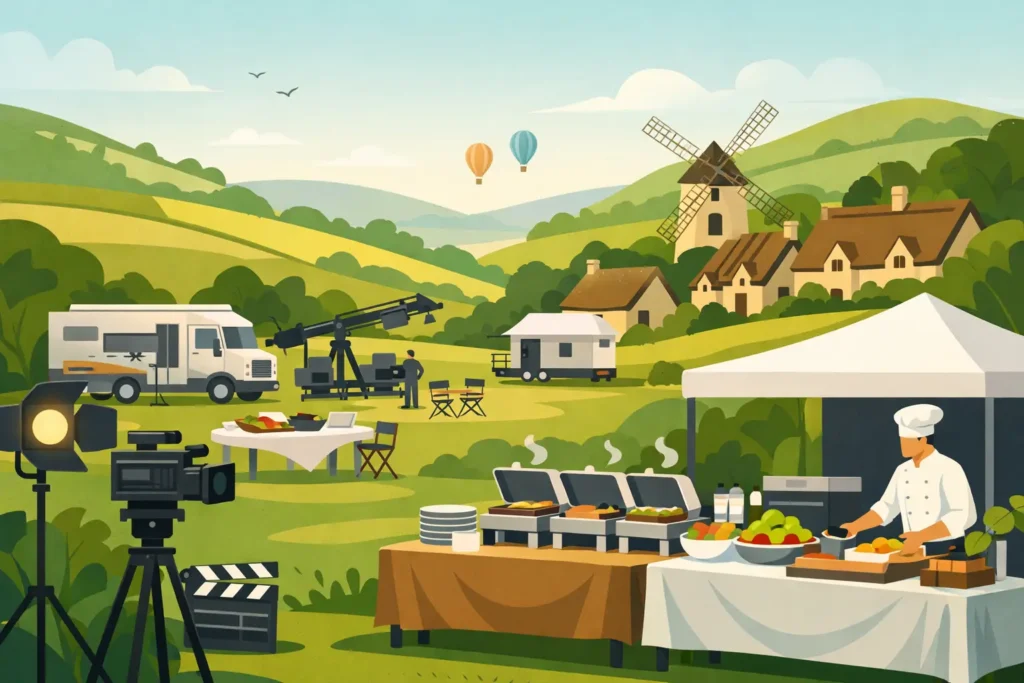
A missed meal break can put more than morale at risk. On a Cotswolds location shoot, it can hold up a reset, leave a night crew running on coffee, or create an avoidable problem when a cast member’s dietary meal has not arrived. Exceptional TV and film catering in the Cotswolds means food that is generous, fresh and genuinely enjoyable – delivered with the timing, planning and calm control a working production requires.
The Cotswolds offers extraordinary filming possibilities: honey-coloured villages, country estates, working farms, period houses and open countryside within reach of London. Yet those same locations often come with narrow access roads, limited power, no nearby lunch options and schedules that shift without warning. Production catering must be built around those realities, not treated as an afterthought.
What exceptional TV and film catering in the Cotswolds looks like
Great food is the starting point, not the whole service. A production needs a catering team that understands call sheets, unit moves, split calls and the difference between a planned lunch and the moment a first AD asks whether food can be ready 25 minutes earlier.
That begins before the first van is loaded. The caterer should establish crew numbers, shooting days, service windows, site access, parking, kitchen facilities and the likely distance between base, unit and set. They should also know who is responsible for confirming changes and how food will reach crews if they are spread across a large estate or working in separate locations.
For location managers and production coordinators, this preparation removes a familiar pressure. Rather than chasing meal numbers while dealing with permits, transport and rain plans, they have one experienced team managing menus, timings and practical set-up. For cast and crew, it means a proper hot meal arrives when it is meant to.
Fresh crew food that keeps the day moving
A long filming day calls for food with substance. Sandwiches have their place for a quick turnaround or a small mobile unit, but a crew working through cold weather, physical scenes or a demanding night shoot needs more than a token lunch.
The strongest menus balance comfort, energy and variety. Think slow-cooked curries with fragrant rice, roast chicken with seasonal sides, vibrant Mediterranean bowls, hearty plant-based stews, grilled fish, fresh salads and warming soups for an early call. The aim is creative and flavoursome dishes from around the globe, made for real working appetites rather than a menu that only looks good on paper.
Portioning matters too. A camera crew on a twelve-hour day, a team rigging lights in poor weather and cast between takes do not necessarily eat the same way. A good production caterer plans enough choice and enough volume without creating needless waste. It is a practical balance, and one that changes with the day, the season and the brief.
Breakfast can be equally valuable. Fresh pastries, fruit, yoghurt, hot breakfast rolls and hot options where required give teams a reliable start. Later, craft tables and grab-and-go stations can keep water, quality coffee, fruit, snacks and lighter bites available without forcing every department to leave its post at once.
Hot boxes, mobile kitchens and the right set-up
Not every Cotswolds location has a usable kitchen. A manor may have beautiful rooms but no suitable space for a caterer. A field location may have limited hard standing. A village street may require a compact footprint and careful consideration for residents.
That is where the service format matters. Portable hot boxes work well when access is tight and food needs to travel from a nearby base to the unit. A mobile kitchen can provide proper hot catering at larger or more remote sites. For studio-adjacent work or locations with facilities, a staffed buffet service may be the best fit.
There is no single correct answer. The right choice depends on crew size, menu, timing, site rules and the distance between food preparation and service. The important thing is that the catering plan supports the shoot rather than adding another logistical issue to solve.
Dietary requirements need proper planning, not last-minute substitutes
Dietary catering is part of crew welfare and must be treated with care. Vegan, vegetarian, halal, gluten-free, dairy-free and allergen-aware meals should be as appealing and filling as the main menu, not a plate set aside with little thought.
The best approach is to gather requirements before the shoot, build suitable dishes into the core menu where possible, and label food clearly at service. This makes choice easier for everyone and reduces the risk of confusion in a busy lunch queue. For serious allergies, the catering team should agree preparation and handling procedures in advance, with clear communication between production and service staff.
There is a commercial benefit as well as a welfare one. When people know their food has been properly considered, they feel looked after. That helps a production maintain focus, particularly during long runs or when working far from the usual city facilities.
Timing is the difference between catering and production catering
A beautifully cooked lunch delivered late is still a problem. TV and film catering has to work to production time, including shifting call times, delayed wrap, staggered breaks and unpredictable weather.
A dependable caterer plans for the confirmed schedule but remains ready to adapt. This can mean holding hot food safely until a delayed break, bringing forward breakfast for an earlier call, or preparing additional portions when a department expands. It also means arranging delivery routes that account for country roads, gatehouses, security, muddy tracks and limited loading access.
Staggered service is especially useful when a full crew cannot break together. It avoids a long queue, protects the filming schedule and keeps the food in good condition across the service period. At larger shoots, separate cast, crew and craft provision may be sensible. On smaller commercials or stills productions, a compact, well-stocked set-up can be more efficient.
D’Lights Event Catering brings this production-aware approach to every brief, combining freshly prepared food with hands-on coordination from enquiry through to service. The goal is straightforward: make catering one part of the day that production does not need to worry about.
Health, safety and waste-conscious service on location
Food safety cannot be compromised because a location is remote or temporary. Professional catering requires safe transport, temperature control, clean service areas, allergen awareness and appropriate equipment for the conditions. On a country location, that may also involve planning for uneven ground, rain, wind, limited water supply or no indoor dining space.
Packaging deserves thought as well. Productions increasingly want practical ways to reduce unnecessary single-use waste, but the solution must still protect food quality and hygiene. Reusable serviceware may suit a controlled unit base, while recyclable or compostable packaging can be more realistic for a dispersed location. The right approach depends on the site and how quickly crew need to move on.
This is also where experienced staffing makes a difference. A capable catering crew can keep the serving area organised, replenish food quickly, manage dietary requests professionally and clear down without disrupting departments around them. It is quiet, useful work that helps the entire location feel under control.
Booking catering for a Cotswolds shoot
The earlier the conversation starts, the better the outcome. Share the provisional call sheet, expected crew numbers, location details, service times, dietary information and any practical restrictions. If numbers are likely to change, say so. A flexible caterer can plan sensible contingencies when they understand the moving parts from the outset.
Be clear about the experience you want to create. A period drama on a rural estate may need warming winter food and a discreet unit-base service. A high-energy commercial may need speedy breakfast, portable lunches and a polished client area. A music video might need late-night hot food, plentiful refreshments and individual dietary provision for artists and crew.
The Cotswolds can be a demanding place to feed a production, but that is precisely why thoughtful preparation counts. With the right menu, equipment, service team and call-time plan in place, every department gets fresh food, proper choice and the energy to keep the day on track.