
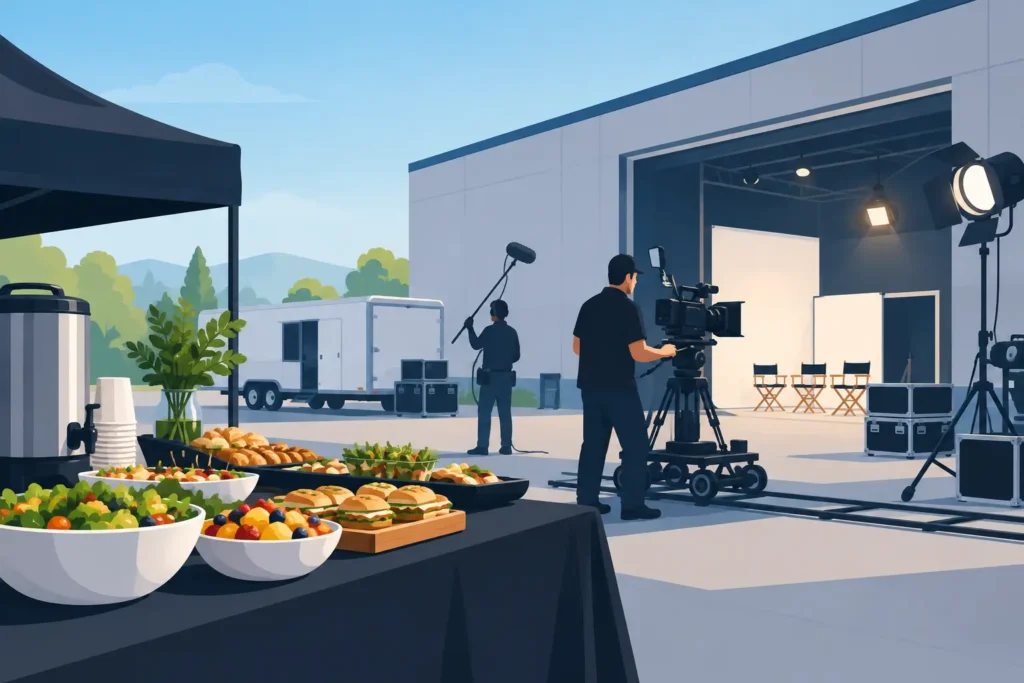
A missed meal break can put far more than lunch behind schedule. When TV and film catering at Pinewood is supporting busy TV productions, food has to arrive at the right gate, at the right call time, in the right format, with every dietary requirement accounted for. Cast, crew, production office and visiting clients all need feeding without creating another problem for the floor team to solve.
Pinewood productions move at pace. Unit bases change, shooting runs over, talent timings shift and a planned seated lunch may become a staggered service between set-ups. The right catering partner brings creative, flavoursome food to the day while working around the realities of a live production.
What Pinewood TV productions need from catering
Studio catering is not simply a buffet dropped into a green room. It is a carefully timed service that supports the day’s schedule, crew welfare and working environment. A production may need early breakfast before first call, hot lunch for a large technical crew, a lighter option for artistes, continuous craft catering, and hot boxes for departments that cannot leave their positions.
The requirement changes with the scale and shape of the shoot. A light entertainment programme with a live audience has different pressures from a drama unit shooting long days across several stages. A commercial may need a polished client-facing lunch alongside practical crew food. A children’s television production may need clearly labelled allergen-aware options and quick, family-friendly choices. Good planning starts with the call sheet, not a generic menu.
For TV and film catering Pinewood teams can rely on, timing matters as much as taste. Food must be freshly prepared, transported safely, set out professionally and served in a way that keeps people moving. That can mean a mobile kitchen for hot service, packed individual meals for a dispersed unit, or a grab-and-go station that lets crew eat without losing half their break in a queue.
Build the menu around the shooting day
A strong production menu gives people energy without making the afternoon feel heavy. It should offer choice, but not so much choice that service becomes slow or wasteful. The best menus balance familiar crowd-pleasers with creative dishes from around the globe, using seasonal ingredients and generous portions that hold up well in a working environment.
Breakfast might include hot bacon and vegetarian rolls, eggs, pastries, fruit, yoghurt and proper coffee ready for early call. For lunch, think slow-cooked curries with fragrant rice, grilled chicken, colourful salads, pasta bakes, hearty stews, wraps and plant-based mains with the same attention given to flavour as every other dish. A warm pudding, cakes or fresh fruit can give a long day a welcome lift.
The serving format should follow the production rather than force the production to fit the catering. A plated meal can work beautifully for a small executive team or client area. For a crew of 100 working to a tight turnaround, hot buffet service is often the sensible option. If departments are filming through lunch, labelled hot boxes can protect both the break schedule and the meal quality.
Dietary requirements deserve proper planning
Dietary catering should never feel like an afterthought or a separate, less appealing plate. Vegan, vegetarian, halal, gluten-free and dairy-free meals need clear labelling, careful preparation and confident communication at service. Allergens require particular care, including ingredient information, separation where needed and an agreed process for identifying individual meals.
Production coordinators should share dietary numbers as early as possible, then update the caterer when crew lists change. It is also worth asking how special meals will be packed, labelled and handed over. On a busy studio day, the difference between a clearly named hot box and an unmarked container is the difference between reassurance and a last-minute scramble.
Catering logistics that keep the floor clear
Pinewood is a working production environment, so access, delivery and set-up cannot be improvised. The catering plan should cover arrival windows, loading arrangements, parking, service location, power and water requirements, waste collection, and the route food takes from vehicle to crew. These details may sound small, but they protect the schedule.
A dependable caterer confirms the practical information before the day rather than calling from the gate with questions. They coordinate with the production office, location team or studio contact, arrive ready to work and keep equipment tidy and safe. Where a mobile kitchen is required, the team should understand the footprint, ventilation and health-and-safety considerations well in advance.
Waste also deserves a place in the conversation. Individually packaged meals are useful for distant departments, night shoots and restricted access areas, but they can create unnecessary packaging if used for every meal. Shared hot service, reusable equipment and sensible portion planning can reduce waste without compromising hygiene or speed. The right choice depends on the set-up, crew movement and the day’s COVID or site requirements.
Plan for change, not perfection
Every production team hopes the schedule holds. Experienced teams plan for the possibility that it will not. Late finishes, a delayed company move, extra background artists or an unplanned night extension can all affect food service. Catering needs enough flexibility to respond without lowering standards.
That does not mean preparing unlimited food just in case. It means agreeing practical contingencies: who can authorise extra meals, how late a hot service can be held, whether a second delivery is possible, and what grab-and-go options are available if a break is compressed. Clear decisions before shoot day prevent stressed conversations when everyone is already under pressure.
Craft catering is part of crew welfare
A well-run craft station keeps the production going between main meals. Fresh fruit, snacks, biscuits, chilled drinks, tea, coffee and lighter savoury options give crew somewhere to refuel during long resets or difficult scenes. For early starts and late nights, that support can make a real difference to morale.
Craft catering is most effective when it is maintained, not simply delivered. Stations need checking, restocking and keeping clean, particularly when several departments are using them across a long day. It is also worth matching the offer to the season. Cold drinks and fresh options matter in summer, while good coffee, soup and warming snacks earn their place during winter location work.
For artist areas and client spaces, presentation matters too. Food should feel generous and welcoming without becoming fussy or difficult to eat. Thoughtful details, from attractive platters to discreet replenishment, help a busy production feel looked after.
The questions to settle before booking
The most useful catering brief includes crew numbers, timings, studio or stage location, service style, budget, dietary requirements and any special guest areas. It should also flag access restrictions, overnight work, split calls and whether food needs to travel to a second location. A clear brief lets the caterer recommend the right approach rather than simply price a headcount.
Ask how the team handles call-time deliveries, last-minute number changes, allergen labelling and waste. Check whether hot food will be held and served safely, what equipment is included, and whether staff remain on site for service. The lowest quote is not always the best value if it leaves the production team arranging tables, heating food, clearing waste or resolving missing dietary meals.
D’Lights Event Catering plans each production package around the actual working day, from portable hot boxes and craft tables to full hot-meal service and mobile kitchens. The aim is straightforward: fresh food, professional coordination and a crew that feels properly fed from first call to wrap.
Give your caterer the call sheet, the real timings and the likely pressure points early. With the right information, catering becomes one less moving part for the production team to chase – and one of the reasons cast and crew can keep doing their best work.