
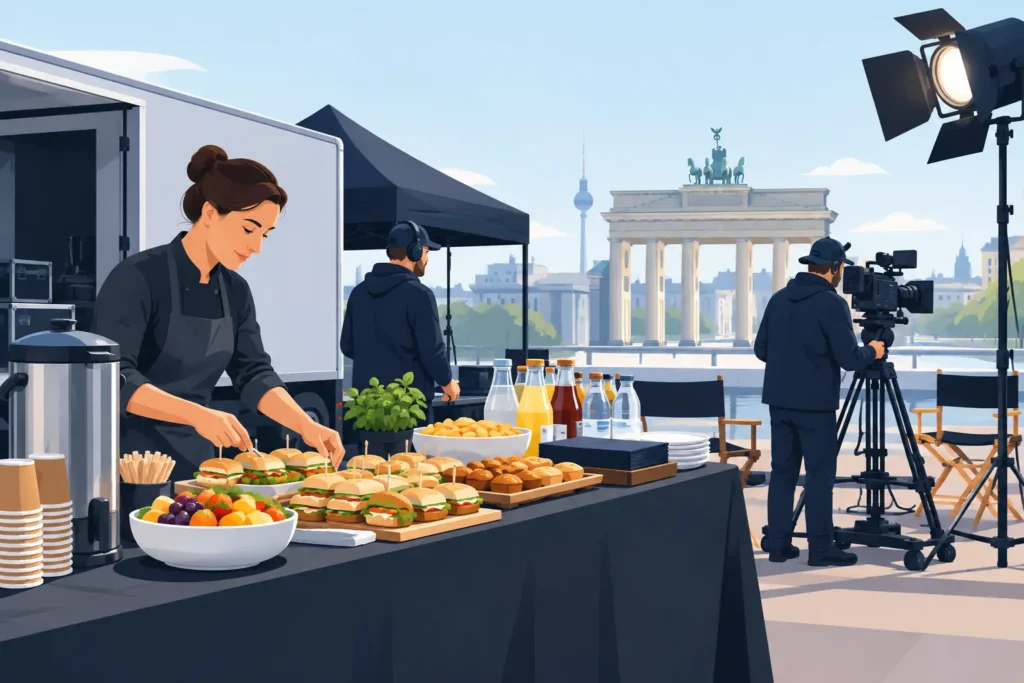
A 05:30 call time outside Berlin, a night shoot in Hamburg, a compact unit moving between Munich locations: the food plan has to work before the cameras roll. TV and film catering in Germany for TV productions is not simply a question of putting breakfast on a table. It is a live operational service that protects crew welfare, keeps departments moving and gives cast a reliable place to reset during a demanding day.
The best catering feels effortless to the people eating it. Behind the scenes, it depends on detailed call sheets, access checks, service windows, power and water availability, dietary information, travel times and a clear answer to one vital question: where will the crew actually be when they need feeding?
What TV and Film Catering Germany Requires
Germany offers outstanding studio facilities, urban locations and striking rural backdrops, but every production base comes with its own practical realities. A studio day may allow for a fixed kitchen position and a scheduled lunch service. A city-centre location with limited parking may require portable hot boxes, compact equipment and carefully timed deliveries. A remote shoot may need a mobile kitchen, chilled storage and a catering crew prepared for changing weather.
That is why catering should be discussed alongside the location plan, not added once the shooting schedule is already locked. Location managers and production coordinators need a caterer who asks the operational questions early: How many people are on set at each meal? Are unit base and set separated? Is there a split crew? Are there early calls, late wraps or overnight work? What access is available for loading, waste collection and vehicles?
A good brief turns those answers into a service that supports the day rather than competing with it.
Call Times Set the Kitchen Clock
A standard breakfast, lunch and wrap service may be right for one production, but it is rarely enough detail. On a commercial or drama shoot, hair and make-up may need food first. Camera and lighting may break at a different time from cast. Runners, drivers and security teams may be working when the main lunch queue has finished.
Catering must be built around staggered service. Fresh breakfast can be ready for the first arrivals, while a later hot option gives teams joining after rigging a proper meal rather than an empty urn and leftover pastries. Lunch needs a clear window but should also hold back portions for essential crew who cannot step away from set. At wrap, a hot meal or substantial grab-and-go option can make a real difference to a team facing a long journey back to their hotel.
Food is part of the production schedule. When it is planned that way, it stops being a source of friction.
Build a Menu That Keeps the Crew Going
Production food needs to be generous, flavoursome and practical. The aim is not a fussy restaurant experience that delays service. It is freshly prepared food that travels well, holds safely and still feels worth looking forward to after twelve hours on location.
A strong menu gives people choice without creating unnecessary complexity. Breakfast might include warm egg dishes, porridge, fruit, pastries and plant-based options. For lunch, a balanced hot main, a vegetarian or vegan alternative, fresh salads, filling sides and a dessert or fruit option give crews the energy to continue. International productions often respond well to creative dishes from around the globe, particularly when familiar comfort food sits alongside bolder flavours.
The trade-off is clear: more menu choice can be welcome, but an overcomplicated menu creates slower queues, more waste and extra pressure in a tight unit base. The right approach depends on crew size, dietary profile, shooting hours and the facilities at hand. A 25-person documentary crew can enjoy a more tailored plated-style service than a 180-person drama unit moving through a narrow lunch break.
Dietary Requirements Need Proper Planning
Dietary catering is not a last-minute vegetarian tray placed at the end of the table. Production teams need clear labelling, separate handling where required and filling options that allow every member of the crew to eat confidently.
Collect requirements before the first day of shooting, then keep the information current as day players, guests and additional crew join the production. Vegan, gluten-free, dairy-free, halal, nut-free and allergy-aware requests all need to be considered in the menu and service plan. Where an allergy presents a serious risk, the catering team and production should agree the appropriate controls before service begins.
Clear labels are useful, but communication matters just as much. Crew should know who to ask about ingredients, and the person serving food should have the information to answer without guessing.
Choose the Right Set-Up for the Location
There is no single format for TV production catering in Germany. The right set-up depends on access, crew numbers, the nature of the shoot and how long the production stays in one place.
For a fixed studio base, a staffed hot buffet or canteen-style service may be the most efficient choice. It allows for a broader menu, fast replenishment and a proper break area where people can sit down. On a travelling unit, portable hot boxes can keep meals at temperature and bring lunch closer to the action. For difficult locations, a mobile kitchen may provide the control needed to cook and serve without relying on limited local facilities.
Craft catering deserves its own plan. Coffee, tea, chilled drinks, fruit, biscuits, protein snacks and grab-and-go items should be available where people need them, particularly during long takes or when departments cannot leave their positions. Good craft service is consistent rather than extravagant. Empty coffee stations and a lack of water will be noticed long before a creative menu is praised.
Protect Food Safety Without Slowing the Day
A fast-moving set still requires disciplined food handling. Hot food must be held safely, chilled food must remain properly stored, and service areas need to stay clean and controlled even when the weather turns or space is limited. This is where experienced production caterers earn their place: they can work around restricted access, shifting unit bases and sudden timing changes without cutting corners.
Before the first service, confirm the practical essentials. Is there power? Is potable water available? Where can the team wash up? Is there covered space for service if it rains? What are the arrangements for rubbish and recycling? On some locations, these details are easy. On others, they determine whether a particular menu or kitchen format is realistic.
Waste-conscious planning also makes commercial sense. Accurate headcounts, sensible portions, reusable service equipment where appropriate and packaging chosen for the location can reduce waste without leaving people hungry. For a moving unit, individual meals may be the right answer. For a settled studio day, a staffed buffet can cut unnecessary packaging considerably.
Work With a Caterer That Understands Production Pressure
The food may be the visible part of the service, but the real value is coordination. A production-aware caterer reads the call sheet, confirms changes, plans delivery times around access restrictions and responds calmly when the schedule moves. That matters when lunch is pushed by an hour, when a weather hold changes the day, or when an additional thirty people appear at base.
For UK teams filming in Germany, local knowledge and early logistics planning are particularly valuable. Transporting food, equipment or staff across borders can add complexity, so the catering model should be agreed well before the shoot. In some cases, a locally sourced service with a dedicated on-site team is the sensible route. In others, an established production caterer may coordinate a mobile solution around the specific needs of the unit. It depends on the budget, duration, location and level of menu control required.
The right questions at the beginning prevent expensive improvisation later. Share the schedule, crew numbers, location details, dietary list, available facilities and budget range. Ask how meals will be held, how late changes are managed, what happens if weather affects service, and who is the point of contact on the day.
A well-fed crew is not a luxury line on a production budget. It is a practical investment in morale, concentration and timekeeping. Plan the catering with the same care as transport and unit management, and your Germany shoot will have one less problem waiting at the next call time.