
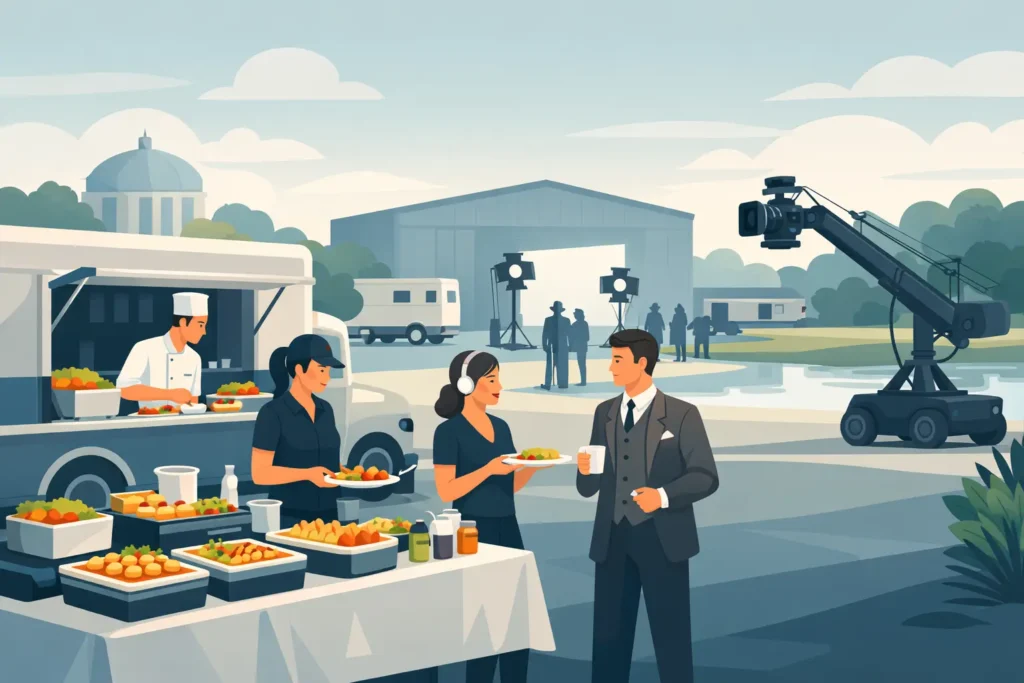
A delayed meal break can cost more than a hungry crew. It affects energy, resets, transport, overtime and morale – particularly when departments are working to tight studio slots. Trusted TV and film catering at Shepperton Studios means far more than placing food on a trestle table. It means hot, flavoursome meals arriving when the schedule says they should, clear dietary provision, well-run service and a catering team that understands production pressure.
For line producers, production coordinators and location teams, the right caterer removes a moving part from an already demanding day. Whether the call sheet requires an early breakfast, rolling lunch for separate units, a late-night hot box or craft catering between takes, food service has to work around the production rather than asking the production to work around it.
What trusted TV and film catering at Shepperton Studios looks like
Studio work can appear straightforward from the outside. The crew is in one place, facilities are nearby and the weather is not threatening to blow a gazebo across a field. In reality, stages, unit bases, holding areas, rehearsal rooms and crew access points all create their own practical questions. Where will food be served? When can deliveries arrive? Which teams need to eat first? How will meals stay hot if shooting overruns?
A trusted catering partner plans for those details before service begins. That includes agreeing access and delivery times, checking the available preparation and serving space, understanding the number of cast and crew expected at each sitting, and allowing for changes that occur once the day is underway. A good plan is never just about headcount. It is built around the call time, turnaround, shooting schedule and the people who cannot all leave set at once.
The food itself should feel like a proper break, not a compromise. Freshly prepared dishes with confident global flavours give crews something to look forward to, whether that is a warming curry, slow-cooked mains, vibrant salads, filling plant-based bowls or a familiar favourite done properly. Variety matters on a long shoot, especially across multi-day productions where the same menu quickly loses its appeal.
Build the menu around the crew, not a fixed package
Film and television crews are not one-size-fits-all groups. A commercial shoot with 35 people needs a different approach from a drama unit feeding 150 across staggered breaks. A music production may need fast, portable food around rehearsals and backstage activity, while a long-form studio production may benefit from a more structured breakfast, lunch and afternoon craft offer.
The strongest menus balance speed, choice and sustenance. Lunch needs enough protein and carbohydrates to carry people through physical work and long standing hours, without making the afternoon feel heavy. Fresh vegetables, generous sides and well-seasoned sauces make that possible. Proper desserts, fruit, cakes and good coffee also earn their place. They are not an afterthought when crews have been on their feet since dawn.
Dietary requirements must be planned into the main menu from the start, not treated as a separate, lesser meal. Vegetarian, vegan, gluten-free, dairy-free, halal and allergy-aware options should be clearly labelled and handled with care. The practical point is just as important as the menu choice: teams need confidence that the meal put aside for them is available at the right time, correctly identified and not lost in the rush of service.
There are exceptions. For a short, fast-moving day, a hot buffet may not be the best use of time or space. Individually packed hot meals, breakfast boxes or grab-and-go stations can keep departments fed without creating a queue outside the stage. For a more settled production day, a staffed service point can bring a welcome sense of occasion and ensure everyone receives the right portion and dietary dish.
Call-time catering needs disciplined timing
Punctuality is one of the clearest signs of professional production catering. An 06:00 call does not mean breakfast is thought about at 06:00. It means the catering team has prepared, travelled, unloaded and set up in time for the first crew member who needs a coffee and a hot breakfast before work begins.
That same discipline carries through the day. Lunch may be scheduled at a precise time, but shooting can run over. A caterer needs to keep food safe and appetising while remaining ready to serve as soon as the assistant director calls the break. If there are two units, talent requirements or a staged release of departments, service should flex without anyone having to chase the catering team for answers.
This is where mobile kitchens, heated service equipment and portable hot boxes make a real difference. They provide options when the available space is limited or when food needs to travel from one point of the studio operation to another. The right equipment depends on the production, but the goal remains the same: hot food should arrive hot, cold food should stay properly chilled, and service should not interrupt the work around it.
Craft catering that keeps the day moving
Meals are the headline, but craft catering often protects the pace of the shoot between breaks. A well-stocked station gives cast and crew access to fresh fruit, snacks, pastries, biscuits, cold drinks, tea and coffee without pulling people away from their departments for long.
It needs managing, too. Empty coffee urns, untidy tables and a snack station that has been cleared by mid-morning do not support a professional environment. Regular replenishment, sensible presentation and waste-conscious packaging help the area stay useful throughout the day. On productions with early starts or late finishes, small but substantial additions such as breakfast baps, soup, wraps or warm sweet treats can lift the mood considerably.
There is also a balance to strike. Too much single-use packaging creates unnecessary waste, while open platters are not always practical for a moving crew or a space with restricted service access. The best choice depends on the schedule, the studio rules and how people will actually eat. Catering should feel considered, not overcomplicated.
Health, safety and clear communication matter
Trusted TV and film catering at Shepperton Studios must meet the same high standards behind the scenes as it does on the serving table. Food safety, allergen awareness, safe temperatures, clean service areas and appropriate waste management are all part of the job. They protect the crew, the production and the venue.
Clear communication is equally valuable. Production teams need one responsive point of contact who can confirm menus, timings, staffing and any changes without a long chain of messages. Caterers need accurate information about numbers, access, dietary needs and schedule adjustments. When both sides share updates early, problems are usually solved before they affect service.
D’Lights Event Catering approaches production food with that hands-on mindset. From menu guidance and crew-friendly dishes to hot meal delivery, staffed service and portable catering solutions, the focus is on making food one less thing for the production team to worry about.
Questions to settle before booking catering
The best catering decisions happen early, particularly when stage access, service locations and crew numbers are still being confirmed. Before booking, establish the first call time, proposed meal breaks, total headcount, cast requirements, dietary information, available power and water, delivery route, parking arrangements and whether food needs to be served at more than one point.
It is also worth discussing what happens if timings move. No caterer can predict every change to a shooting day, but an experienced one can explain how they will hold food, adapt service and communicate with the production office. That conversation is often more useful than choosing between two similar-looking menus.
At Shepperton Studios, catering should support the rhythm of the day: generous food, sensible logistics and a team ready to respond when the schedule changes. Get those foundations right, and the crew can return to set fed, focused and ready for the next take.