
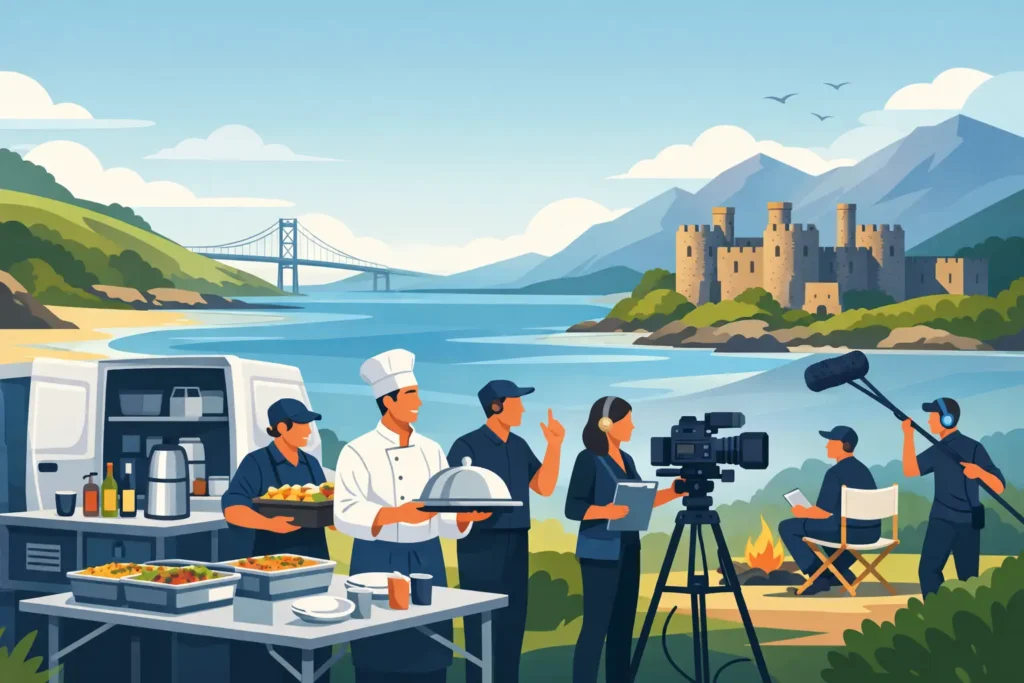
A Welsh location can look spectacular on screen, but it can be unforgiving behind the scenes. A unit base may be miles from the nearest suitable kitchen, weather can change before lunch is served, and a missed meal break can put pressure on every department. That is why location catering across South and North Wales needs more than great food. It needs proper production planning, dependable transport and a team ready to feed people wherever the call sheet leads.
For film, TV, commercials, music and live events, catering is crew welfare in action. A hot, flavoursome meal at the right moment keeps energy up, protects morale and gives cast and crew the reset they need to do their best work. From city-centre shoots in Cardiff and Swansea to rural sets, coastal locations and mountain-adjacent unit bases in North Wales, the standard should stay the same: freshly prepared food, organised service and no unnecessary drama.
What location catering in Wales has to handle
Wales offers extraordinary variety within one production footprint. One day may involve a studio call in South Wales; the next, a dawn exterior at a country estate, a beach, a forestry location or an industrial site with restricted access. North Wales brings its own demands, including longer travel distances, changeable conditions and locations where local facilities are limited.
A location caterer must plan around that reality before the first pan goes on. This means confirming vehicle access, parking, power, water, waste arrangements, shelter, service space and the exact timing of meal breaks. It also means asking whether crew will be working in one base, split across multiple units or moving through the day.
The menu matters, but so does the route to site. A brilliant lunch is no use if it arrives late, cools down in transit or cannot be served safely where the crew actually is. Production-grade catering accounts for travel time, road conditions, location restrictions and the possibility that the schedule will shift at short notice.
Fresh hot food for crews working to call times
Early calls, night shoots and staggered departments call for food that works hard. A breakfast service may need to begin before first light, with proper hot options alongside lighter choices for those who cannot face a full plate at 5am. Lunch should feel like a real meal, not an afterthought grabbed between set-ups.
Creative, flavoursome dishes from around the globe bring welcome variety to long production days. Think warming curries, slow-cooked mains, vibrant grain salads, fresh wraps, nourishing soups and hearty plant-based dishes, all supported by sides that travel and hold well. The right menu changes with the season, the location and the physical demands of the day. A cold, wet exterior shoot calls for something very different from a summer commercial on the coast.
For cast, featured artists or clients with limited windows, hot boxes and individually timed deliveries can keep service discreet and practical. Craft catering and grab-and-go stations also give departments access to good food and refreshments between formal meal breaks, without pulling people away from the job for too long.
Location catering across South and North Wales without guesswork
The difference between event catering and location catering is often the level of contingency. On a production, timings move. A scene runs over, weather stops play, a location becomes inaccessible, or a last-minute dietary requirement appears on the revised call sheet. The catering plan needs enough structure to stay safe and on time, while remaining flexible enough to respond.
For South Wales productions, proximity to major studios and cities can make operations more straightforward, but it does not remove the need for careful coordination. Loading restrictions, tight urban parking, limited holding areas and split unit bases can all affect service. For North Wales, the priority may be building extra travel allowance into the plan, ensuring equipment is self-sufficient and arriving with enough food, hot holding capacity and supplies for a more remote day.
D’Lights Event Catering approaches these details as part of the job, not as extras to be solved on the morning. Every booking is shaped around guest numbers, dietary needs, location access, budget, kitchen facilities and the production schedule. Where a full kitchen is not available, a mobile kitchen set-up or portable hot service can make the difference between simply feeding people and feeding them properly.
Build the catering plan around the day, not a standard package
A strong briefing starts with the call sheet. Knowing the first crew call, planned meal windows, wrap time and likely pressure points lets the catering team prepare service that supports the schedule. If the art department is in first, they need breakfast first. If a night unit is working separately, their meals cannot be an afterthought.
It is equally useful to understand the rhythm of the location. Is there a protected area for crew dining? Will people eat in shifts? Can food be served from a vehicle, marquee or pop-up unit base? Is there an indoor fallback if rain makes an outdoor set-up impractical? These answers determine equipment, staffing levels and menu design.
There is no value in forcing a formal buffet where a fast, covered service point is safer and quicker. Equally, a high-profile brand shoot, artist green room or client-facing launch may need polished presentation alongside operational speed. The service style should fit the job.
Dietary requirements are part of the main menu
Productions cannot afford to treat dietary requirements as a side note. Vegan, vegetarian, halal, gluten-free, dairy-free and allergy-aware meals need to be planned clearly, labelled correctly and served with care. Cast and crew should not have to search for a suitable meal after a demanding morning, nor should a production coordinator be chasing answers while a unit waits to break.
The best approach is to collect requirements early, confirm them against the final numbers and prepare food in a way that reduces avoidable cross-contact risks. This does not mean every dish has to be bland or separate. It means building menus where inclusive choices are genuinely appealing, substantial and easy to identify.
A varied menu also helps avoid the familiar location-catering fatigue. Repeating the same sandwich tray or token salad may fill a gap, but it does little for morale on a multi-day shoot. Rotating flavours, using seasonal ingredients and including satisfying meat-free options gives the whole crew something to look forward to.
The practical details that protect service
Great food is only one part of a reliable Wales location catering operation. Health and safety, temperature control, allergen information, clean service areas and responsible waste handling all need to be managed quietly and consistently. Production teams have enough to supervise without having to worry about catering compliance.
Waste-conscious packaging is particularly useful where washing-up facilities are limited or departments are spread across a large location. It needs to be practical, however. Packaging should keep hot food hot, cold food fresh and meals easy to eat where people are working, whether that is at a unit table, in a green room or between takes.
Communication keeps the operation moving. A capable caterer stays in contact with the production coordinator or location manager, confirms arrival arrangements, flags genuine risks early and adapts when timings change. The aim is not to create more messages for the production office. It is to remove one major concern from their day.
Food that gives the day momentum
When booking location catering in South and North Wales, ask practical questions before choosing a menu. Can the caterer serve a remote site? How will meals stay hot? What happens if service times move? Can they support multiple units, night calls and dietary requirements? Do they have the equipment and staffing to handle the scale of the production?
The answers reveal whether you are booking a food delivery or a catering partner. On a demanding location day, that distinction matters. Give the catering team the call times, access details and crew requirements early, and they can put the right food, people and plan in place before the first vehicle reaches site.