
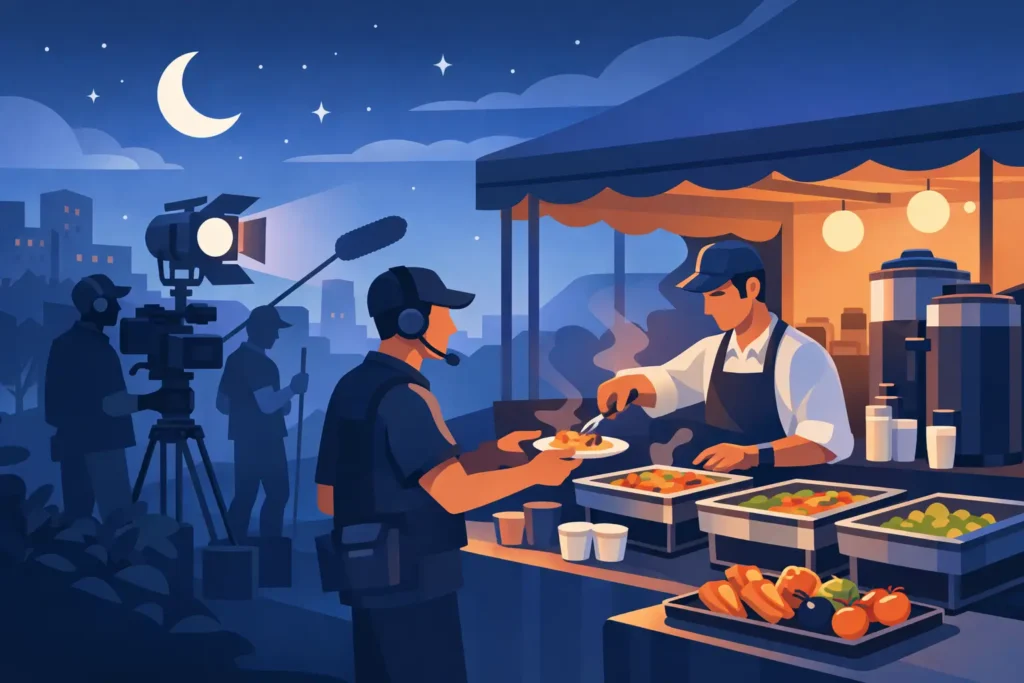
At 1.30am, a crew does not need another lukewarm sandwich left beside a kettle. They need proper food, ready at the right moment, in a place that may be a studio loading bay, a rain-soaked street or a remote location with limited power. A professional night shoot catering service keeps people fed, focused and looked after when the production schedule is at its most demanding.
Night work changes the rules of catering. Meal breaks can move with little warning, performers may be called to set just as service begins, and access routes are often shared with lighting, sound and transport teams. The right caterer plans around the pressure rather than adding to it, serving creative, flavoursome food while keeping the operation quiet, safe and dependable.
Why night shoots need a different catering plan
A daytime event has a natural rhythm. A night shoot may begin with a late-afternoon call time, build towards a midnight main meal and run through to breakfast. That means the menu, delivery plan and service style must all work against the body clock.
Heavy food at the wrong time can leave a crew sluggish. Light snacks alone, however, do not sustain a camera team lifting equipment in the cold or artists working through multiple takes. The answer is balance: satisfying hot dishes with fresh, lighter options, substantial plant-based choices and easy grab-and-go food available between calls.
Timing matters just as much as the menu. A meal served ten minutes late can hold up a reset, delay a unit move or leave a department without the energy to continue safely. Catering needs to be built into the call sheet, with a clear understanding of when cast, crew and drivers can actually eat. On a live production, that may mean staggered service rather than one large queue.
There is also the practical reality of the night. Nearby shops may be shut, parking restrictions may change, noise must be controlled and a venue’s kitchen may be unavailable. A caterer needs viable alternatives before the unit arrives, whether that is a mobile kitchen, insulated hot boxes, a carefully positioned service station or a hot delivery timed to the minute.
What a reliable night shoot catering service looks like
The best night shoot catering service is not simply a food drop. It is a coordinated crew-welfare operation. From the first conversation, the catering team should ask about unit size, call times, access, power, parking, service space, budget, dietary requirements and the likelihood of schedule changes.
That level of planning allows food to arrive fresh and hot without interrupting the production. It also gives the location manager confidence that allergens, waste, equipment and cleaning have been considered. In a narrow city-centre location, for example, a compact hot-box service may be more sensible than a full kitchen build. On a large studio production or an overnight exterior shoot, a staffed mobile kitchen can provide more flexibility as the night develops.
Food that works at 2am
Good night-shoot food should feel like a meal, not an afterthought. Slow-cooked curries, aromatic rice dishes, hearty pasta bakes, grilled chicken, colourful salads, jacket potatoes and warming soups can all work well when prepared and held correctly. The menu should have enough variety that crew members on their fourth consecutive night are not faced with the same tired choice.
Global menus are especially useful because they offer comfort and range without becoming predictable. A fragrant vegetable curry can sit comfortably alongside a rich meat option, fresh slaw and warm flatbreads. A late-night breakfast service might include egg dishes, vegan alternatives, pastries, fruit and porridge pots, giving those wrapping at dawn something more considered than a vending-machine snack.
Dietary provision must be planned, not improvised. Vegan, vegetarian, halal, gluten-free and allergen-aware meals should be clearly identified and protected from cross-contact. It is not enough to offer one token plant-based tray at the end of the table. Every member of the crew deserves a proper, appetising meal that feels part of the service.
Service built around the call sheet
The call sheet is the caterer’s working map. It indicates when departments arrive, when the principal cast is likely to break, whether a second unit is operating and when transport crews need feeding. A well-organised catering plan accounts for each of these movements.
For a smaller commercial shoot, that could mean a hot evening meal on arrival, a self-serve drinks and snack station through the middle of the night, then breakfast boxes for the wrap. A feature production may require several hot service windows, dedicated craft catering, runner-friendly collections and separate arrangements for cast or backstage teams.
Flexibility is essential, but it is not guesswork. The caterer should agree decision points with the production coordinator or location manager: who can move service, how much notice is realistic and what happens if a meal break is delayed. That creates calm when the schedule changes, because everyone knows the route forward.
The logistics that protect the shoot
Food may be the visible part of catering, but logistics are what make it dependable. Overnight access needs confirming in advance, particularly at studios, council-managed locations and venues with security gates. Delivery vehicles need a legal place to wait, equipment must be moved without blocking technical departments, and the service area should be safe under low light.
Health and safety matters throughout. Hot food must be transported and held at safe temperatures, service areas kept clean, and allergen information readily available. On exterior locations, the catering setup also needs to cope with weather. Gazebos, lighting, flooring, handwashing facilities and covered storage can make the difference between an efficient meal break and an uncomfortable scramble in the rain.
Waste deserves the same attention. Overnight shoots produce enough disposable cups, packaging and leftovers without creating more than necessary. Reusable serviceware may suit some locations, while recyclable or responsibly selected single-use packaging is often the practical choice where washing facilities are limited. The right approach depends on the site, the crew size and the turnaround time, but it should be discussed before the first meal is served.
Choosing a catering partner for an overnight production
Price matters, particularly when a production is balancing many moving costs. But the cheapest quote can become expensive if meals arrive late, portions run short or dietary requirements are mishandled. Look for a caterer that is willing to build a package around the shoot rather than forcing the production into a fixed menu and fixed service time.
Ask how they handle delayed breaks, where food is prepared, how hot meals are maintained in transit, and whether they can support both a main meal and craft catering. Find out what staffing is included and whether the team has experience working around live sets, backstage areas and tight location access. Clear answers are a strong sign that the caterer understands production pressure.
D’Lights Event Catering plans each overnight service around the people and practicalities on site, from portable hot boxes for compact units to full-service catering for large crews. The aim is straightforward: fresh food, confidently delivered, with a team that can respond when the night takes an unexpected turn.
Give the crew something worth stopping for
Night shooting asks a great deal of people. It asks them to stay sharp after midnight, work safely in changing conditions and bring the same energy to the final take as they did at call time. A generous, well-timed meal is more than a line on the production schedule. It is a practical sign that the crew’s effort is valued.
When planning your next overnight call, share the real schedule early, including the uncertain parts. A catering team that understands the pressure can shape the menu, service and setup around it, so when the break finally comes, everyone has a hot meal ready and the shoot can keep moving.