
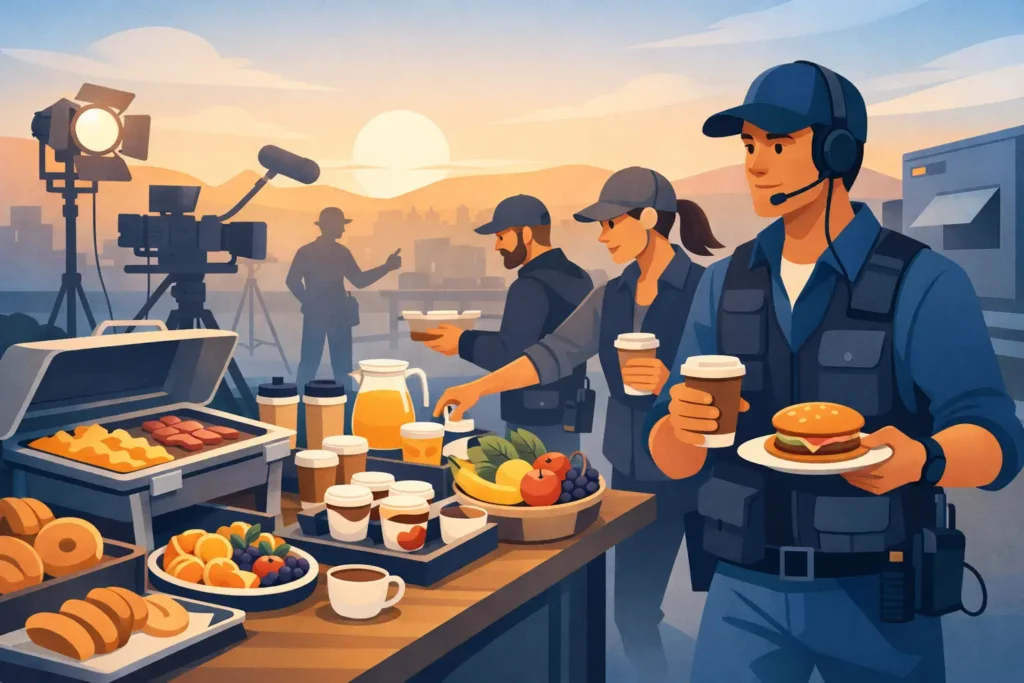
A 5.30am call time leaves no room for a late breakfast, lukewarm coffee or a queue that holds up the first setup. Call time breakfast catering is part of the production plan, not an afterthought: it gives cast, crew and guests the energy to arrive ready, settle quickly and get to work. From a studio floor in London to a remote unit base or a backstage holding area, the right service keeps an early start feeling properly looked after.
Why Early Call Times Need Proper Catering
The first meal of the day sets the pace. A crew carrying cases, rigging lights or preparing talent needs more than a packet of biscuits on a folding table. They need food that is satisfying, easy to access and timed around the reality of the schedule.
For production teams, breakfast is also a practical welfare decision. A well-fed crew is more comfortable, focused and less likely to disappear in search of coffee just as the day needs to begin. On a long shooting day, giving people a decent start is one of the simplest ways to show that their time and effort matter.
That does not always mean a huge hot buffet. The best approach depends on the call sheet, the location, available power, access restrictions and how long people have before work begins. A compact grab-and-go station can be right for a fast-moving commercial shoot. A hot breakfast service may be the better choice for a large unit arriving in waves or a corporate team gathering before a full-day event.
Call Time Breakfast Catering Built Around the Schedule
Punctuality is the minimum. Good call time breakfast catering also accounts for what happens around delivery: security sign-in, parking, goods lifts, a long walk from the loading bay, restricted access to a studio, or a location where the catering area has to be built from scratch.
That planning starts before the day itself. Confirm the first crew call, talent arrival, department stagger, service window and the point at which breakfast must be cleared or moved. If camera, art and production arrive at different times, food should not appear once and vanish before the final group arrives. Staggered replenishment keeps the station fresh and avoids waste.
A reliable caterer will ask practical questions early. Is there a kitchen, an urn point or usable power? Is water available? Will food be served in a green room, unit base, office, backstage corridor or outside under cover? Is there room for a mobile kitchen, or does everything need to arrive ready to serve? These details shape the menu, equipment and staffing plan.
At D’Lights Event Catering, early calls are handled with the same production awareness as a hot lunch service. The aim is simple: arrive prepared, serve efficiently and make the food operation one less thing for the production team to chase.
What Makes a Breakfast Menu Work on Set
Breakfast needs range, but it also needs purpose. Heavy food can be welcome on a cold exterior location, while a lighter spread may suit a summer studio day or a client breakfast before a presentation. The strongest menus balance familiar comforts with fresh options that travel and hold well.
A well-planned spread can include warm breakfast rolls with quality fillings, scrambled eggs, vegetarian and plant-based alternatives, pastries, fresh fruit, yoghurt pots, overnight oats and granola. Freshly brewed tea and coffee are essential, with chilled juices and water available from the start. Creative and flavoursome dishes from around the globe can add variety too, particularly for longer bookings or teams tired of the same breakfast roll every morning.
The key is not to put every possible item on the table. Too much choice can slow service, create unnecessary waste and complicate a tight setup. A focused menu with enough options for different appetites usually performs better than an oversized buffet. For a small crew, individually packed breakfast pots and hot rolls may be ideal. For a 150-person studio call, a staffed hot counter and separate grab-and-go area can keep traffic moving.
Hot Food, Cold Options and Holding Time
Hot food has obvious appeal at dawn, especially in colder months. But it must be delivered, held and served safely. Eggs, bacon, sausages and breakfast bakes need the right hot-holding equipment and regular checks, not a hopeful arrangement of foil trays.
Cold options are equally valuable. Fruit, yoghurt, pastries and oats allow people to eat quickly between tasks or take food to their department. They also protect the service if the schedule changes suddenly, which it often does. A mix of hot and cold gives the production flexibility without compromising quality.
Dietary Requirements Are Part of the Main Menu
A dietary list should never be treated as a late extra. Vegan, vegetarian, gluten-free, dairy-free, halal and allergen-aware options need to be planned from the beginning, clearly labelled and positioned so people can choose with confidence.
For busy crews, clarity matters as much as variety. Labels should state what each dish contains, and service staff should be able to answer straightforward questions about ingredients and allergens. Cross-contamination controls, separate utensils and sensible layout are especially important when space is limited.
Ask for dietary requirements when the call sheet is taking shape, then revisit the numbers close to the booking. Cast changes, agency staff and last-minute crew additions are common. It is sensible to allow a small contingency, but the amount should reflect the size of the job and the likelihood of movement. A production with 20 people has different needs from a 300-person live event.
Make the Breakfast Station Easy to Use
The layout is where a good menu either works or creates a bottleneck. Put drinks away from the main food line so the person waiting for an oat latte is not delaying someone grabbing a breakfast roll. Place quick, portable items at the front or on a separate table. Keep cutlery, napkins and condiments within reach, rather than making everyone cross the room for them.
For location work, the station must also respect the space. Cables, cases, wet weather, uneven ground and narrow access routes all need consideration. A neat, contained setup looks professional and prevents the catering area from becoming another obstacle for a working crew.
If the schedule is particularly tight, individual breakfast bags can be effective. They are useful for drivers, runners, early riggers and teams travelling between locations. The trade-off is packaging and reduced choice, so they work best alongside a central drinks point and with waste-conscious packaging selected for the site.
Service Levels Should Match the Job
Not every breakfast requires a full front-of-house team, but some absolutely do. A simple delivered spread may suit a small office meeting with a clear service area. A high-pressure shoot, client-facing launch or backstage operation often benefits from staff who can replenish food, manage hot equipment, maintain cleanliness and respond to requests without pulling the coordinator away from their real work.
Mobile kitchens and portable hot boxes can make a major difference where there is no usable catering facility. They allow hot food to reach studios, car parks, remote locations and temporary production bases without relying on a venue kitchen that may be unavailable or unsuitable.
Budget matters, and it should be discussed honestly. The cheapest option can become expensive if it arrives late, does not cater for dietary needs or forces production staff to spend the morning fixing service issues. A tailored package lets you choose where to invest: stronger coffee service, more hot food, extra staffing, extended availability or portable breakfast for dispersed teams.
A Better Brief for Your Breakfast Caterer
The clearest briefs produce the calmest mornings. Share the date, address, access instructions, crew numbers, first and final call times, dietary requirements and whether food is for crew only or includes clients, talent and guests. Mention parking, security, stairs, lifts, power, water and any site rules around generators, gas or waste.
It also helps to describe the rhythm of the morning. Will everyone arrive at once? Is there a director and agency breakfast before the main crew? Does talent need a quieter, separate service? Are people expected to eat on the move? These small details help a caterer design a service that feels effortless rather than improvised.
A strong breakfast service is felt in the atmosphere: the coffee is ready, the food is fresh, dietary needs are covered and nobody is asking where the caterer is. For your next early call, book the food plan with the same care as transport and equipment, then let your crew start the day properly fed and ready to deliver.