
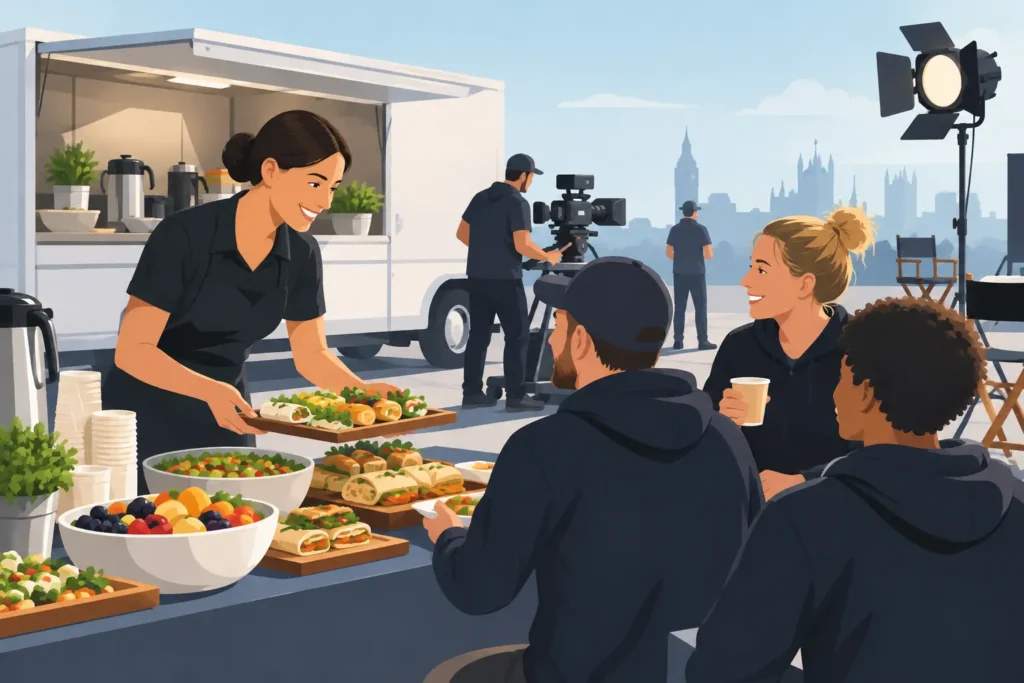
A TV and film catering company UK production teams can depend on does far more than put food on a table. It keeps people alert through a cold dawn call, gives a night unit a proper hot meal when local options are shut, and makes sure a dietary requirement never becomes a problem halfway through service. When the schedule is tight, catering has to move at the speed of the production.
For line producers, production coordinators and location managers, crew food is a practical part of keeping the day on track. A late breakfast, unclear allergen information or a missing hot box can create frustration quickly. Good production catering brings calm to a busy set, whether the unit is filming in a central London studio, an empty warehouse, a private home or a remote location with limited facilities.
What TV and Film Catering Must Deliver
Screen crews work unusual hours, and every production works differently. One day may begin with breakfast before first light and run into an evening turnaround. Another may require staggered lunch for cast, camera, art department and drivers who cannot all leave their posts at once. The food service needs to fit the call sheet, not ask the crew to fit around it.
That means proper planning before the first meal is served. Guest numbers, service windows, unit base access, parking, power, water, welfare facilities and the distance from kitchen to set all affect the right catering set-up. A studio job may suit a staffed buffet and craft table, while a location shoot might need portable hot boxes delivered directly to separate units. Neither approach is automatically better. The right choice depends on the schedule, space and how quickly people need to eat.
Freshly prepared food matters too. A crew facing a long day deserves more than a repetitive tray of sandwiches. Varied, satisfying dishes help sustain energy and morale, particularly when people are working physical roles, standing for hours or travelling between locations. Creative and flavoursome dishes from around the globe give teams choice without slowing service down.
A TV and Film Catering Company UK Productions Need
The strongest catering partners understand that food is only one part of the job. They arrive prepared, communicate clearly and adapt when the day changes. In production, it often does.
A scene can overrun. A weather hold can push lunch back. Additional background artists may appear on the final call sheet. Talent may need a private service area or an early meal before moving to hair and make-up. An experienced team plans with contingencies in mind, keeps the production contact informed and finds a practical route forward rather than adding another issue to solve.
Timing is particularly important. Meals should be ready at the agreed service point, hot where they need to be hot, clearly labelled and presented so that a busy crew can move through efficiently. For spread-out locations, a catering team may need to coordinate multiple drops or staggered replenishment. The goal is simple: nobody should be left wondering when they will eat, what is available or whether it is safe for them to do so.
Menus that work for real crews
Production menus need range, but they also need common sense. A generous hot main with well-chosen sides, fresh salads and a dessert or fruit option can work brilliantly for a large crew. For smaller teams or fast-moving units, individually packed hot meals may be more suitable. Grab-and-go stations, breakfast baps, pastries, fruit, snacks and good coffee keep departments going between formal meal breaks.
Dietary planning should be built in from the start, not handled as an afterthought. Vegan, vegetarian, halal, gluten-free and dairy-free meals need the same care, flavour and presentation as every other dish. Allergens must be managed responsibly, with clear labelling and a service team that knows exactly what has been prepared. It is worth collecting dietary requirements early, but a capable caterer should also be ready for last-minute changes.
There is a balance to strike. An overly complicated menu can make service slower and increase waste, while a limited menu can leave people underfed or disappointed. The best menus are generous, recognisable and interesting, with enough flexibility to reflect the crew, the location and the budget.
Location Logistics Are Part of the Service
Catering in a venue with a fitted kitchen is one thing. Catering from a unit base in a field, a narrow London street or a listed building with strict access rules is another. A production-focused caterer assesses the conditions rather than assuming a standard set-up will work everywhere.
Mobile kitchens can provide hot food where permanent facilities are unavailable. Portable hot boxes are useful when departments are working in separate areas or when a set cannot pause for a full-service lunch. Craft catering can be replenished throughout the day so cast and crew have drinks, snacks and lighter options close by. Each format has a place, and a well-planned combination is often the most effective answer.
Health and safety also needs careful attention. Food must be transported and held correctly, service areas kept clean, and equipment positioned safely around cables, vehicles and pedestrian routes. Waste-conscious packaging helps reduce the impact of location catering, but it must still protect food quality and work for people eating on the move. These details are not glamorous, but they are what make a demanding service run well.
Scale up without losing control
A two-day commercial and a major drama production may have very different needs, yet both require the same level of attention. Smaller crews can benefit from flexible menus and direct delivery. Larger productions may need a fully staffed catering operation, several service points and detailed coordination with the production office.
The key is not simply having the capacity to cater for more people. It is having the systems to do it without queues becoming unmanageable, dietary meals going astray or standards slipping during a busy service. Accurate numbers, sensible portion planning and regular communication with the production team make a visible difference.
At D’Lights Event Catering, every package is planned around the realities of the production: crew size, location, call times, menu preferences, access and budget. That hands-on approach makes it possible to support intimate shoots, backstage teams and large-scale services with the same focus on fresh food and dependable delivery.
Questions to Settle Before You Book
A productive catering conversation begins with the schedule. Share the call time, likely meal break, wrap time and whether timings are fixed or likely to move. Confirm where the caterer can park, unload, prepare and serve, along with any security or access restrictions. If the location is remote, explain what facilities are available and what needs to be brought in.
It also helps to be clear about the crew mix. Will everyone eat at once? Are there separate cast, client or VIP requirements? Does the team need breakfast, lunch, dinner, craft service and late-night food, or only selected meals? The more accurately this is mapped out, the better the catering team can recommend a service that feels generous without inflating the budget.
Finally, ask how dietary requirements, allergen labelling, late additions and schedule changes will be handled. The answer should be practical and confident. Production days rarely run exactly as planned, so you need a caterer that can respond quickly while keeping food quality and safety in hand.
When the next call sheet lands, treat catering as part of your production plan from day one. Give your crew something worth looking forward to, and give your team one less moving part to chase when the cameras are ready to roll.