
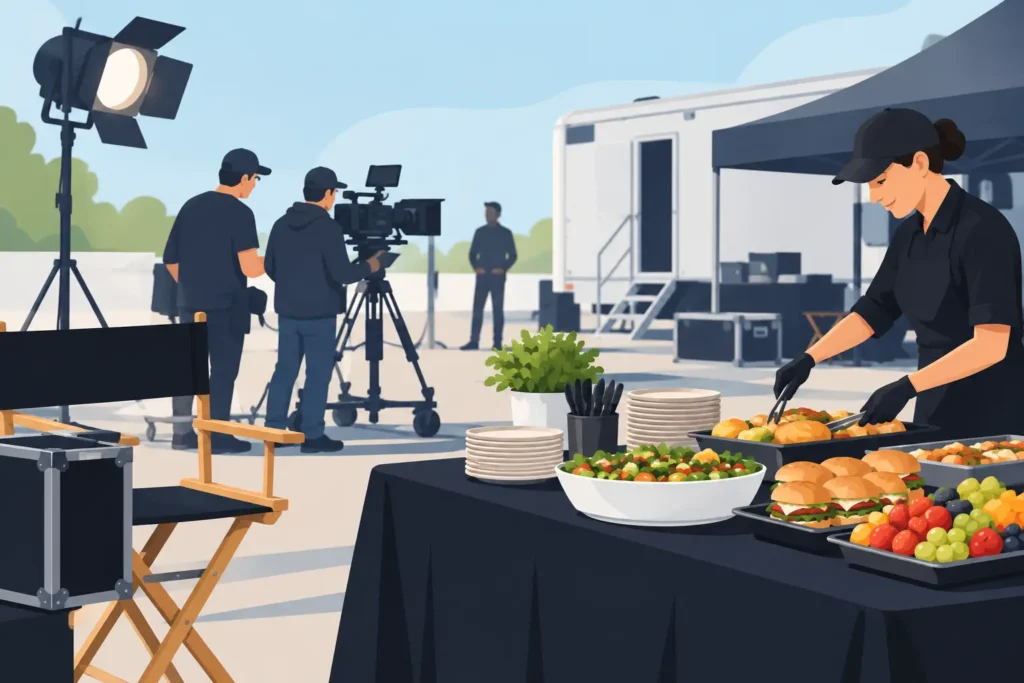
A search for film set catering near me is rarely just about finding someone who can deliver lunch. On a working set, food has to arrive at the right gate, at the right call time, in the right format, for the right number of people. It must keep crew moving, talent comfortable and the production office free to focus on the day ahead.
For London shoots, the best choice is a caterer that understands production pressure as well as great food. Whether you are filming in a studio, working from a unit base, moving through several London locations or shooting overnight, the details behind every meal matter.
Film set catering near me: proximity is only the start
A local caterer can be useful, particularly when access windows are tight or a last-minute schedule change calls for a fast response. But the nearest supplier is not automatically the right production partner. A brilliant café may make excellent food and still struggle with a 5.30am crew breakfast, restricted vehicle access, staggered lunch waves or a sudden increase in headcount.
Look for a catering team that can confidently plan for your location rather than simply drop off trays. They should ask where the unit base is, what parking and loading arrangements apply, whether there are stairs or security checks, and how long food needs to remain hot before service. On some shoots, a mobile kitchen makes sense. On others, portable hot boxes or a well-stocked grab-and-go station will keep the day running more efficiently.
London adds its own considerations. Congestion, limited loading bays, controlled parking zones and venue rules can all affect delivery timing. A production-aware caterer factors these into the plan early, rather than treating them as a problem when breakfast is already due.
Start with the shooting schedule, not the menu
The menu matters, but it should follow the schedule. Before choosing dishes, establish the practical shape of the day: crew call, talent call, first shot, likely meal break, company moves, wrap time and any night-work requirements. A caterer can then recommend a service style that suits the pace of production.
For a straightforward studio day, a hot breakfast followed by a properly served lunch may be ideal. A location shoot with a compressed turnaround may need breakfast baps, all-day tea and coffee, individual hot meal boxes and snacks that can be picked up between takes. For a night shoot, a substantial hot meal at the right point in the call sheet is often more valuable than trying to repeat a daytime lunch pattern.
Staggered service is especially useful on busy sets. Camera, lighting, art department, production, drivers and supporting artists do not always break at the same time. Catering that can hold quality across a service window helps avoid queues, cold plates and the familiar scramble when everyone is called back to set.
A good caterer will also be realistic about trade-offs. A plated dining experience creates a polished feel for a smaller cast or client-facing day, but it takes more space, staffing and time. Generous buffet service works well for many crew meals, while hot boxes offer control where breaks are short or locations are spread out. The right option depends on the day, not a fixed formula.
Feed the crew well enough to finish strong
Crew catering should be filling, fresh and genuinely enjoyable. A meal that looks good but leaves people hungry will quickly be noticed. Equally, food that is too heavy can slow everyone down during a long afternoon on set.
The strongest menus balance comfort with variety. Think warming curries, slow-cooked mains, vibrant salads, grilled options, rice dishes, pasta bakes, fresh breads and colourful sides. Creative and flavoursome dishes from around the globe give crews choice without making service complicated. A dependable vegetarian or vegan main should feel like a proper meal, not an afterthought placed beside the meat option.
Breakfast deserves the same attention. Early calls call for hot options, pastries, fruit, porridge, breakfast rolls and good coffee, with enough flexibility for people arriving at different times. Add nourishing snacks, cold drinks and refuel points through the day, particularly in hot studios, outdoor summer shoots or demanding overnight calls.
Portion planning is part of crew welfare too. A professional caterer will build quantities around your confirmed numbers, the nature of the work and expected appetite, while keeping contingency in mind for runners, visitors, late additions and a crew that has been carrying kit since dawn.
Dietary requirements need a clear system
Every production has dietary needs, and they should be managed with calm precision. Vegetarian, vegan, halal, gluten-free, dairy-free and allergen-aware requirements must be collected early, checked before service and clearly communicated on the day.
The key is not simply offering alternatives. It is knowing who needs what, labelling dishes properly and preventing confusion at the serving point. Where severe allergies are involved, the catering team should discuss the level of control required, the preparation environment and any cross-contact risks. No caterer should make promises they cannot safely keep.
Share dietary information as soon as you have it, then update it with final crew numbers before the agreed cut-off. This gives the kitchen time to prepare food with care rather than rushing a substitute at the last moment. It also means every member of the crew can eat confidently, without needing to chase production for an answer during a break.
Ask how the caterer handles the location
When comparing film catering companies, ask practical questions that reveal how they operate. Can they cater from a mobile kitchen if there is no usable indoor space? Do they provide tables, hot-holding equipment, serving staff, disposables and waste collection where needed? How will they manage food temperature, handwashing and weather exposure on an outdoor set?
Health and safety is not background paperwork. It shapes how catering works in a live production environment. Safe hot holding, clean service areas, allergen information and sensible waste management protect your crew and keep the location presentable. Waste-conscious packaging is particularly valuable when individual meals are necessary, helping production reduce unnecessary disposable items without compromising speed.
Also consider the working relationship with the location team. Caterers may need to coordinate with security, facilities, studio management or the location owner. A team that arrives prepared, respects the site and leaves its catering area tidy is one less operational concern for the location manager.
Build flexibility into the booking
Film days change. A scene runs over, rain stops play, talent timing shifts or a company move becomes more complicated than expected. Catering cannot remove every disruption, but it can make the day easier to recover.
Discuss likely variables when booking: additional meals, revised service times, late wraps, weekend work and the possibility of a second unit. Be clear about notice periods and costs, but choose a partner willing to solve problems rather than point to the original order. This is where experience earns its value.
D’Lights Event Catering plans each production around the crew size, location, menu requirements, schedule and budget, from hot on-set meals and craft catering to mobile-kitchen service. That hands-on planning allows the food service to support the shoot rather than becoming another department that needs managing.
Get the brief right before you request a quote
A useful catering quote needs more than a headcount. Include the shoot dates, full address or area, access details, call times, proposed meal times, number of cast and crew, dietary breakdown, preferred service style and any equipment or staffing requirements. If the location is unusual, say so early. A woodland base, rooftop, private home, stadium or central-London street location each needs a different logistical approach.
It is also worth stating your budget range. That does not limit creativity. It helps the caterer shape a realistic package, perhaps prioritising a generous hot lunch and all-day refreshments over extras that will not improve the crew’s experience. Clear information leads to a clearer plan and fewer surprises on the invoice.
The best film catering feels almost invisible once the day begins: hot food appears when it should, dietary meals are ready, coffee is flowing and the service area works around the set. Choose a team that asks the operational questions early, and your cast and crew will feel the difference at every call time.