
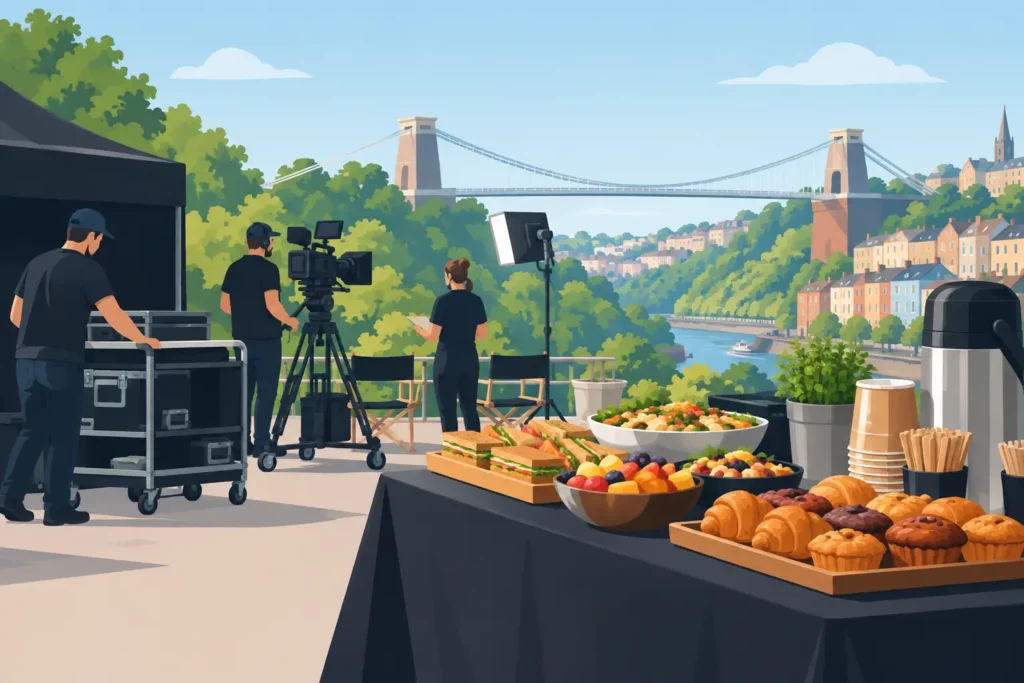
A 5.30am call time on a Bristol location leaves little room for catering that is merely adequate. Crew need proper hot food before a long day, cast may need individual dietary provision, and service has to work around camera set-ups, road access and a schedule that can change without warning. When you need a TV and film catering-location catering company in Bristol, the standard is simple: great food must arrive on time and keep the production moving.
For location managers, line producers and production coordinators, catering is crew welfare and operational planning in one. A late breakfast, an understocked craft table or a lunch queue that runs over can put pressure on every department. The right team makes food one less thing to chase.
What Production Catering Must Deliver on Bristol Locations
Bristol gives productions a huge range of settings, from harbourside spaces and city-centre streets to converted warehouses, rural estates and studio facilities. That variety is a creative advantage, but it changes the catering brief every time. Parking may be limited, access may be through a narrow gate, there may be no working kitchen, or the unit base may be a short shuttle ride from the set.
Location catering needs to be built around those realities. It is not simply a case of dropping off trays of food. It means confirming where the catering vehicle can stand, how meals will stay hot, where crew can safely eat, what equipment is needed and how waste will be managed at the end of service.
Timing matters just as much as the menu. A production may need breakfast ready before first transport arrives, rolling service for departments on staggered breaks, or boxed meals for a small team working away from the main unit. A dependable caterer works from the call sheet, communicates clearly with production and adjusts service to the day rather than expecting the day to fit a standard package.
TV and Film Catering: Bristol Location Catering That Holds the Schedule
The best food on a shoot is food people can actually get to, eat comfortably and return from on time. That sounds obvious, but it requires proper planning. Crew numbers can shift, a scene can overrun, weather can move people indoors, and an additional night shoot can be added with little notice.
A capable location catering team plans for these moving parts. Hot meals should be served at the agreed time, with enough choice to keep a mixed crew happy without creating unnecessary delays. Portable hot boxes can support units working at distance. Mobile kitchens can bring cooking capability to locations with limited facilities. For a demanding day, craft catering and grab-and-go options keep energy up between formal meal breaks.
Hot food that feels worth the break
A proper crew lunch should do more than fill a gap. It should give people a chance to recharge after hours of physical, technical or creative work. Freshly prepared global dishes bring variety to a long shoot, whether the brief calls for warming curries, generous pasta dishes, colourful salads, slow-cooked mains or familiar comfort food.
The choice depends on the crew, the season and the pace of the day. A cold winter exterior shoot often calls for hearty, warming food and hot drinks close at hand. On a summer commercial, lighter dishes, chilled refreshments and quick service may be the better fit. There is no one-size-fits-all production menu, which is why menu guidance before the shoot is valuable.
Craft service that supports the whole day
Craft catering is often where a catering team proves its value. It needs to stay appealing from early call through wrap, not become a table of tired biscuits by mid-morning. Quality coffee, fruit, snacks, sweet treats, sandwiches and sensible savoury options give cast and crew something they can pick up quickly between takes.
It also needs attention. Stock levels, presentation and dietary labelling matter, especially on larger productions where people arrive at different times. A well-run craft station reduces the constant question of where the next coffee or snack is coming from, leaving department heads to focus on the work in front of them.
Plan Catering Before the First Vehicle Arrives
A smooth catering day starts well before food preparation. Production teams should share the call sheet, estimated headcount, location details, access restrictions and meal timings as early as possible. If there are split units, early calls, distant set-ups or expected overtime, say so at the outset. These details shape staffing, delivery times, equipment and contingency planning.
Dietary requirements deserve the same level of care. Vegan, vegetarian, halal, gluten-free and allergy-aware options should be planned into the menu, not treated as a last-minute substitute. Clear labelling protects guests and crew, while varied choices ensure nobody is left with an afterthought plate when everyone else is enjoying the main service.
Budget is part of the conversation too. A smaller documentary crew may need a focused, flexible package with hot breakfast, lunch and refreshments. A major drama production may require multiple meal periods, extensive craft service, kitchen equipment and catering staff on site all day. Both need thoughtful food and reliable logistics. The difference is in the scale of support.
Food Service for Sets, Unit Bases and Remote Locations
Every location has its own pressure points. A city-centre shoot may require carefully timed loading and discreet set-up. A rural location may need a self-contained mobile kitchen, water planning and power considerations. A studio job might have more space but tighter timings between scenes and departments.
The practical details are where production experience counts. Food must be transported safely, kept at the correct temperature and served in a clean, organised space. The catering area should be welcoming without obstructing the unit. Packaging should be chosen with both pace and waste in mind, particularly where crew need meals they can carry back to a remote position.
Health and safety cannot sit in the background. Good catering practice includes hygienic preparation, allergen awareness, safe food handling and a sensible plan for clearing down. These are not glamorous parts of the job, but they protect the people on set and help production run professionally.
Choose a Catering Partner That Can Adapt
When comparing Bristol location catering companies, look beyond a sample menu. Ask how they handle changed call times, whether they can cater for staggered breaks, how they manage dietary requirements, and what they need from the location to deliver safely. Find out whether they can provide hot food at remote sites, support a late finish and respond if numbers rise.
The answers reveal whether a caterer understands the rhythm of production. Beautiful food photography is useful, but it will not help if lunch arrives after the turnaround or the team cannot accommodate a unit moving location. Experience under pressure matters.
D’Lights Event Catering brings that production-aware approach to every brief, pairing creative, flavoursome dishes from around the globe with practical support around schedules, staffing, equipment and service. From a compact crew meal to a major production day, the aim is always the same: feed people well and keep the day on track.
For your next Bristol shoot, bring the call sheet, crew numbers, location details and dietary list to the first conversation. With the right planning behind it, catering becomes a welcome pause in a demanding day, not another production problem waiting to happen.