
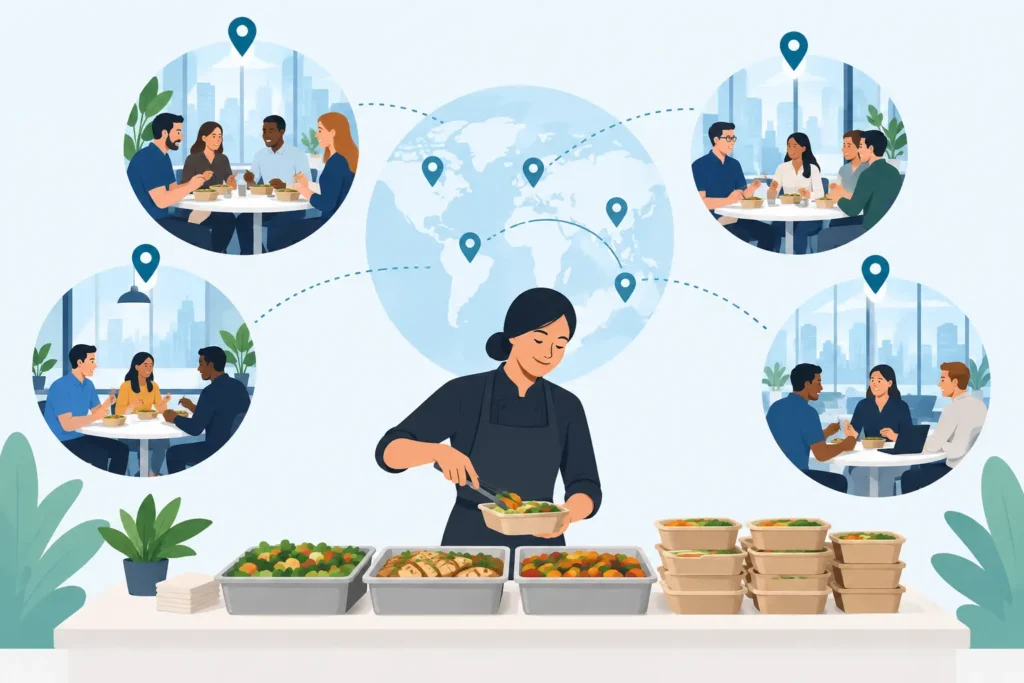
A unit base breakfast, a studio lunch service, hot boxes sent to a night location and a backstage supper can all be part of the same day. That is where multi location catering earns its place. It is not simply sending the same menu to several addresses. It is a planned food operation that keeps cast, crew, guests and clients properly fed without interrupting the schedule.
For London productions, live events and brand activations, people are rarely gathered in one convenient room at one convenient time. Teams split between locations. Call times move. Talent may need food before the main crew breaks. A product launch may have guests arriving while the build crew still needs a hot meal behind the scenes. The right catering partner makes those moving parts feel handled, with fresh, flavoursome food arriving exactly where it is needed.
Why multi location catering needs production thinking
A single-venue event gives a caterer one service point, one kitchen plan and a relatively clear guest flow. Multi-site work changes the equation. Each location can have different access rules, parking restrictions, power availability, lift access, security procedures and service windows. A menu that works brilliantly in a staffed dining area may not be the best choice for a wet exterior location, a remote unit base or a fast turnaround backstage area.
Timing is equally critical. If a crew is called for a 6am set-up, breakfast cannot arrive at 6.15. If a director needs a working lunch between takes, the food must be ready when the schedule allows, not when a standard lunch break would usually happen. Good planning accounts for travel time, loading, venue access, traffic and the fact that a production day does not always run to plan.
This is why the best service begins before the first tray is loaded. A catering team should ask practical questions about call sheets, addresses, headcounts, dietary requirements, delivery slots, service style and who has authority to approve changes on the day. Those details protect the food, the budget and the running order.
Build the menu around how each team will eat
Creative global cuisine brings energy to a long day, but food also has a job to do. It needs to be satisfying, easy to serve and appropriate for the setting. A plated dinner for VIP guests, for example, requires a different approach from individually packed hot meals for a camera crew working across London.
For active locations, hot boxes can provide a proper meal when there is no time or space for a full set-up. Freshly prepared curries, slow-cooked mains, warming vegetarian dishes and balanced sides travel well when packed correctly and served promptly. For roaming teams or short breaks, grab-and-go stations can keep people fuelled with breakfast pots, sandwiches, wraps, salads, fruit and sweet treats without creating a queue that costs valuable minutes.
Backstage and green-room catering often benefits from a mix of substantial dishes and lighter choices. Artists, touring crew and production teams may eat at completely different times, so replenishment matters as much as the opening display. Meanwhile, a corporate event or launch may call for food that looks as sharp as the guest list: colourful canapés, polished bowl food, generous grazing options or a tailored buffet that encourages conversation.
There is no single perfect menu for multi-location work. The right choice depends on service time, travel distance, available equipment, weather, guest expectations and whether people will be sitting down or eating with one hand free. A capable caterer will guide the menu rather than force every location into the same package.
Dietary requirements should travel with the plan
Dietary catering cannot be an afterthought when meals are being sent to several sites. Every location needs a clear, accurate record of vegan, vegetarian, halal, gluten-free and allergy-led requirements, alongside the correct labelling and handling procedures. A gluten-free meal that is delivered to the wrong unit, or a vegan option that runs out before a late call, is not a small detail for the person affected.
The strongest plans confirm dietary numbers early, allow for sensible contingencies and keep special meals clearly separated in transit and at service. It also helps to make inclusive dishes genuinely appealing. Nobody wants the only plant-based option to feel like an obligation while everyone else enjoys the main spread.
The logistics behind reliable multi location catering
Food quality is only one part of the job. Reliable multi location catering depends on the operational work guests often never see: route planning, temperature control, packaging, equipment checks, staffing rotas and clear communication between the kitchen, drivers and on-site contacts.
A mobile kitchen may be the best answer for a large or remote production where hot food must be cooked and served on location. For smaller satellite teams, timed delivery of portable hot boxes can be more cost-effective and less disruptive. For a venue with limited kitchen access, a prepared buffet with the right hot-holding equipment may offer the best balance of choice and speed.
The trade-off is simple. More locations and more service formats usually require more coordination, vehicles, equipment and staff. That does not mean the answer is always a bigger budget. It means the plan needs to be honest about priorities. If the schedule is tight, simplify the menu rather than risk a complicated service that arrives late. If guest experience is the priority, invest in the staffing and presentation needed to deliver it properly.
Four details that prevent avoidable disruption
When several locations are involved, these four points make a measurable difference:
- A named contact at every site who can confirm access, direct drivers and report changes quickly.
- A realistic delivery window that includes loading, security checks and the walk from vehicle to service point.
- A final headcount and dietary list, with an agreed contingency for late additions or overtime.
- A service plan stating whether food is drop-off, staffed, self-service, plated, replenished or collected after use.
These are not glamorous details, but they are the difference between a calm food break and a production coordinator chasing missing lunches during a live schedule.
Keep service flexible when the schedule changes
Productions rarely move in a straight line. A scene overruns, weather changes the filming order, a speaker is delayed or a venue asks for a service area to be moved at short notice. Catering needs enough structure to be dependable and enough flexibility to respond without panic.
That may mean staggered service rather than one large lunch rush. It may mean holding back part of the food for a second unit, sending additional coffee and snacks to a late-working team, or adjusting the set-up when a loading bay becomes unavailable. Clear updates are essential. The catering team needs to know what has changed, who is affected and when the revised food service must happen.
D’Lights Event Catering approaches this work with the same focus whether it is feeding a small location crew or supporting a major production: understand the pressure points, prepare thoroughly and stay hands-on throughout service. That is particularly valuable when organisers are already managing talent, suppliers, venue teams and a changing production schedule.
Choose a partner that can support the whole event
Food may be the centre of the brief, but it does not sit apart from the event. The layout of a catering station affects guest flow. The timing of coffee service affects a conference agenda. The look of a buffet can support a launch theme, while the right location decoration can make a temporary production space feel welcoming and considered.
Ask how a caterer manages health and safety, food temperatures, allergen information, waste-conscious packaging and end-of-service clear-down. Ask what happens if access changes or service must be staggered. Most importantly, ask whether they are comfortable working around a live schedule rather than expecting the schedule to work around them.
A well-fed team works better, and guests remember how an event made them feel. Give every location a clear plan, give every dietary need proper attention and give your catering team the information to act quickly. Then even the busiest day can make room for a hot, generous meal served at exactly the right moment.