
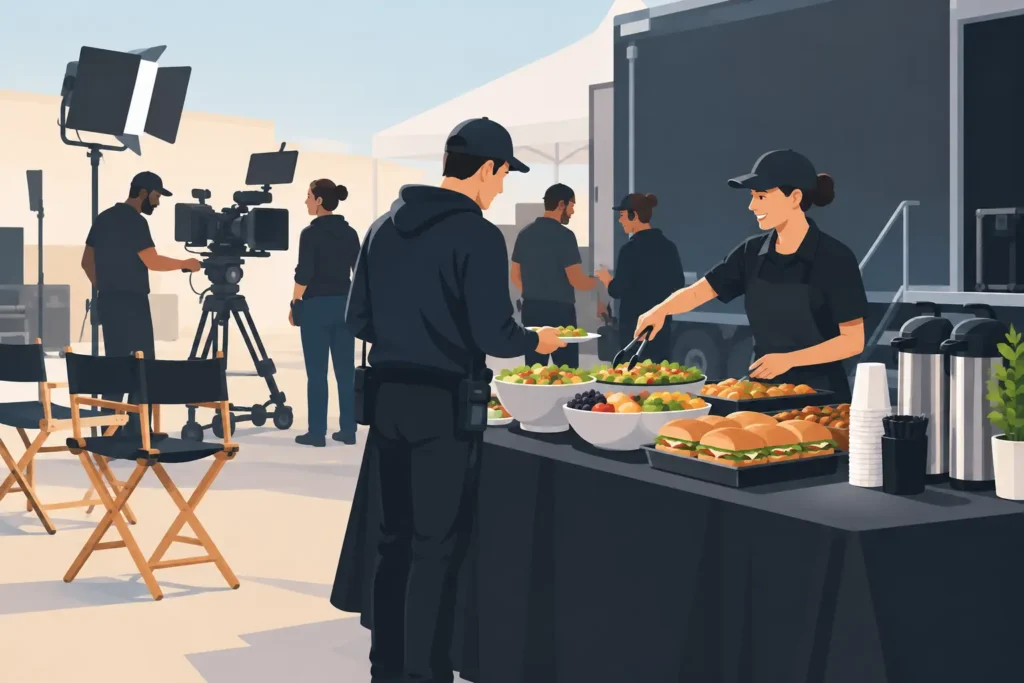
A 6am call time, a wet location, a crew working through a complicated reset: this is where HETV and film catering for film and TV productions proves its value. Food cannot be an afterthought when people are carrying kit, managing talent, turning around scenes and working long hours. It needs to arrive when promised, stay hot, meet every dietary need and give people a proper moment to refuel.
For production teams, great catering is part of keeping the day moving. It supports crew welfare, helps departments stay focused and gives cast, clients and visitors confidence that the production is being handled professionally. The right catering partner brings more than creative and flavoursome dishes from around the globe. They bring planning, flexibility and the calm capability to deal with a changing schedule.
HETV and Film Catering That Works to the Call Sheet
High-end television and film sets rarely run to a standard lunchtime. A unit may be shooting at a studio one day and on a remote London location the next. Meal breaks can move, night shoots need a different rhythm, and a delayed scene can turn a carefully planned service into an immediate operational challenge.
That is why production catering starts with the call sheet, not simply a headcount. Before menus are agreed, a caterer needs to understand where the crew will be based, when departments arrive, whether there is space for a mobile kitchen and how service can work around filming. A 60-person commercial shoot in a central London studio has different requirements from a 250-person drama unit working across several locations.
The best approach is tailored to the production. That may mean breakfast waiting for an early unit, staggered lunches for departments that cannot all break at once, and a late hot meal for a crew wrapping after dark. It can also mean portable hot boxes for people positioned away from base, or a grab-and-go station that keeps essential teams fed without holding up the schedule.
Proper Hot Meals Keep Crews Going
A packet of crisps and a tired sandwich are not enough for a demanding shoot day. A well-fed crew works with more energy, better concentration and a stronger sense that their efforts are valued. That matters on every production, but particularly during physically demanding location work, overnight filming and long technical set-ups.
Freshly prepared hot meals give the day a lift. Think comforting curries with fragrant rice, hearty pasta dishes, slow-cooked mains, colourful salads, warming soups and generous sides that feel like a genuine meal rather than a quick stopgap. Menus can take inspiration from global cuisines while staying practical for service, transport and the pace of the set.
Choice is just as important as quality. Some crews want a familiar, filling favourite after a long morning; others appreciate lighter dishes that keep them comfortable on camera or during physical work. A good caterer builds range into the menu without making service slow or complicated. The aim is simple: satisfying food that looks appetising, travels well and is ready at the exact point the crew needs it.
Breakfast, craft and late-night service all matter
Film and TV catering is not only about lunch. A strong breakfast service can set the tone for the whole day, particularly when departments arrive before first light. Fresh pastries, fruit, hot breakfast options, quality coffee and lighter choices help people get started without fuss.
Craft catering keeps the production supported between main meals. This can include fresh fruit, baked goods, snacks, cold drinks and replenished tea and coffee stations. It needs regular attention rather than a single delivery left in a corner, especially where people are working across large locations or studios.
For night shoots, food should feel just as considered. A hot, flavoursome meal at midnight can make a real difference to morale. Timing is everything, though. Heavy dishes may suit some teams, while others will prefer lighter bowls, salads and warm snacks that provide energy without leaving them sluggish.
Dietary Requirements Need a Clear Plan
On a busy set, dietary requirements cannot be treated as a last-minute adjustment. Allergies, intolerances, religious dietary needs and personal preferences all deserve careful handling. A production coordinator should be able to pass over requirements with confidence and know they will be accounted for properly.
This starts with clear menu planning and continues through preparation, labelling and service. Vegetarian, vegan, gluten-free and dairy-free options should be dishes people genuinely want to eat, not an uninspired alternative served as an apology. Equally, allergen controls and separation procedures need to be built into the kitchen operation, especially when catering for large mixed crews.
There is a balance to strike. Not every production needs an extensive menu at every service, and overcomplicating the offer can create unnecessary waste. The right package depends on crew size, dietary profile, location and budget. What matters is that every person has a safe, satisfying option and that the information is clear when service begins.
Location Logistics Can Make or Break Service
A brilliant menu will not rescue catering that arrives late or cannot be served safely. Film and TV locations bring practical pressures that event venues often do not: limited power, restricted access, difficult parking, weather exposure, long walks from unit base and tight load-in windows.
Experienced film and TV catering accounts for these realities early. Is there room for a mobile kitchen? Can hot food be held safely? Does the location require portable service equipment? Will the caterer need to work around resident access, studio rules or restricted vehicle times? Answers to these questions shape the service as much as the menu does.
For some shoots, a full catering set-up with service staff is the right fit. For others, delivered hot meals and portable hot boxes offer a faster, more practical option. A small documentary unit may need flexible drop-offs across several days, while a large drama production may need a staffed operation that can feed separate teams in waves. There is no one-size-fits-all answer, which is why early coordination saves stress later.
Waste-conscious choices without compromising crew welfare
Production catering also has a role to play in reducing avoidable waste. Sensible portion planning, reusable service equipment where practical and waste-conscious packaging can help keep the operation cleaner and more responsible. Accurate numbers matter here. Ordering too little creates frustration; ordering far too much wastes food and budget.
That does not mean stripping back the offer. It means planning it intelligently, reviewing numbers as schedules change and choosing a service format suited to the location. A well-managed catering operation can be generous to the crew and mindful of its footprint at the same time.
What Production Teams Should Confirm Before Booking
The quickest way to get film and TV catering right is to share the operational detail from the outset. Crew numbers, location addresses, service times, break patterns, access restrictions, dietary lists and budget all influence the final plan. If numbers may change, say so early. Catering teams used to productions can build in a sensible level of flexibility.
It also helps to discuss the atmosphere you want. Some jobs need a quick, practical crew meal with minimal disruption. Others involve clients, agency teams, talent or VIP guests who need a more polished presentation. Both are possible, but they require different staffing, menus and service arrangements.
D’Lights Event Catering works with organisers from inquiry through service, helping shape menus and logistics around the real demands of the day. From studio shoots and commercials to music, backstage and location productions, the focus stays on fresh food, dependable timing and a team that can respond when plans move.
A successful shoot has enough moving parts already. Give your cast and crew food worth looking forward to, then let an experienced catering team manage the call times, dietary detail, hot holding and service. Request a menu and book catering that is ready to work as hard as your production does.