
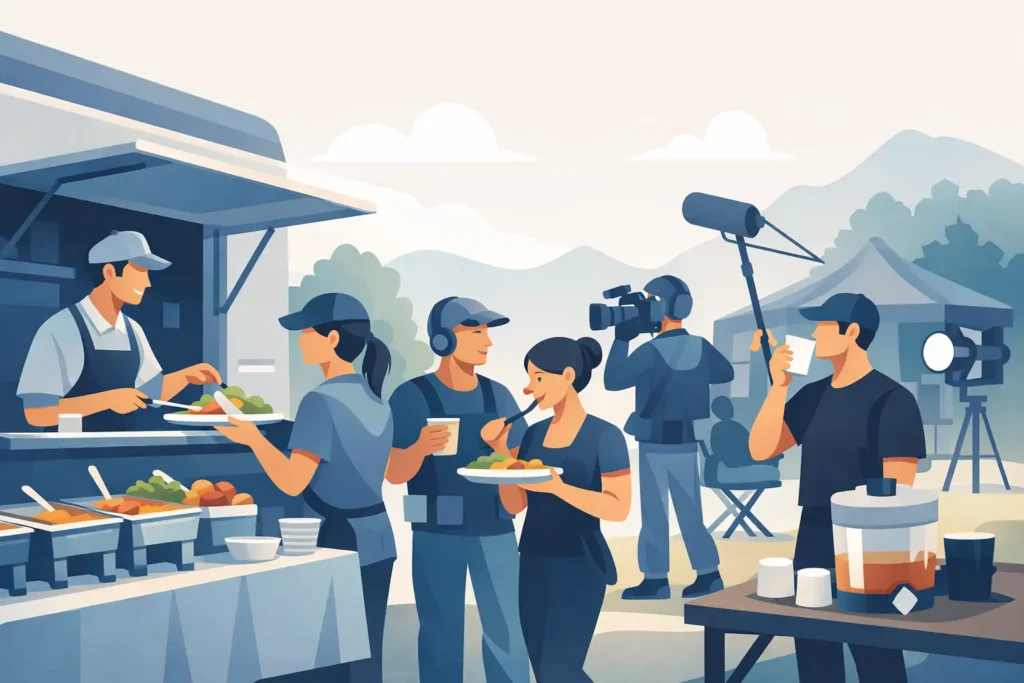
A missed meal break can put far more than lunch behind schedule. When a crew is working through a wet location move, a night shoot or a tightly timed studio day, people need proper food at the right moment. So, what is unit catering? It is the organised food service that looks after a production’s cast, crew and visiting team from its base unit or working location, with meals, drinks and practical hospitality planned around the day’s call sheet.
For film, television, commercials and live productions, unit catering is not simply food delivery. It is a working part of the operation. The caterer has to understand call times, access restrictions, meal windows, changing headcounts, dietary needs and the reality that a delayed scene can turn a scheduled lunch into a rolling service.
What Is Unit Catering on a Production?
Unit catering provides substantial, freshly prepared food and refreshments for everyone working on a production. It is usually set up at the unit base, a studio, a location vehicle park or another agreed crew area. Depending on the shoot, service may come from a mobile kitchen, a temporary catering setup, hot boxes or a combination of these.
The aim is straightforward: keep people well fed, hydrated and ready to do their jobs without creating another problem for the production team to solve. That means food needs to be appetising, filling, safe to serve and available when departments can actually get to it.
A typical unit catering service might cover breakfast before first call, hot lunch, afternoon snacks, tea and coffee, cold drinks and a later meal for overtime or night work. Menus can range from hearty British favourites to creative and flavoursome dishes from around the globe, with plant-based, halal, gluten-free and allergy-aware options planned from the outset.
The scale changes with every brief. A small commercial crew may need a compact hot-box service in a difficult central London location. A feature shoot or television production may require a full mobile kitchen, staffed serving area and staggered meal sittings for a large unit. Both are unit catering. The difference is in the logistics, not the level of care.
Unit Catering Is Different From Craft Catering
The terms are often used together, but they do different jobs. Unit catering focuses on proper meals and scheduled nourishment for the whole production. Craft catering is the ongoing snack and drinks station, usually offering fruit, pastries, biscuits, sweets, tea, coffee, soft drinks and lighter grab-and-go options throughout the day.
A strong production plan often needs both. A hot lunch gives a camera team, runners, artists and crew the energy to get through a demanding day. Craft catering keeps people going between setups, particularly where departments cannot all break at once. On long days, an accessible craft table can also prevent the familiar drop in concentration before the next meal service.
There is a budget balance to consider. Some smaller shoots choose a focused unit meal service with limited refreshments. Larger productions, multi-day shoots and artist-heavy calls often benefit from a more generous craft offer alongside hot meals. The right choice depends on the schedule, crew size, location facilities and the expectations of those on set.
What a Good Unit Caterer Actually Manages
The visible part is the food. Behind it sits careful coordination. A reliable unit caterer will work with the production office, location manager or coordinator to establish where the team will eat, how equipment will reach the site and when service can happen without disrupting filming.
At D’Lights Event Catering, this planning starts with the practical questions: What is first call? Is there water and power on site? Will the crew be split across stages? Is parking limited? Are there stairs, narrow access points or a remote location to consider? These details shape whether a mobile kitchen, delivered hot boxes or a self-contained service station is the sensible solution.
Timing matters as much as the menu
Production schedules rarely stay still. A scene may overrun, weather may stop play, talent may be called earlier than expected or a location move may take longer than planned. Unit catering needs enough structure to keep service punctual and enough flexibility to respond when the day changes.
This can mean holding food safely for a delayed department, serving in waves rather than all at once, or arranging separate provision for cast and crew with different call times. It can also mean preparing an early breakfast for a pre-rig team, followed by a full lunch once the main unit is in place.
Food should never become the reason a team loses time. Clear service timings, labelled dietary meals and a catering lead who communicates calmly with the production team make a real difference when pressure is high.
Dietary requirements are part of the main plan
A vegetarian dish that has already run out, an unlabelled allergen or a single option for a long list of diets is not good enough on a working set. Dietary requirements need to be collected early, checked properly and built into the menu, not treated as an afterthought.
This includes vegan and vegetarian meals, halal provision, gluten-free choices and specific allergen controls. The details matter: separate utensils, accurate labels, sensible placement on the service table and clear communication with anyone collecting a special meal. For productions with artists, children or guests on site, the need for careful handling can be even greater.
Location conditions shape the service
Not every location has a kitchen, a dining room or even reliable shelter. Unit catering may be required in a studio car park, a field, a warehouse, a city-centre street or a venue with strict loading rules. The caterer must bring the right equipment, maintain food temperatures and leave the area clean and presentable.
Waste-conscious packaging is also a practical consideration. Where reusable service ware is suitable, it can improve the dining experience and reduce waste. Where a location calls for portable packaging, it should be sturdy, easy to handle and appropriate for hot food. The best approach depends on the site, the schedule and what is realistic for the crew to manage.
What Should Be Included in a Unit Catering Menu?
There is no fixed menu, because productions do not have fixed needs. A winter night shoot might call for warming curries, slow-cooked dishes, soups and generous hot puddings. A summer location day may suit fresh salads, grilled proteins, colourful grain bowls and chilled fruit alongside a substantial hot option.
The most effective menus give people a genuine choice without making service slow. A main meat or fish dish, a strong plant-based alternative, balanced sides, salads and a dessert or fruit option will work well for many calls. Breakfast may include hot baps, porridge, pastries, fruit and good coffee. For crews moving quickly between departments, individually packed hot meals or grab-and-go breakfast items can be the better fit.
Quality matters because crew welfare matters. People notice when food has been prepared with care, when portions are satisfying and when the last person through the queue receives the same standard as the first. Good catering lifts the mood of a set. Poor catering is remembered for all the wrong reasons.
How to Book Unit Catering With Confidence
When requesting a quote, give the caterer more than a headcount. Share the production dates, postcode, call time, expected meal times, crew and cast numbers, dietary list, parking situation and whether the location has power, water, shelter and waste facilities. If the schedule is likely to move, say so early.
It also helps to explain the nature of the job. A fashion commercial, period drama, music video and corporate filming day may all have the same number of people, yet require very different service styles. A professional caterer will use that context to recommend the right setup rather than forcing every brief into the same package.
Ask how food will be transported and held, whether staff will remain on site, how dietary meals are identified and what happens if meal times change. You are not being difficult by asking these questions. You are protecting the production day.
For London productions, experience with permits, restricted access, busy unit bases and difficult loading conditions is especially valuable. The meal may be the headline, but dependable logistics are what get it onto the table hot.
A well-run unit catering service gives your crew a proper pause in an intense day: hot food, clear choices and one less thing for the production team to chase. Share your schedule early, be honest about the challenges of the location and choose a caterer ready to rise to them.