
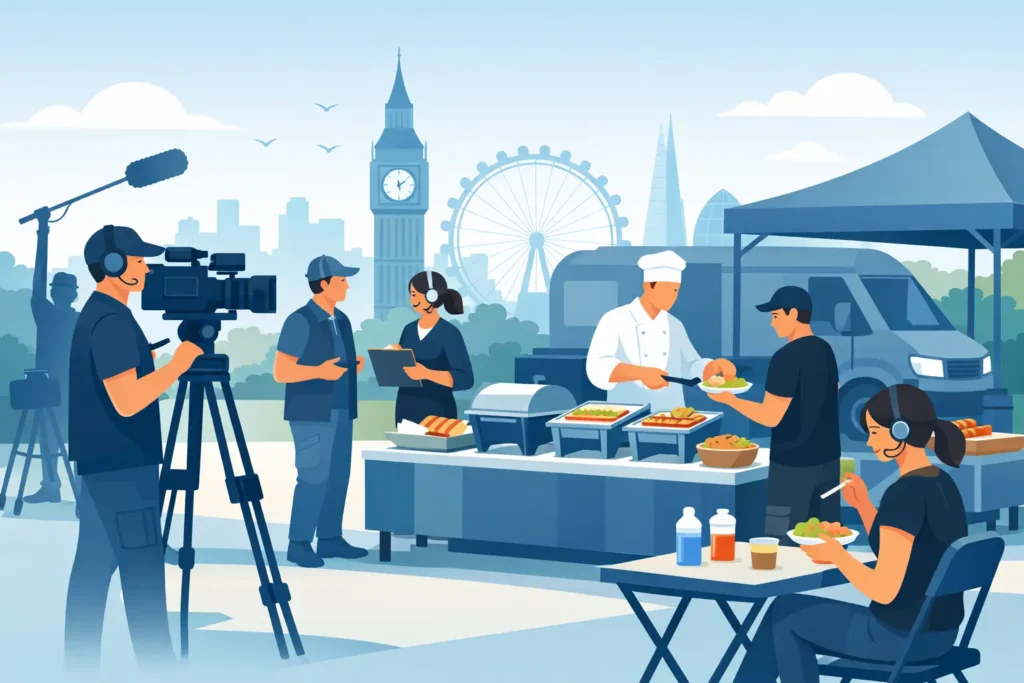
A 5.30am call time, a rain-hit exterior location and a crew that will not break for lunch at the same moment: this is where TV production catering London teams need proves its value. Food cannot be an afterthought when cast and crew are working long days, moving between setups and relying on production to keep everything running. The right catering plan puts fresh, satisfying meals exactly where they are needed, without adding another problem for the production office to solve.
For studio shows, commercials, factual programming and high-pressure location shoots, catering needs to work around the schedule rather than asking the schedule to work around lunch. That means clear communication, realistic timings, excellent food and a team ready to respond when the day changes shape.
TV Production Catering London Productions Need at Pace
A production day rarely follows the original call sheet perfectly. Scenes overrun, weather shifts, talent arrives early, a unit moves location or a night shoot suddenly requires a hot meal at an unusual hour. Good production catering is built for that reality.
The first question is not simply, “What is on the menu?” It is, “Who needs feeding, where are they, and when can they actually eat?” A practical catering partner plans around call times, turnaround periods, filming windows and staggered breaks. Hot food may be served from a mobile kitchen, delivered in portable hot boxes or set up as a managed buffet in a studio green room. For smaller teams or split units, individually packed breakfast and lunch options can keep people fed without holding up the day.
There is a balance to strike. A full hot service creates a proper break, gives the crew variety and lifts morale on demanding days. However, it takes space, access and a window in the schedule. A well-stocked grab-and-go station is faster and ideal when departments are working in shifts, but it should still feel generous, fresh and properly thought through. The best approach depends on the location, crew size and how tightly the schedule is running.
Food That Keeps Cast and Crew Going
Production catering should feel like more than fuel. A well-fed crew is more comfortable, more focused and better able to handle a long shooting day. A lukewarm sandwich after six hours on a difficult exterior is unlikely to do the job. Freshly prepared, flavoursome food makes a genuine difference.
A varied menu also prevents the same meal becoming a daily frustration on a multi-day shoot. Creative dishes from around the globe can sit comfortably alongside familiar crew favourites: warming curries, hearty stews, grilled chicken, vibrant salads, rice bowls, pasta dishes and proper breakfast options. The aim is satisfying food with enough choice for different appetites, working patterns and preferences.
Breakfast deserves particular attention. Early calls need more than a tray of pastries. Hot breakfast baps, egg dishes, porridge, fruit, yoghurt and good coffee help crew arrive ready to work. Later in the day, substantial hot meals, lighter options and dependable snacks keep energy steady through resets, rehearsals and late finishes.
For artists, presenters and key cast, service may need an extra layer of privacy and flexibility. Separate dressing-room deliveries, tailored meals and precise timing can all be arranged without creating unnecessary fuss. The service should be discreet, polished and fully aligned with the wider production plan.
Dietary Requirements Are Part of the Brief
Dietary catering is not a side note to be dealt with on the morning of the shoot. Vegetarian, vegan, halal, gluten-free and allergen-aware meals need to be planned from the start, labelled clearly and served with care.
This protects the people eating the food and gives coordinators confidence that no one has been overlooked. It also avoids the familiar last-minute scramble when a crew member discovers the only suitable option has already gone. Accurate numbers, clear dietary information and a menu designed with genuine choice are far better than one token alternative tucked away at the end of the table.
Where severe allergies are involved, the catering team and production should agree procedures early, including separate preparation where appropriate, labelling and handover. No catering supplier should make promises they cannot safely deliver. Clear, practical planning is always the right call.
Location Logistics Matter as Much as the Menu
London offers every kind of filming environment, from purpose-built studios and offices to narrow residential streets, warehouses, parks and busy public spaces. Each one brings its own access challenges. Can a catering vehicle park nearby? Is there power and water? Is there enough room for a serving area? Will food need to travel across a large site? Are there restrictions on noise, waste or cooking equipment?
These details shape the service. A mobile kitchen may be perfect for a large location with space to operate, while hot boxes and a compact serving setup may suit a tight central London unit base. For a shoot with no practical indoor dining area, a covered outdoor setup, insulated delivery and carefully timed service can keep meals hot and the crew moving.
Waste also needs consideration. Productions are rightly looking for ways to reduce unnecessary single-use packaging, particularly on longer shoots. Reusable serviceware is often possible where washing facilities and collection arrangements allow. Where packaging is required, it should be chosen thoughtfully and matched to the realities of the location. The right option is not always the most elaborate one – it is the one that keeps food safe, service efficient and waste manageable.
A Catering Plan Should Read Like a Production Plan
The strongest catering arrangements begin with a proper briefing. Crew numbers, call times, location access, parking, dietary needs, service style, budget and any client-facing requirements all affect the final plan. Catering should also account for runners, drivers, security, visiting contributors and crew members arriving later than the main unit.
A useful plan sets out who is being fed at each stage of the day, how food will arrive, where it will be served and what happens if timings change. It should include enough contingency for an overrun without producing huge amounts of waste. On a large job, this may mean staggered meal service across departments. On a smaller shoot, it could mean a flexible hot lunch delivery with additional snacks held back for late finishers.
Health and safety should be handled quietly but properly. Food temperature control, allergen information, clean service areas and sensible waste management are not glamorous, but they are essential. When these basics are managed confidently, the production team can focus on the work in front of them.
Choosing a Catering Partner for a London Shoot
A menu tasting can be useful, but it is only one part of the decision. Production teams need to know whether a caterer can turn up at an awkward hour, adapt when the unit moves, feed 30 people as well as 300, and communicate clearly when plans change.
Look for a team that asks practical questions before quoting. If a supplier does not want to know the call sheet, access conditions, dietary list or likely break pattern, they may be treating a production job like a standard office lunch. That can quickly become expensive when the schedule tightens.
It also helps to choose caterers who understand that every department has different pressures. The assistant director needs service to support the day’s timings. The location manager needs deliveries and waste handled responsibly. The line producer needs costs controlled. Crew need food that is plentiful, enjoyable and available when they get a chance to eat. A capable catering team respects all of those needs at once.
D’Lights Event Catering brings that production-aware approach to TV shoots across London, combining creative, freshly prepared food with practical coordination from the first enquiry through to service. Whether the brief calls for early breakfasts, hot on-set meals, mobile kitchens, craft catering or an all-day crew station, the focus stays on keeping your people well fed and your schedule protected.
If your next shoot has a difficult access window, a complex dietary list or a call time that leaves no room for error, raise it at the booking stage. The earlier the catering plan is built around the production, the easier it is to serve excellent food when the cameras are rolling.