
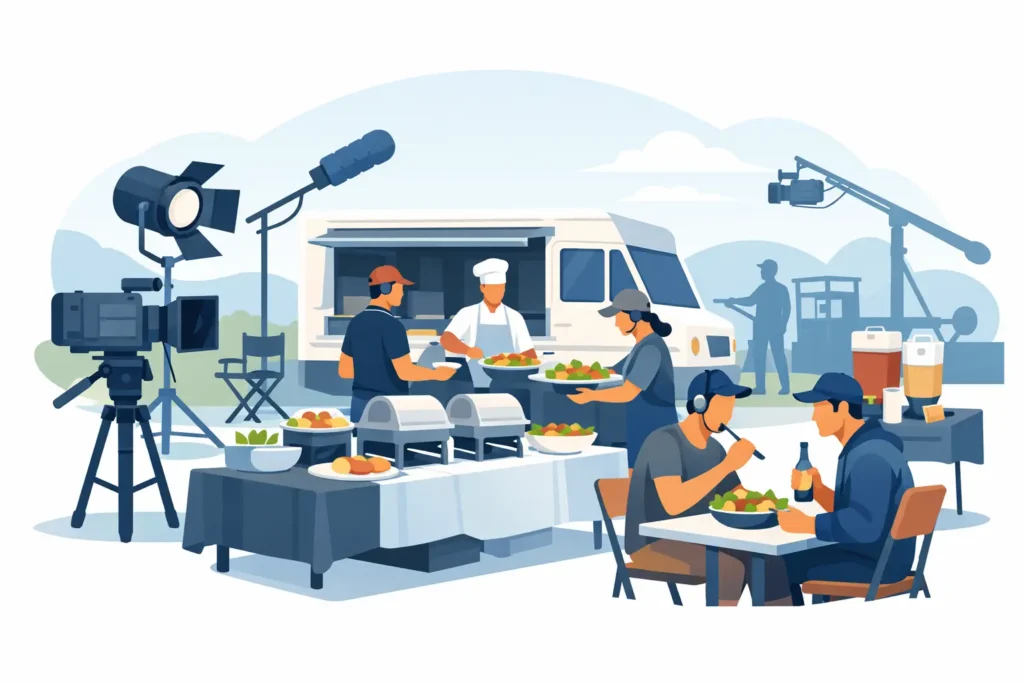
A missed meal break can put more than crew morale at risk. It can slow a reset, create avoidable overtime and leave people running on coffee when they need proper fuel. TV AND FILM CREW CATERING & LOCATION CATERING is therefore not simply about putting food on a table. It is a production service that has to work around call times, changing schedules, remote access, long days and the very different needs of cast, crew and clients.
For London shoots and locations further afield, the best catering feels effortless because the hard work has happened behind the scenes. Fresh, flavoursome food arrives hot, the right dietary meals are clearly handled, service fits the schedule, and the production team does not need to chase, explain or firefight.
What TV and film crew catering needs to deliver
A production day rarely moves in a straight line. An early unit call may need breakfast before dawn, while a late-running scene can push lunch well beyond the planned slot. Some people need a substantial hot meal; others need something quick between lighting changes, costume calls or a turn in the chair. Location catering needs the flexibility to keep everyone fed without becoming another obstacle for the assistant director, production coordinator or location manager.
That means planning food around the real working day, not an ideal timetable. A dependable service considers access restrictions, parking, power, holding areas, unit bases and whether meals need to travel from a mobile kitchen to set. It also accounts for the fact that crew numbers may change, a second unit may appear, or a client meeting may require a more polished spread than the crew lunch.
Good crew food is generous, practical and genuinely enjoyable. It should travel well, hold its temperature safely and give people a choice without creating queues that eat into a short break. Creative dishes from around the globe can bring welcome variety to a demanding run of shoot days, but the menu must still suit the pace of the job.
The difference between crew meals and craft catering
Crew catering and craft catering support different moments in the day. Both matter, but confusing them can leave a unit underfed or a budget badly allocated.
Crew meals are the main event: breakfast, lunch and, where required, dinner or a late wrap meal. They need to be filling, well timed and scalable. A typical service might include a hearty hot option, lighter choices, fresh salads, sides and desserts, with vegetarian, vegan and allergen-aware meals prepared as proper dishes rather than last-minute substitutes.
Craft catering is the constant support station. It keeps people going between main meals with quality coffee, tea, fruit, pastries, sandwiches, wraps, snacks and cold drinks. On a long exterior day, a well-stocked craft table can prevent the energy dip that makes everyone feel the last few hours more sharply. On a studio production, it can be set up to serve departments without cluttering working space.
The right balance depends on the schedule. A tightly controlled commercial shoot with a fixed lunch break may need a concise crew menu and premium grab-and-go craft options. A feature production with split calls, night work and a large unit may need several meal waves, hot boxes for people unable to leave position, and a mobile kitchen ready to adapt.
Location catering is logistics with a food standard
A beautiful menu means little if it arrives late, cold or in packaging that is difficult to distribute on set. Location catering succeeds when food quality and production logistics are planned together from the first conversation.
Start with the practical questions. What is the first call time? Where can vehicles park and unload? Is there running water, sufficient power and a weather-proof service area? Will the crew be able to reach the catering point, or do meals need to be delivered in labelled hot boxes? Is there a quiet period, a lock-off or a live set where service must be staggered?
These details shape the entire approach. A city-centre location may call for carefully timed deliveries and compact service equipment. A remote site may need a self-contained mobile kitchen, extra water planning and a menu designed for reliable holding. Stadium, backstage and large venue work can require multiple stations so that hundreds of people are not waiting in one line.
Health and safety is part of that same discipline. Hot food must remain hot, chilled items must be properly controlled, allergen information must be clear, and service areas need to stay safe and clean even when the weather turns or the day runs late. Waste-conscious packaging also matters, particularly where there are limited disposal facilities or a production has sustainability targets to meet.
Build the menu around the shooting day
The strongest menus do not treat dietary requirements as an afterthought. Production teams should provide numbers and requirements as early as possible, including vegetarian, vegan, halal, gluten-free and specific allergen needs. Caterers can then plan meals that are equally appetising, clearly labelled and safely separated where necessary.
Breakfast needs to suit the call. For very early starts, warm breakfast baps, porridge, pastries, fruit and good coffee can get the day moving quickly. A later call may allow for a fuller hot breakfast with eggs, plant-based options and lighter choices. The key is speed: no one wants to lose time queuing when the day is already underway.
Lunch should restore energy without making people sluggish. Warming curries, slow-cooked meats, vibrant grain bowls, pasta bakes, fresh salads and satisfying plant-based dishes can all work brilliantly, provided the menu is designed for the season and the setup. In winter, hot comfort food is often welcome on cold locations. In summer, lighter dishes and plentiful chilled drinks become more valuable, especially for exterior work.
Night shoots need their own thinking. A meal served at 1am should still feel fresh, substantial and considered. This is where hot boxes, staggered service and a dependable refresh of the craft station can make a real difference. People working through the night notice when catering has been planned around them rather than squeezed into a daytime template.
When scale changes, the system must change
Catering for a small documentary crew is not a reduced version of catering for a major drama, music event or studio production. The food may be equally good, but the service model changes.
For an intimate crew, flexible delivery and well-packed hot meals may be the most efficient solution. A larger production could require staffed buffet service, separate stations for cast and crew, mobile kitchen facilities, on-set runners and additional provision for production offices. If the schedule is fluid, the caterer must be ready to communicate quickly and adjust quantities or timing without compromising standards.
Budget matters too, and good planning protects it. A clear brief helps avoid overspending on unnecessary extras while ensuring the essentials are covered: meal numbers, service windows, dietary provision, beverages, equipment, staffing and travel. The lowest quote is not always the most economical choice if it creates delays, lacks contingency or leaves the production team managing problems during the shoot.
A better catering brief gets better results
The fastest way to receive an accurate, useful proposal is to share the operational picture, not just a headcount. Include the shoot dates, postcode or location type, call and meal times, expected crew numbers, whether the numbers may fluctuate, access details, dietary requirements and the level of service required. Mention whether there is a kitchen on site, if hot food must be taken to set, and whether you need craft catering throughout the day.
It also helps to be honest about the pressure points. If lunch could move by an hour, say so. If parking is difficult, flag it early. If an artist, client or senior cast member has a specific preference, build it into the brief rather than hoping it can be managed on the day. These are the details that allow a catering team to arrive prepared.
D’Lights Event Catering plans each package around the production rather than forcing a standard menu or service pattern onto it. From fresh hot crew meals and portable hot boxes to mobile kitchens, craft stations and full-service catering, the focus is on food that keeps pace with the day.
When the schedule shifts, the crew still need feeding. Choose catering that understands the call sheet, respects the location and serves food people will look forward to at the point they need it most.