
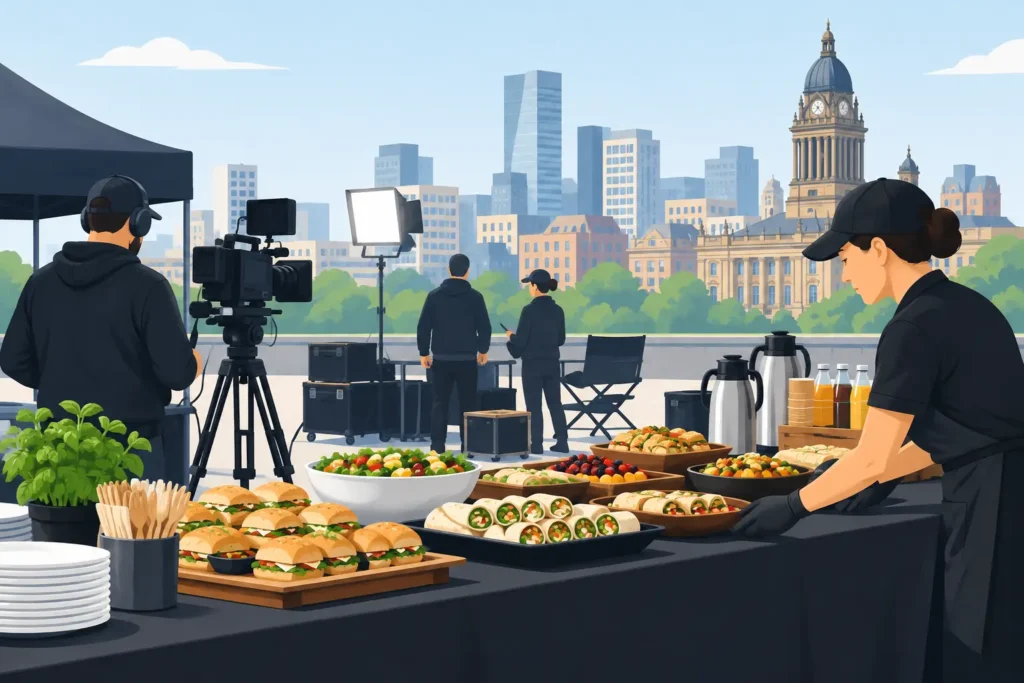
A 5am call time, a location with limited access and a crew that needs feeding before the first setup: this is where dependable TV and film crew caterers Leeds West Yorkshire productions can count on make a real difference. Good food keeps people focused, but production catering is about much more than serving a tasty plate. It is timing, access, dietary planning, safe service and the confidence that meals will be ready when the schedule says they must be.
For location managers, line producers and production coordinators, the right catering partner takes one major moving part off the call sheet. Whether you are filming in a Leeds studio, on a city-centre unit base, at a rural West Yorkshire location or across several venues in one day, crew welfare needs a plan that works in the real world.
Why TV and Film Catering Needs Production Thinking
A restaurant service can work around its own rhythm. A film or television shoot cannot. Scenes overrun, weather changes the plan, talent has separate requirements and departments break at different times. Catering has to flex without becoming chaotic.
That starts well before the first meal. An experienced production caterer will ask the questions that protect the day: What is the first call time? When can vehicles access the site? Is there power and water? Will the crew eat in a designated dining area, from hot boxes or on the move? How many people need breakfast, lunch, craft catering and a late wrap meal?
The answers shape everything from menu choices to staffing and equipment. A compact commercial crew working from a tight city location may need fast, individually packed hot meals and a well-stocked grab-and-go station. A longer drama shoot with a large unit may benefit from a mobile kitchen, a hot lunch service and a separate tea, coffee and snack point that stays open between takes.
The aim is simple: nobody should lose valuable time wondering where their food is, whether there is a suitable option for them or if the service can cope with a sudden change to the schedule.
TV and Film Crew Caterers in Leeds, West Yorkshire
Leeds and the wider West Yorkshire region offer a varied mix of filming environments. One day may mean a busy urban location with strict delivery windows; the next, a remote exterior where vehicle access, weather and power supply need careful consideration. Catering has to suit the location rather than force the location to suit the catering.
For city-centre shoots, punctual drop-offs, compact service footprints and clear coordination with site teams are essential. There may be restricted loading bays, limited parking and little room for queues. In these situations, hot boxes, labelled individual meals and staggered collection times can keep everyone fed without blocking a corridor, pavement or working area.
For rural locations, the priorities can be different. A mobile kitchen may be the most practical option, especially where local food choices are limited or the nearest facilities are too far from unit base. Reliable hot drinks, warming breakfasts and satisfying meals matter even more when crew are working long hours outdoors in the Yorkshire weather.
It depends on the size and shape of the production. There is no value in paying for a large-scale setup if a flexible delivered service will do the job. Equally, trying to run a major shoot on a few basic platters can leave crews under-fuelled and organisers firefighting. A tailored plan gives the production the right level of support without unnecessary spend.
Fresh Menus That Keep Crews Going
Crew food should feel like a proper meal, not an afterthought in a foil container. Long days demand generous, balanced food with flavour, variety and enough substance to carry people through physically demanding work.
A strong menu can move easily from breakfast through to wrap. Early calls may need hot breakfast baps, vegetarian options, fruit, pastries and quality coffee. At lunch, creative and flavoursome dishes from around the globe can include hearty curries, grilled chicken, slow-cooked mains, fresh salads, seasoned grains and comforting vegetarian dishes. The best approach is to provide choice without overcomplicating service.
A good catering team will also build menus around the practical conditions. Hot food travels well when it has been designed for delivery and held at the right temperature. Lighter dishes may be better for a summer location, while warming bowls, baked dishes and filling sides suit colder months or night shoots.
Craft catering fills the gaps between formal meal breaks. Fresh fruit, biscuits, crisps, cakes, protein-rich snacks, soft drinks and hot beverages give departments something to reach for without leaving site. On shoots with limited break windows, that can make a meaningful difference to energy and morale.
Dietary Requirements Are Part of the Main Plan
A dietary list should never be treated as an awkward add-on. Vegan, vegetarian, halal, gluten-free, dairy-free and allergen-aware meals need the same care, quality and presentation as every other dish.
The practical detail matters. Each meal should be clearly labelled, and allergens must be managed responsibly from preparation through to service. Separate utensils, thoughtful packing and a clear handover process help avoid confusion when a busy crew is collecting meals quickly.
The best time to handle dietary requirements is during pre-production. Share crew numbers and dietary information as early as possible, then update the caterer when cast or departments change. A capable team can accommodate late additions where possible, but earlier information gives more room for menu creativity and proper planning.
Catering Around Call Times, Not Office Hours
On-set schedules do not keep conventional hours. Breakfast may be needed before dawn, lunch can shift by an hour or more, and a late-night pickup can mean a second hot service is essential. Catering needs to be built around the call sheet, not a standard delivery slot.
This is where detailed coordination earns its place. Delivery timing should account for access restrictions, security check-in, parking, unloading and the time needed to set up. If the lunch break is staggered, food must remain appetising and safe throughout service. If a scene runs over, the catering team should know how food will be held, refreshed or served later.
For productions moving between locations, portable hot boxes can be a sensible solution. They give departments hot, satisfying meals without requiring a full kitchen setup at every stop. For larger unit bases, a staffed mobile kitchen can provide a more complete experience, including hot service, drinks and ongoing support through the day.
What to Confirm Before Booking Crew Catering
Before confirming a caterer, give them a clear view of the production rather than just a headcount. The crew total is important, but it is only one part of the picture. Share the location address, parking and access details, meal times, expected duration, dietary needs, available facilities and whether the schedule is likely to move.
It is also worth discussing how the service will look on site. Will crew collect meals from a serving point? Do meals need to be delivered department by department? Is there space for tables, chairs and a covered dining area? Do you need disposable packaging, reusable equipment or a mix of both?
Waste-conscious choices can be planned in too. Where practical, recyclable or lower-waste packaging, realistic portioning and sensible ordering can reduce what is left behind at wrap. The right choice depends on the location and the production’s waste arrangements, but it should be considered from the beginning rather than at the end of the day.
Calm Support When the Schedule Changes
Even the best call sheet changes. A location becomes unavailable, the weather closes in, an extra day is added or the crew count grows overnight. The caterer you choose should be responsive enough to deal with change and organised enough not to let it affect service.
D’Lights Event Catering brings that production-minded approach to every brief, combining freshly prepared food with practical coordination for crews, cast and guests. From individual hot boxes to full mobile-kitchen service, the focus stays on feeding people well while keeping the day moving.
For your next Leeds or West Yorkshire shoot, provide the full brief early, be honest about the unknowns and choose a catering team that can adapt under pressure. Then your crew can get on with the work that matters, with a hot meal ready when they need it most.