
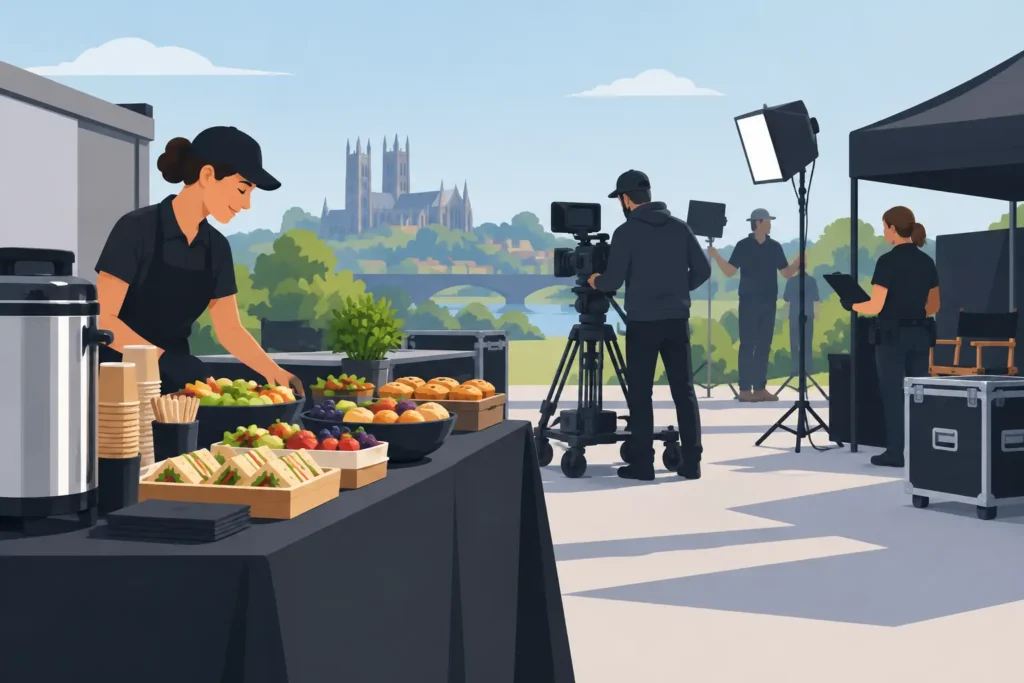
A delayed breakfast can put pressure on a whole shoot. A missed dietary meal can stop a crew member working. And when lunch arrives cold, late or short on portions, the knock-on effect reaches far beyond the catering table. TV and film catering Midlands productions need is not simply good food. It is a reliable service built around call times, changing schedules, demanding locations and people who need proper fuel to do their best work.
For production coordinators, line producers and location managers, catering is part of the day’s operational plan. It has to arrive when promised, work within the available space and keep cast and crew fed without slowing down the schedule. That means thoughtful menus, clear communication and a catering team ready to respond when the plan changes.
What TV and Film Catering in the Midlands Must Deliver
A production day rarely runs in neat, restaurant-style service windows. One department may be called at dawn, another may need a break after a set reset, while artists, drivers and overnight teams may all work to different timings. The right caterer plans around those realities from the first conversation.
Hot, freshly prepared meals remain the backbone of crew welfare, particularly during long location days or colder months. But hot food alone is not enough. The service must also cover early breakfasts, practical packed options, craft tables, hot drinks, snacks and lighter choices that people can pick up between takes. A strong menu has enough variety to keep morale up over a multi-day schedule, without becoming complicated to serve in a tight turnaround.
Dietary planning belongs at the beginning, not as an afterthought on the day. Vegetarian, vegan, halal, gluten-free and allergen-aware meals should be clearly organised, labelled and treated with the same care as every other dish. For a mixed crew, this is good hospitality and sound production management.
Build the Service Around the Shooting Schedule
The most successful catering plans start with a detailed brief. Share the first call time, expected crew numbers, filming hours, access arrangements and likely break windows. If the unit is split across a studio, holding area and external location, say so early. It allows the caterer to recommend the most practical setup rather than trying to force a standard service into an unsuitable space.
For an early call, a substantial breakfast can make a real difference: warm breakfast rolls, eggs, pastries, fruit, porridge, yoghurt and quality tea and coffee give people a choice without creating a lengthy queue. Later on, a generous lunch might include creative and flavoursome dishes from around the globe, with familiar crowd-pleasers alongside lighter salads and dietary alternatives.
Where a formal lunch break is unlikely, staggered service is often the better answer. Food can be refreshed in timed waves so departments are not left with picked-over trays after a delayed scene. Portable hot boxes may be more suitable for a small, mobile unit, while a larger production may need a fully equipped mobile kitchen and staffed serving point.
It depends on the scale of the shoot, the space available and how far people can travel from set. A studio production with a designated dining area has very different needs from a rural location with limited parking, uneven ground and no usable power supply. The best catering plan reflects those constraints rather than ignoring them.
Location logistics deserve proper attention
Midlands locations can range from city-centre units with strict loading times to country estates, warehouses, roadside bases and temporary build sites. Each introduces different considerations: vehicle access, parking, water, waste removal, power, weather cover and safe separation between catering activity and production traffic.
A production-aware caterer will ask the questions that prevent avoidable problems. Where can the vehicle be positioned? Is there a safe route for carrying food to the unit base? Is there room for tables, urns and waste stations? Will service need to move during the day? These details may sound small, but they determine whether the crew receives food smoothly or whether lunch becomes another issue for the floor team to solve.
Health and safety is equally practical. Safe food temperatures, clean service areas, clear allergen information and responsible waste management protect everyone on site. Waste-conscious packaging is particularly useful when there is no washing-up facility or the unit is moving quickly between locations, but it must still be sturdy enough for a proper meal, not an awkward compromise.
Food That Keeps Crews Going
Crew catering should feel generous, not repetitive. People working long hours appreciate food with flavour, choice and enough substance to get them through physically demanding work. A balanced menu might pair slow-cooked mains or spiced chicken with rice, roasted vegetables and fresh salads, while a comforting pasta dish, curry or warming stew can be ideal for a colder shoot day.
The right choices depend on the production. A commercial shoot with a compact crew may benefit from polished individual lunch boxes and a neatly presented craft station. A feature or drama unit with a large headcount may need high-volume hot service that keeps queues moving. Music, backstage and artist catering can call for a more tailored approach, with hospitality trays, private dietary requirements and food available outside conventional meal times.
There is a trade-off between maximum menu choice and speed. Offering too many separate dishes can slow service and create unnecessary waste. A well-designed menu with a clear main choice, a vegetarian or vegan alternative, plentiful sides and properly planned dietary meals usually gives crews what they need while keeping service efficient.
Snacks matter too. Fresh fruit, cereal bars, crisps, biscuits, nuts where appropriate, chilled drinks and proper coffee can sustain a team through a long reset or late finish. A craft table should look inviting, but it also needs regular attention. Empty coffee urns and tired-looking snacks send the wrong message when people are already working hard.
Choosing a Midlands Production Caterer
Great food is essential, but it is only one part of the decision. Look for a team that understands production language and can work confidently with your schedule, budget and site rules. They should be comfortable receiving updated numbers, responding to revised break times and coordinating with the location department without needing constant direction.
Ask how the caterer handles call-time deliveries, dietary meals, late additions and access restrictions. Confirm what equipment, staffing, tables, serving ware and waste arrangements are included. If the shoot requires food at several points during the day, establish exactly how replenishment will work. A clear quote should reflect the actual level of support required, not just a per-head menu price that leaves key logistics unaccounted for.
For productions travelling beyond their usual base, book early and share the route, postcode and unit schedule as soon as possible. D’Lights Event Catering works with clients to shape tailored production catering packages, from compact crew meals to larger, fully supported services. The earlier the brief is shared, the more confidently the food, staffing and transport can be planned around the day.
Keep the Brief Clear, Even When the Day Is Not
Shoot days change. A scene runs over, weather turns, talent arrives later than expected or an additional crew is brought in at short notice. The catering team does not need every detail set in stone, but it does need one clear point of contact and prompt updates when priorities shift.
Give your caterer the production schedule, a reliable on-site contact and a realistic indication of where flexibility may be needed. Flag the non-negotiables, whether that is an artist’s dietary requirement, a strict lunch window or food service in a difficult location. Then let the catering team manage its part of the operation.
When food is planned with the same care as transport, power and scheduling, it becomes one less thing for the production office to chase. Request a menu and booking early, provide the practical details, and give your cast and crew the fresh, satisfying meals that help the day keep moving.