
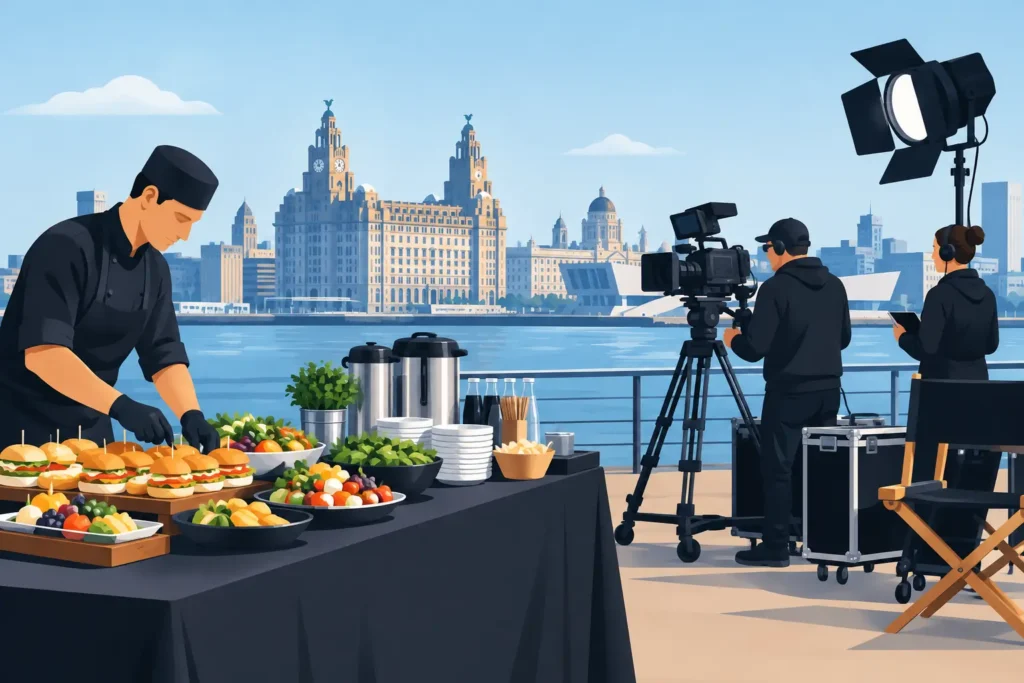
A 5.30am call time, a unit base with limited power, rain on location and a crew that needs feeding before the first setup: that is where tv and film catering Liverpool for tv production has to perform. Great food matters, but timing, access, dietary confidence and a calm response to change matter just as much. When catering runs properly, cast and crew stay focused on the work, not on when lunch is arriving.
TV and film catering in Liverpool that keeps pace
Liverpool is built for screen work. From city-centre streets and waterfront locations to studios, warehouses and private venues, productions can move through very different environments in a single week. Each brings its own catering challenges. There may be no fixed kitchen, no easy parking, restricted loading, a split crew, or a filming schedule that changes before breakfast has been served.
Production catering needs to be planned around the day rather than fitted in around it. That starts with understanding the call sheet, crew numbers, unit base layout, access times and the distance between service and set. It continues with food that travels well, holds safely and still feels freshly prepared when it reaches the person eating it.
D’Lights Event Catering approaches every booking with that production mindset. Whether the requirement is hot breakfast before a dawn call, a mobile kitchen for a long location day, individually packed hot boxes or a full craft table for a busy studio, the aim is simple: keep people properly fed without creating another problem for the production team to solve.
Why crew meals are a production issue, not an afterthought
A well-fed crew is not a luxury line in the budget. It supports concentration, morale and the pace of the day. When lunch is late, too light, repetitive or unsuitable for a large portion of the team, the effect is felt quickly. People leave the unit to find food, breaks overrun and energy drops precisely when the schedule is under pressure.
The right service depends on the production. A small commercial may need a compact breakfast station, hot lunch and quality grab-and-go options between setups. A drama with a large unit may need staggered meal service so departments can eat without stopping the floor. A night shoot may require proper hot food at hours when local options are closed.
That is why the menu and the logistics have to work together. Creative, flavoursome dishes from around the globe can be a genuine highlight of the day, but they must also be portioned, transported and served for the realities of a working set. Comforting curries, slow-cooked mains, fresh salads, vibrant grain bowls, filling plant-based dishes and familiar crew favourites all have a place when they are planned well.
Call times set the catering timetable
On a production, “lunchtime” is not always lunchtime. Breakfast may be required before 6am. A hot meal could be needed mid-afternoon after a delayed first setup. A second meal may be essential for a night unit, while snacks and hot drinks need replenishing throughout the day.
A reliable caterer asks the practical questions early: What is the first call? When is the anticipated break? Is it a split call? Are there child performers, talent riders or separate client service requirements? Will the crew be moving location? These details shape the service plan and prevent avoidable delays.
Dietaries need the same attention as the main menu
Dietary requirements cannot be treated as a last-minute add-on. Productions commonly need vegetarian, vegan, halal, gluten-free, dairy-free and allergen-aware options, often alongside individual medical needs. The goal is not to offer one uninspiring alternative in the corner. It is to give every member of the team a meal that is generous, clearly labelled and enjoyable.
Good planning includes obtaining dietary information in advance, separating and labelling food carefully, and ensuring the service team understands what is being offered. It also means allowing sensible flexibility. Crew numbers and dietary lists can change late, so a catering plan needs enough resilience to handle that without compromising quality or safety.
Choosing the right service for your Liverpool shoot
There is no single best format for TV production catering. The right answer depends on the scale of the crew, duration of the shoot, location facilities and how much movement the day involves.
For a studio-based production with suitable space, a staffed hot buffet or mobile kitchen gives crews variety and a proper break from the floor. It works particularly well for larger numbers and longer shoot runs, where rotating menus help prevent food fatigue.
For a location shoot where access is tight, portable hot boxes and organised delivery can be the better option. Meals arrive ready to serve, with less equipment required on site. This can be a practical choice for smaller units or locations with limited power, though it requires accurate timings and a protected service area.
Craft catering keeps the unit going between main meals. Fresh fruit, pastries, sandwiches, savoury snacks, sweet treats, tea, coffee and cold drinks can make a substantial difference during a long day. The strongest craft tables are kept clean, replenished and appropriate to the schedule rather than left as an afterthought at first call.
Grab-and-go stations are useful when departments cannot all break together. They are also effective for travel days, recce days and fast-moving commercial shoots. The trade-off is that food has to remain appealing and satisfying even when eaten quickly, so quality packaging, portion size and menu choice are crucial.
What to confirm before you book TV production catering
A quote based only on headcount rarely tells the full story. The most useful catering brief gives the service team the information needed to protect your schedule and budget from the start.
Share the expected crew and cast numbers, then flag whether the number may rise. Confirm call times, planned meal breaks and wrap time, as well as the address, parking arrangements, loading restrictions and any stairs or long walks from the vehicle to unit base. If the production is moving between locations, say so early.
It also helps to clarify what is already available. Is there a kitchen, water supply, covered service space, tables, power or refrigeration? If not, a mobile kitchen or self-contained service setup may be required. For outdoor work, weather planning matters too. A service that works beautifully in a courtyard on a dry day needs a different approach in wind and rain.
Budget should be discussed openly. A good caterer can suggest where to prioritise spend, whether that is a more substantial breakfast for early starts, a premium talent menu, additional hot drinks for winter locations or a fuller evening meal for a night shoot. Saving money by cutting portions or leaving no room for dietary requirements usually costs more in crew dissatisfaction later.
Food safety, presentation and waste on set
Production food needs to look inviting, but it must also meet strict health-and-safety standards. Safe temperatures, allergen controls, clean serving areas and sensible food handling are fundamental, particularly when working outdoors or across extended service windows.
Presentation still counts. A well-laid buffet, clearly labelled dishes and a tidy craft station make people feel looked after, even on a demanding location day. That standard should not disappear because the service is happening in a car park, backstage area or temporary unit base.
Waste-conscious choices are part of thoughtful production catering too. Accurate headcounts, menu planning that reflects the crew’s needs, reusable equipment where practical and considered packaging can reduce unnecessary waste. The balance depends on location rules and turnaround speed, but it is always worth discussing before service begins.
A calmer catering plan starts before the shoot
The best catering teams are visible when service is needed and quietly organised when it is not. They coordinate delivery around the call sheet, arrive prepared, adapt to real-world changes and keep the food coming without disrupting departments trying to make the day.
If you are planning a Liverpool shoot, bring your schedule, estimated numbers, dietary list and location details to the first conversation. From there, a tailored menu and service plan can take one major moving part off your plate, leaving your cast and crew with fresh food, full energy and one less reason for the day to fall behind. Call now to discuss your production dates and build a catering package that works from first call to final wrap.