
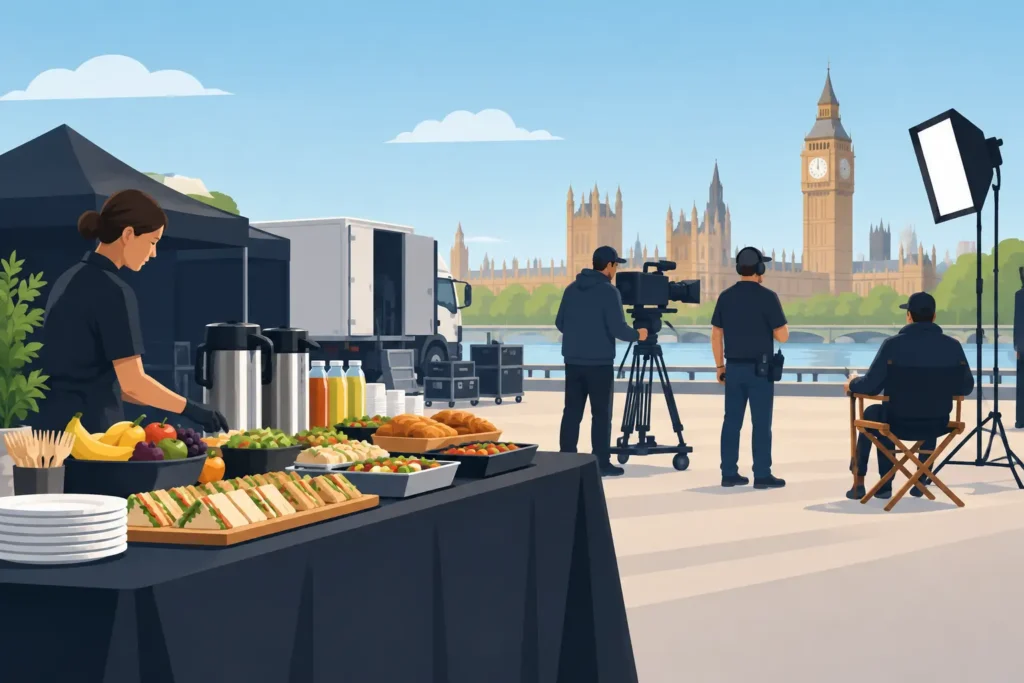
A crew can forgive a wet location, a delayed unit move or a last-minute script change. What they will not forget is being left hungry after a 5am call time. TV and film catering across the UK for TV productions is not simply about serving good food. It is about keeping a working production fed, focused and ready for the next set-up – whether the day is based in a London studio, a windswept coastal car park or a converted warehouse in Manchester.
For production teams, catering is part of the day’s operational plan. The right service arrives when it says it will, understands who needs feeding and works around the schedule rather than asking the schedule to work around it. From hot breakfasts and proper unit lunches to craft tables and late-night wraps, every meal has a job to do.
TV and Film Catering Across the UK That Works to Call Times
A production day rarely follows neat restaurant hours. The first crew may be on site before dawn, supporting artists may arrive later, and a night shoot can require a substantial hot meal when most kitchens are closed. That is why production catering needs planning well before the first van is loaded.
Call sheets provide the starting point, but the best catering plan also considers unit bases, parking access, travel times, power availability, weather and the distance between the kitchen and the set. A service that looks straightforward on paper can become difficult quickly when a location has narrow access, no running water or a crew split across several floors.
D’Lights Event Catering plans around these realities. We work with production coordinators and location managers to agree delivery windows, service points and meal timings that support the shoot. If lunch needs to be staggered because departments cannot all break at once, that is built into the service. If the crew is moving to a second location, portable hot boxes and well-packed grab-and-go options can keep the day moving without sacrificing a satisfying meal.
Fresh food matters when the day runs long
A good crew meal should feel like a proper break, not an afterthought in a foil tray. Freshly prepared, flavoursome food gives people energy without leaving them sluggish for the afternoon. Menus can bring in creative dishes from around the globe alongside familiar, filling favourites – the balance depends on the brief, the budget and the people being fed.
For an early start, that may mean hot breakfast rolls, porridge, fresh fruit and good coffee ready before the first lighting check. For lunch, it could be generous hot mains with colourful salads, sides and desserts. On a short commercial shoot, a well-stocked craft station may be the most useful option. On a long-form drama with a large unit, a mobile kitchen and staffed hot service may make better operational sense.
There is no single correct format. The aim is to give every department reliable access to food without slowing down the production.
Catering for Studios, Location Shoots and Remote Units
The UK offers extraordinary shooting locations, but they place very different demands on caterers. A soundstage may have loading bays, water, power and a defined dining area. A rural exterior can mean muddy ground, limited vehicle access and a long walk from unit base to set. A city-centre shoot may involve tight delivery slots, permit restrictions and little room for equipment.
The catering approach should change accordingly. Studio productions can often benefit from a fuller service set-up, including hot food stations, craft catering and a comfortable crew dining area. For a remote location, mobility, safe food holding and sensible packaging become more important. Food needs to travel well, remain at the right temperature and be easy to serve in a limited space.
Weather is another factor that cannot be ignored. Cold days call for warming, substantial dishes and hot drinks that are available when people need them. In summer, lighter meals, chilled refreshments and hydration stations become more valuable. The menu should be seasonal where possible, but it also needs to suit the practical conditions of the shoot.
The difference between delivery and full production support
A hot meal delivery can be ideal for a smaller crew with a clear break time and a suitable place to eat. It is efficient, budget-conscious and easy to arrange when the unit does not need extra service staff.
A larger or more complex production may require a broader set-up. This can include a mobile kitchen, front-of-house support, serving equipment, managed craft catering and staff who can keep food replenished during staggered breaks. The additional investment is often worthwhile when it takes pressure off the production office and gives the crew a reliable place to refuel.
The decision depends on numbers, location, schedule and facilities. What matters is choosing a catering format that fits the job rather than forcing every production into the same package.
Dietary Requirements Need Proper Planning
Dietary requirements are standard production information, not a complication to be handled at the last minute. Cast and crew may need vegetarian, vegan, halal, gluten-free, dairy-free or allergen-aware meals. Some requirements are preferences; others are essential for safety and wellbeing. Both deserve clear communication and careful preparation.
A well-managed menu gives people a genuine choice. A vegan dish should be a considered, satisfying meal in its own right, not the only item left once everyone else has been served. Gluten-free food needs sensible handling to reduce the risk of cross-contact. Clear labelling helps crew members choose quickly and gives the catering team a clean process during busy service periods.
Production teams can make this easier by collecting dietary information early and sharing it with the caterer before final menu planning. Numbers do change, particularly on fast-moving shoots, but early detail allows for better purchasing, more variety and fewer avoidable problems on the day.
Crew Welfare, Safety and Waste on Set
Catering has a direct effect on crew welfare. Regular access to food, water and hot drinks helps people maintain concentration through long shooting days. This is especially relevant for night work, physically demanding exterior shoots and jobs where departments are working far from shops or local facilities.
The service also has to meet health-and-safety expectations. Food should be transported, stored and served at safe temperatures. Service areas need to be clean and sensibly laid out, with attention paid to walkways, cables, hot equipment and waste. On a busy unit base, those details protect people and prevent unnecessary disruption.
Waste-conscious planning is equally practical. Portion forecasting can reduce over-ordering, while recyclable or lower-waste packaging is useful for mobile shoots where washing facilities are limited. Reusable service ware may suit a studio or venue with appropriate infrastructure. The right choice depends on the location, but waste should be considered from the start rather than after the last meal has been cleared away.
What Production Teams Should Confirm Before Booking
A strong catering brief saves time for everyone. Before confirming a supplier, establish the crew and cast numbers, call times, meal windows, dietary requirements and planned locations. It is also worth confirming site access, parking, power, water, covered space and whether the unit will move during the day.
Budget matters, but the lowest figure is not always the lowest risk. Ask what is included: delivery, staffing, equipment, disposables, hot holding, beverages and service time can all affect the final arrangement. A clear quote makes it easier to compare options fairly and avoids surprises when the schedule changes.
Most importantly, choose a caterer that communicates well. Productions move quickly. You need a team that can respond to a revised call time, an increased crew count or an unexpected location challenge with practical answers, not added stress.
Make Food One Less Thing to Chase
When catering is planned properly, it becomes quiet evidence that the production is being looked after. The breakfast is ready before the day begins. Lunch appears at the right point in the schedule. Dietary meals are clearly prepared, the craft table stays stocked and the final wrap is served without a scramble.
For TV productions working anywhere in the UK, that reliability gives coordinators and producers valuable breathing room. Share your call times, location details and crew requirements early, and let the catering plan carry its share of the production day.