
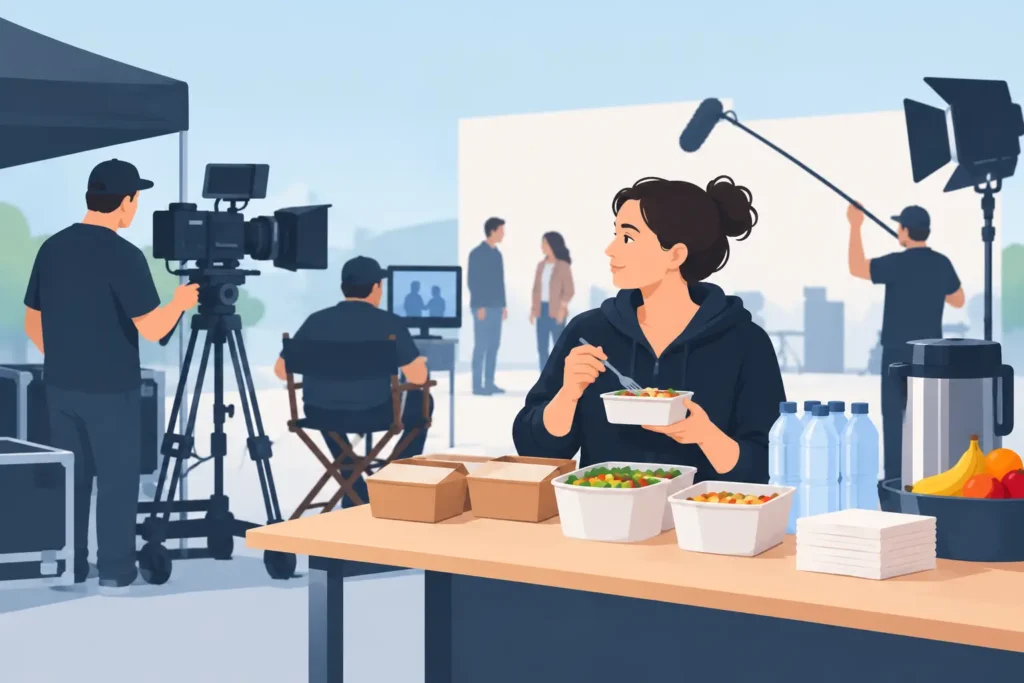
A meal break that starts 20 minutes late rarely stays a 20-minute problem. Crew members lose the chance to reset, talent is held waiting, departments fall out of sync and the next setup begins under pressure. To prevent meal break delays, catering has to be planned as part of the running order, not added once every other production detail is fixed.
For a location shoot, a live music event or a high-footfall corporate launch, food service needs to work around reality: changing call times, split units, access restrictions, dietary requirements and people who need to eat quickly without compromising on a proper hot meal. The right approach protects both the schedule and the people keeping it moving.
Start catering at the scheduling stage
The most reliable meal breaks are designed before the final call sheet goes out. A caterer needs more than a headcount and a suggested lunchtime. They need to understand when each department can step away, where people will be working, whether the unit is likely to move, and how much time the production can genuinely allow for service.
On a studio job, one clearly defined service window may be enough. On a location shoot, it may make more sense to plan a rolling lunch that begins with crew who are wrapping one setup while another department remains in position. For concerts and backstage environments, artist catering, production teams and technical crew may each need a different service time.
There is a trade-off here. A single, short lunch window can look efficient on paper, but it creates queues if 150 people arrive at once. A longer rolling service takes more coordination, yet it is often the better option when a tight schedule cannot absorb a bottleneck. The plan should follow the day, not force the day to follow the food.
Give the catering team the information that changes the plan
Small details have a major effect on delivery and service. Confirm the nearest vehicle access, loading restrictions, lift availability, parking arrangements, kitchen or power facilities, and the distance between the service point and where crew are working. A hot meal is only useful if it arrives hot, safely and where people can reach it.
Share likely schedule changes early, even if they are not confirmed. A good caterer can prepare contingencies when they know a scene may overrun, a venue opening is delayed or a crew call could move forward. Silence creates avoidable surprises; a quick update creates options.
Build service around the real number of people eating
Headcount is not always meal count. Some crew members will be on staggered calls, some may arrive after breakfast, and some will need a packed option because they cannot leave a position. Equally, under-ordering by a few meals can hold up a whole department when people are asked to wait for replacements.
Ask who needs breakfast, elevenses, lunch, afternoon snacks, dinner and late-night food. For long shoot days, the gap between meals matters as much as the main service itself. A well-stocked craft area with fruit, pastries, savoury bites, cold drinks and good coffee can prevent hunger from becoming a morale issue before lunch is called.
Dietary information should be collected early and treated as a service requirement, not an afterthought. Clearly labelled vegetarian, vegan, halal, gluten-free and allergen-aware meals reduce questions at the serving line and ensure that every member of the team can eat at the same time. When a crew member has to search for a suitable meal or wait for a separate dish, the break has already lost momentum.
Prevent meal break delays with the right menu
A flavoursome menu does not need to be slow to serve. In fact, the most successful production menus balance fresh, creative global cuisine with dishes that hold their quality and can be plated or boxed quickly. Think fragrant curries with rice, hearty braises, colourful grain salads, grilled chicken, fresh wraps and satisfying plant-based mains, supported by sides that travel well.
Some dishes are better suited to particular conditions than others. A formal plated meal can be right for a wedding or client dinner, where the experience is built around guests sitting together. It is less suitable for a crew break in a narrow location base with a fixed turnaround. For that job, buffet service, hot boxes or individually packed meals may keep people fed without stopping the work around them.
Avoid menus that create a last-minute choice at every plate. Too many bespoke decisions slow the queue, particularly when the service team is working from a mobile kitchen or temporary unit. Offer enough variety to make the meal appealing, but keep the serving format decisive.
Choose a service style that removes queues
The right format depends on the site, the schedule and the guest experience required. Where a high volume of people must eat in a short window, these options can keep service moving:
- Dual-sided buffet stations allow two lines to form without splitting the menu.
- Separate dietary collection points give guests confidence and reduce congestion at the main counter.
- Pre-packed hot boxes suit remote locations, travelling units and crew who cannot leave their work area.
- Grab-and-go stations work well for early calls, short breaks and conferences with staggered attendance.
The key is to match the format to the pressure point. A compact crew in a studio may be perfectly served from one counter. A large production spread across several floors may need more than one food point, or planned deliveries to each working area.
Put one person in charge of the food timetable
Catering works best when there is a named contact on both sides. From production, this might be the location manager, production coordinator, event manager or assistant director. From catering, it should be someone who understands the agreed menu, timetable, access plan and contingency arrangements.
That single point of contact should not be expected to chase every detail during service. Agree check-in times in advance: when the caterer confirms arrival, when the service area is ready, when food is being held for a delayed department, and when any change to numbers or timings must be communicated.
This is particularly valuable on shoots where the day changes minute by minute. If lunch moves by 30 minutes, the caterer needs enough notice to preserve food quality and food safety. Holding hot food for too long is not a solution. A capable catering team will advise whether to delay final cooking, switch to a different service arrangement or send portable meals to the crew first.
Plan for the delay before it happens
No production schedule is immune to overruns. Weather, talent availability, technical issues, traffic and a difficult scene can all move the break. The objective is not to pretend this will never happen. It is to ensure that a shift in timings does not leave people without food or create unnecessary waste.
A practical contingency plan might include an earlier snack drop, a reserve of portable meals, insulated hot boxes for a small remote team, or a flexible cooking schedule where site facilities allow it. The best option depends on the scale of the job. A major unit may need a mobile kitchen and a dedicated service team; a smaller commercial shoot may be better served by timed deliveries and clearly labelled individual meals.
Waste-conscious planning matters too. Ordering sensibly, confirming numbers and using suitable packaging protects the budget as well as the site. But flexibility should not mean cutting provision so tightly that one extra department or a late-running crew is left short. The smartest plans allow a sensible margin without turning good food into unnecessary waste.
Keep the break comfortable enough to work
Speed matters, but people also need somewhere suitable to eat. A cramped service point with no seating, poor weather cover or insufficient bins can turn a well-timed meal into a frustrating experience. On location, consider tables, shelter, lighting, handwashing arrangements and waste collection as part of the catering brief.
For client-facing events, presentation carries equal weight. Food stations should look generous and considered while remaining easy to approach. For TV, film and backstage work, the priority may be quick access and clear labelling, but good presentation still reassures crew that their welfare has been properly considered.
D’Lights Event Catering plans menus and service around the realities of the day, from call-time deliveries and hot on-set meals to mobile kitchens, craft catering and flexible dietary provision. That operational detail is what keeps food service useful when schedules are anything but predictable.
When you are building your next call sheet or event schedule, give the meal break the same attention as transport, access and technical setup. People work better when they are fed properly and on time – and a well-planned service can be the calmest part of a demanding day.