
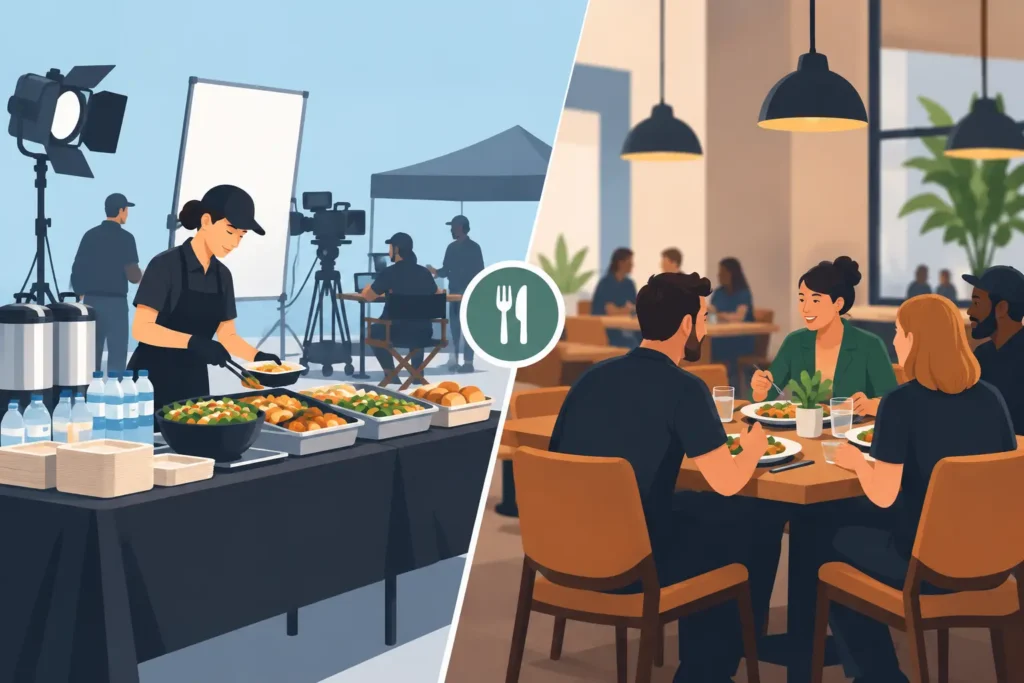
A crew meal is never just a meal when the next setup is waiting, talent is due back in make-up and the location has a narrow access window. The decision around on-set catering versus restaurants can affect call times, morale, transport, spend and the pace of an entire shoot. Restaurants can be a brilliant choice for the right occasion, but for most working productions, food needs to arrive around the schedule rather than asking the schedule to bend around food.
For line producers, production coordinators and location managers, the question is not simply which option serves the best lunch. It is which one keeps cast and crew well fed, accounted for and ready to work without creating another operational problem to solve.
On-set catering versus restaurants: the practical difference
A restaurant provides a fixed environment: a set location, table service or counter ordering, an established menu and opening hours. That can work well for a small team, a planned client dinner or a wrap meal where everyone can leave the unit base and enjoy a change of scene.
On-set catering is built around production reality. Meals can be served from a mobile kitchen, unit base, studio space, backstage area or carefully planned location setup. Service can be timed for breakfast call, rolling crew breaks, a six-hour turnaround, night shoots and late wrap. Hot meals, portable hot boxes, craft tables and grab-and-go stations can all be shaped around the working day.
That flexibility matters because productions rarely run in neat, restaurant-friendly blocks. A location may be miles from the nearest suitable venue. Parking may be restricted. A crew of 80 may need to eat in 25-minute waves. Background artists may need feeding separately from the main unit. Restaurant tables do not easily solve those problems. A production catering plan does.
Why time on set changes the food decision
The cost of taking a crew to a restaurant is not limited to the bill. Factor in travel time, finding the venue, ordering, waiting for food, paying, getting everyone back and restarting the day. Even a short lunch can become a lengthy interruption once a full department is involved.
On-set service protects the schedule. Food is ready where the crew is working, with timings agreed in advance. A breakfast station can be set before first call. Lunch can be staggered by department so camera, lighting, art and production do not all disappear at once. For night shoots, a substantial hot meal can land exactly when energy usually drops.
This is particularly valuable on commercials, drama, music videos and live-entertainment jobs where each lost minute has a consequence. If a crew meal runs late, overtime costs can follow. If people return hungry because restaurant service was slow or choices were limited, concentration and morale suffer too.
That does not mean restaurants have no place on a production. For a small pre-production meeting, a director and client dinner, or a modest crew working close to a venue with plenty of time, a restaurant can be enjoyable and straightforward. The key is to assess the true schedule, not the ideal schedule on the call sheet.
Feeding everyone means planning beyond the menu
A restaurant may accommodate dietary needs with notice, but a busy service can make detailed requirements harder to manage across a large group. On a production, dietary information needs to be collected, understood and reflected in the food setup from the start.
A professional on-set caterer can plan clear vegetarian, vegan, halal, gluten-free and allergen-aware choices alongside the main menu, rather than treating them as a last-minute alternative. Careful labelling, separate handling where required and direct communication with production help crew members eat with confidence.
It is also about variety. A crew eating on location for several days does not want the same basic offering on repeat. Freshly prepared, creative and flavoursome dishes from around the globe can keep meals interesting while still providing the familiar, filling food that people rely on during long days. Think warming curries with rice and sides one day, vibrant grain bowls and grilled proteins the next, followed by proper comfort food when the weather turns.
Restaurants offer choice from a menu, which can be useful for a small group. But large bookings often mean a reduced menu, pre-orders or uneven service times. On-set catering gives organisers greater control over portions, menu balance, dietary coverage and the way food is presented.
Craft catering covers the gaps between meals
The main meal is only one part of crew welfare. Early calls, long resets and overnight work require good craft catering too. Fresh fruit, pastries, sandwiches, snacks, hot drinks and cold refreshments help people keep going without leaving the location or relying on a nearby shop.
A restaurant lunch followed by nothing for eight hours is rarely enough for a demanding shoot. Well-stocked craft service can be tailored to the call sheet, weather, workload and audience. A cold day may call for soups and hot drinks; a summer exterior shoot may need chilled drinks, light snacks and easy hydration close to set.
Budgeting for the full picture
Restaurant pricing can appear simpler because the cost is attached to individual dishes. Yet productions should look at the wider spend: taxis or minibuses, fuel, parking, lost working time, service charges, drinks, last-minute headcount changes and the risk of paying for no-shows.
On-set catering is normally quoted around numbers, menu requirements, service style, equipment, staffing, delivery and location conditions. That may look more detailed, but it creates a clearer working plan. It also allows the package to match the job, whether that means individually packed hot boxes for a dispersed unit, a staffed hot buffet for a studio crew or a mobile kitchen for a remote exterior.
There are trade-offs. A compact, low-headcount shoot with a generous break and a restaurant next door may not need a full kitchen setup. Conversely, a multi-day production in a remote location may need more infrastructure, staffing and transport to deliver food safely and on time. The best value is not always the lowest meal price. It is the option that prevents disruption and feeds people properly.
Location, access and health and safety
Restaurants remove some setup responsibility because their kitchen and dining area already exist. However, they can introduce access issues of their own: limited parking, no room for kit, poor suitability for workwear, restricted group capacity or a long walk from the shooting location.
On-set catering requires planning, but that planning can be designed around the site. A reliable caterer will consider access routes, vehicle space, power and water where needed, service areas, waste removal, handwashing, weather cover and safe food holding. On a tight London location, this attention is often what makes the difference between a calm meal break and a logistical scramble.
Waste matters too. Catering for screen and events should not mean leaving a location burdened with unnecessary packaging. Reusable serviceware where practical, thoughtful portion planning and responsible packaging choices can reduce waste without compromising speed or hygiene.
When a restaurant is the better call
Restaurants are often the stronger option when the meal itself is part of the experience. A client-hosting dinner, awards celebration, small executive meeting or wedding-related gathering may benefit from a dedicated dining room, a particular ambience and full front-of-house service.
They can also suit a very small crew with no pressing turnaround, especially when the venue is genuinely close and able to handle the group. Confirm the booking, service timing, dietary requirements and payment process before the day. A casual assumption that a restaurant can absorb 20 hungry crew members at short notice is a risky production plan.
For shoot days, ask a simpler question: can every person eat well and return ready to work within the time available? If the answer depends on traffic, table availability or an over-stretched kitchen, bring the food to the set instead.
Choose the service that supports the day
The best catering decision starts with the call sheet. Share crew numbers, split shifts, dietary details, location constraints, meal times, budget range and whether cast, clients or artists need a separate service area. A good caterer will turn that information into a workable food plan, not just send over a menu.
D’Lights Event Catering plans meals around the real demands of TV, film, music and live events, from hot on-set food and portable hot boxes to craft catering and full-service event meals. The goal is straightforward: food that arrives on time, tastes excellent and gives production one less thing to worry about.
Before you book a restaurant or confirm a catering order, map the journey your crew would need to make and the minutes it would take at every stage. If food can be served safely, generously and on schedule where your team already is, that is usually the choice that keeps the whole day moving. Request a menu and booking plan early, particularly for busy shoot dates, so every call time is covered.