
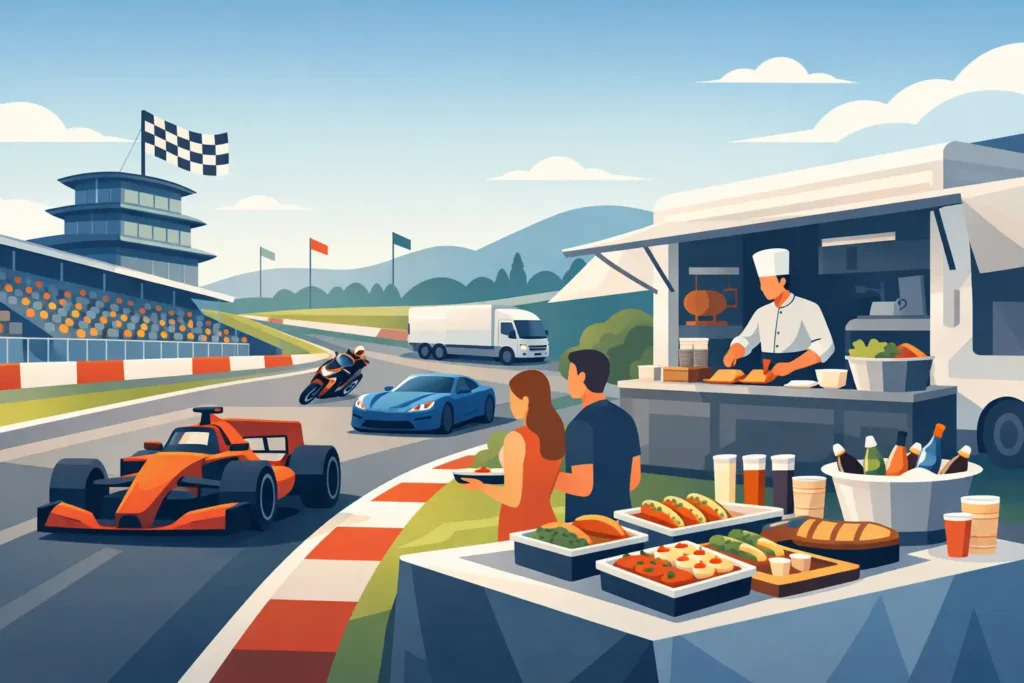
A race weekend can run on tight call times, changing weather and a schedule that shifts by the hour. MOTOR SPORT AND TRACKSIDE CATERING UK AND EUROPE needs to keep drivers’ teams, production crews, guests and event staff properly fed without slowing a single operation down. That means more than putting out a buffet. It means hot food ready when the garage opens, portable options for people on the move, and a catering team that understands the pressure behind the pit wall.
From a one-day track activation to a touring championship across Europe, the right food service supports energy, morale and a polished guest experience. At D’Lights Event Catering, we plan every menu and service point around the realities of the event: access restrictions, load-in times, long shifts, dietary requirements, changing headcounts and the need for food that arrives looking as good as it tastes.
What trackside catering has to deliver
Trackside environments are demanding for good reason. Crews may begin before sunrise, hospitality guests can arrive at a fixed time, and race teams often need a quieter, faster meal service between jobs. A catering plan has to serve all three groups without creating queues, waste or confusion.
The first priority is timing. Breakfast may need to be ready before the first briefing; lunch might be staggered around practice sessions, qualifying or filming; and evening food may be required after a late de-rig. Catering should work around the running order, not ask the event to work around catering.
The second is accessibility. Paddocks, garages, grandstands, temporary hospitality suites and remote test locations all have different practical limits. Some have full kitchens and power; others require a self-contained mobile kitchen, hot boxes or carefully planned drop-offs. A capable trackside caterer will establish access, parking, power, water, waste collection and service space before the first pan is heated.
Finally, there is the food itself. Race-day meals must be satisfying but sensible. Heavy, slow lunches are rarely the answer for people working physically or concentrating for long periods. Freshly prepared dishes with clear portions, generous protein, colourful salads, warming sides and reliable vegetarian, vegan and allergen-aware choices keep people fuelled without making the afternoon feel harder.
Motor sport and trackside catering across the UK and Europe
UK and European events bring an extra layer of planning. A catering brief for Silverstone, Brands Hatch or a London motorsport launch may involve different timings and site rules from a circuit weekend in mainland Europe. Touring crews may be arriving from another venue, local sourcing can vary, and a menu has to travel well if equipment or food is moving between locations.
For organisers, the practical question is not simply, “What shall we serve?” It is, “Who needs food, where will they be, and how much time do they genuinely have?” Once those answers are clear, the service format becomes easier to build.
A production crew filming content around the circuit may need individually packed hot meals delivered in timed waves. A sponsor hospitality area may suit polished buffet service, canapés and bar support. Mechanics and technical teams may benefit from a grab-and-go station that remains stocked through the day, with hot food available at planned intervals. The most effective package can combine all three.
When travel is part of the brief, menu design matters even more. Dishes need to hold their quality, remain safe at the correct temperature and be easy to serve in a temporary environment. This is where operational knowledge makes a clear difference. Food should be prepared for the journey, the service window and the people eating it, rather than selected solely because it looks good on a sample menu.
Build the menu around the working day
A strong trackside menu has rhythm. Early starts call for breakfast that feels generous but practical: hot breakfast baps, eggs, pastries, fruit, yoghurt pots and quality coffee can give a team a proper start without a lengthy sit-down service.
For lunch, variety is essential. Creative, flavoursome dishes from around the globe work particularly well because they offer comfort and choice in one service. Think fragrant curries with rice and fresh salads, slow-cooked meat or plant-based mains, vibrant grain bowls, pasta dishes, grilled vegetables and filling sides. The exact dishes should reflect the season, guest profile, equipment available and budget.
Afternoon service is often overlooked, yet it can prevent a noticeable drop in energy. Fresh fruit, cakes, savoury snacks, cold drinks and proper tea and coffee can keep teams going through a delayed session or a long de-rig. For evening service, a warming hot meal or relaxed street-food-style station can bring the day to a satisfying close.
Dietary requirements should never be an afterthought. Vegan, vegetarian, halal, gluten-free and allergen-aware meals need the same care, flavour and presentation as every other plate. Clear labelling and controlled service are vital, particularly where large crews are eating quickly. Ask for requirements early, but keep a sensible contingency in place for late additions and unanticipated guests.
Choose service that suits the site
There is no single right format for race catering. The best choice depends on guest numbers, access, weather, the amount of available space and how tightly scheduled the day is.
For a compact crew on a location shoot or test day, hot boxes and timed meal drops can be the most efficient solution. They keep food hot, avoid congestion and allow teams to eat when their department can step away. For a larger paddock workforce, a mobile kitchen can provide a visible, reliable hot-food base throughout the day.
Corporate guests and sponsors often need a more hospitality-led experience. This may include welcoming breakfast service, a staffed lunch buffet, canapés, table styling and coordinated front-of-house staff. It is still trackside catering, but the presentation needs to match the brand hosting the guests.
Weather is the variable that every organiser knows too well. Outdoor service points need cover, sensible food protection and a plan for wind, rain or unexpected heat. A good caterer does not wait for the forecast to turn before considering these details. They build alternatives into the plan from the start.
Details that protect the race-day schedule
The food can be exceptional, but the service fails if vehicles cannot get on site, staff arrive after call time or the dietary meal is not separated correctly. Trackside catering succeeds through planning that happens well before the event day.
A clear brief should cover the full schedule, estimated covers by meal period, access times, passes and security requirements, parking, loading routes, available facilities, power supply, waste arrangements and the precise point of contact on site. It should also identify where crew meals, client hospitality and talent or driver catering need to be delivered.
Staggered service is often the simplest way to keep operations moving. Rather than calling every department to lunch at once, teams can be given short windows around their responsibilities. This reduces queues, keeps food fresher and means essential roles are still covered.
Health and safety is equally practical. Temperature control, allergen management, clean service areas and waste-conscious packaging are part of protecting people and the venue. At circuits and temporary sites, where bins may be limited or far from the service area, having a waste plan is not a small detail. It helps the location stay professional throughout the event and speeds up de-rig at the end of the day.
Ask the questions before you book
The earlier catering is included in the production conversation, the more options you have. A supplier can advise on menu formats, staffing levels and equipment before the site plan becomes fixed, rather than trying to solve avoidable problems late in the process.
Before confirming a trackside catering partner, establish whether they can provide hot food at your required call times, cater for separate crew and hospitality areas, manage last-minute dietary updates, work from a mobile kitchen where needed and scale up if attendance changes. Ask how they will communicate with your production or event lead on the day. A single, responsive point of contact makes a busy schedule far easier to manage.
Great food at a motor sport event should feel effortless to the people eating it. Behind that moment is careful timing, experienced staff, thoughtful menus and a team prepared to adapt when the running order changes. Get those foundations in place early, and your cast, crew, guests and clients can focus on the race rather than wondering when lunch will arrive.