
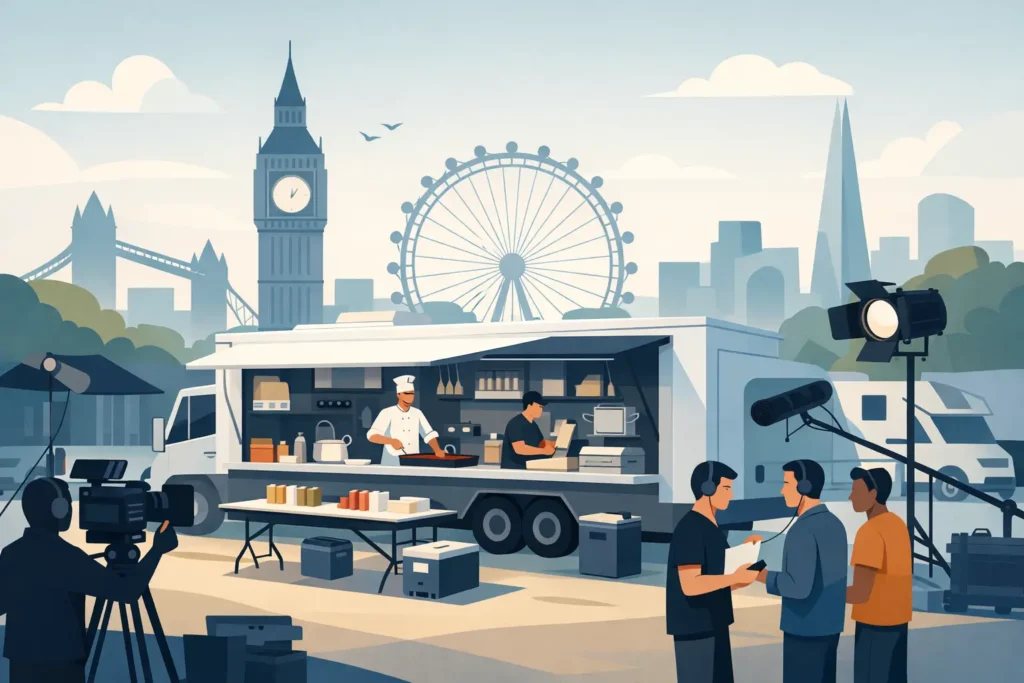
A crew is called for a 6am breakfast on a location with no usable kitchen. Lunch needs to land between set-ups, half the team are working in a different unit, and dinner may move by an hour without warning. This is exactly where mobile kitchens earn their place: not as a food van parked nearby, but as a fully planned catering operation that keeps people well fed, focused and on schedule.
For film, television, music, corporate events and large private celebrations, food has to work around the day rather than hold it up. A mobile kitchen brings fresh, hot, creative catering directly to the people doing the work, whether they are in a studio, on a remote location, backstage at a venue or in a London office car park.
What mobile kitchens bring to a production
A properly equipped mobile kitchen gives organisers freedom that a fixed venue kitchen cannot always offer. It allows meals to be cooked, held and served close to the action, with the equipment, staffing and food-safety controls needed for a reliable service.
That matters when the nearest restaurant is not suitable for a large crew, when a venue has limited facilities, or when a production is working somewhere with awkward access and changing call times. The aim is simple: guests and crew should receive a proper meal at the right moment, without the organiser having to chase deliveries, manage heating equipment or find space for preparation.
The best set-up depends on the brief. A small commercial shoot may need breakfast, a rolling craft table and a hot lunch for 35 people. A multi-day drama production may require staggered service across departments, portable hot boxes for a second unit and a late meal for a night shoot. A product launch may call for polished front-of-house service alongside an efficient back-of-house kitchen. The equipment is mobile, but the planning should never feel improvised.
Fresh food, even when the location is difficult
There is a misconception that catering from a mobile unit means compromising on quality. In reality, the right kitchen enables freshly prepared dishes to arrive hot, well presented and ready to serve in places where conventional catering would struggle.
Menus can be built around the rhythm of the day. Early calls may suit hot breakfast rolls, pastries, fruit, porridge and strong coffee. Lunch can be hearty and varied, from slow-cooked global dishes and vibrant salads to comforting classics that hold well during a staggered service. For evening work, a filling hot meal and lighter grab-and-go options help teams stay energised without slowing down.
Choice matters, but so does practicality. A delicate plated dish might be ideal for a seated dinner, while a one-pot dish, bowl food or generous buffet may be the stronger option on a muddy location or a tightly timed shoot. Good caterers will be honest about what travels well, what can be served quickly and what gives every guest the best experience within the available space and budget.
Dietary requirements need a real system
Dietary catering is not an afterthought, especially when feeding cast, crew or guests at scale. Vegan, vegetarian, gluten-free, halal, dairy-free and allergen-aware meals need clear planning from the start, along with accurate labelling and service procedures that reduce confusion at the counter.
The most effective approach is to gather requirements before the event, build satisfying alternatives into the main menu and make sure every dish feels considered. Nobody should be left with an uninspiring side salad while everyone else enjoys a full hot meal. A mobile kitchen can support this well when the menu, preparation areas and service plan are designed with dietary needs in mind.
Timing is the difference between catering and crew support
On a production, a late lunch is more than an inconvenience. It can affect morale, push back a schedule and create unnecessary pressure for the production team. Mobile catering needs to be coordinated around call sheets, access times, filming windows, parking restrictions and the reality that plans can change at short notice.
This is why an experienced catering partner asks detailed questions before confirming a service. How many people are expected at each meal? Is there a split between cast, crew, clients and performers? Can vehicles access the site? Is there power and water available? Where can queues form without affecting the working area? Will meals be served all at once, or in waves?
Those details shape everything, from the number of staff on site to the menu format and amount of equipment required. A breakfast service for 150 people arriving over 90 minutes requires a different plan from a 150-person sit-down meal. Neither is more difficult by default, but both need the right operational thinking.
Build flexibility into the day
The strongest mobile kitchen plans leave room for movement. A shoot may overrun. A stage time may change. Rain may force a service point to move indoors. A location manager may need the catering footprint reduced at the last minute.
Flexibility does not mean guessing. It means agreeing sensible contingencies in advance: what happens if lunch shifts, where food can be held safely, which menu items are suitable for later service, and who has the authority to make decisions on site. This preparation gives organisers confidence when the unexpected arrives.
Choosing the right mobile kitchen set-up
There is no single mobile-kitchen model that suits every event. The right choice depends on guest numbers, menu ambition, site conditions, service style and how long the operation will run.
For a compact location with a smaller crew, a portable hot-food set-up and hot boxes may be enough. For a large outdoor event or a long-running unit base, a more substantial kitchen operation can provide continuous production, storage and service. Where access is restricted, equipment may need to be brought in and assembled rather than parked directly beside the venue.
Organisers should also consider the less glamorous essentials. Waste management, handwashing, refrigeration, weather cover, power supply, lighting and safe walking routes all influence whether service runs smoothly. In central London, vehicle access and timing can be as critical as the menu itself. A great dish cannot rescue a catering plan that cannot physically reach the site.
Presentation still matters
Mobile does not have to mean basic. Corporate guests, wedding parties and launch attendees still expect food that looks generous, tastes excellent and suits the occasion. Even on a working production, a well-stocked craft table, attractive buffet or thoughtfully packed hot meal sends a clear message: the people here are being looked after.
For client-facing events, the service can be tailored further with menu styling, table presentation, branded touches and front-of-house staff who understand the tone of the occasion. For crews, speed, portions and warmth may be the priority. Both are hospitality. They simply ask for different choices.
D’Lights Event Catering plans mobile food service around that reality, pairing creative and flavoursome dishes from around the globe with the practical coordination busy productions require. The goal is not merely to arrive with food. It is to make the catering side of the day feel handled.
Questions to settle before booking
Before committing to a mobile catering service, get clear on the production schedule, exact site address, expected numbers and menu priorities. Confirm whether guest numbers may rise, whether there are separate service areas, and which dietary requirements need individual meals rather than general menu options.
It is also worth discussing the working conditions openly. A caterer needs to know about stairs, narrow gates, uneven ground, limited parking, noise restrictions, security checks and any venue rules. These are not minor details. They determine the safest and most efficient route from preparation to plate.
Finally, set expectations around communication. One named contact on the day, a shared timetable and prompt notice of changes can prevent small issues becoming major disruptions. When the catering team understands the running order, they can respond quickly and keep service calm even when the schedule is not.
A mobile kitchen is at its best when it becomes part of the production rhythm: breakfast ready before the first briefing, hot food waiting when the floor breaks, and a dependable team quietly adapting behind the scenes. Give the catering plan the same attention as transport, power and staffing, and your guests will remember the food for the right reasons.