
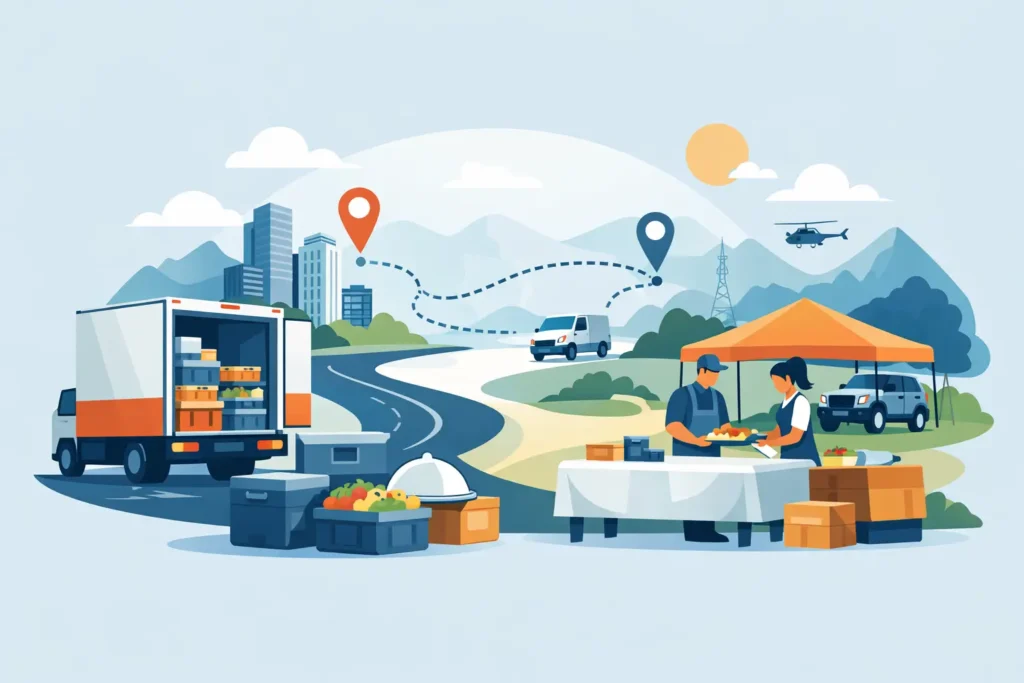
A crew can forgive drizzle, a bumpy access track and a long walk from unit base. What they should not have to forgive is a cold meal, a missing vegan option or lunch arriving after the next set-up has started. Knowing how to cater remote locations means treating food as part of the production plan, not an item to arrange once the location is confirmed.
From woodland shoots and coastal adverts to festival fields, warehouses and country estates, remote catering needs more than a good menu. It needs clear communication, practical equipment and a team that understands call times, access restrictions and the reality of feeding people who cannot simply leave site to find lunch.
Start With the Location, Not the Menu
Creative and flavoursome dishes from around the globe can work brilliantly in a remote setting, but only when the service is built around the site. Before finalising food, establish exactly where the catering team can park, unload, prepare, serve and clear down. A postcode is not enough when the final mile involves a narrow farm track, a height barrier or a steep walk across uneven ground.
Ask for a detailed location brief early. It should cover vehicle access, gate widths, turning space, parking permissions, surface conditions and the distance from the loading point to the serving area. Check whether there is hard standing for a mobile kitchen, whether generators are permitted and where waste can be stored securely. A beautiful location with no practical route for deliveries can quickly turn a straightforward lunch into a logistical problem.
Power and water deserve the same attention. Some locations have a reliable mains supply and accessible drinking water. Others have neither. This affects whether the best solution is a fully equipped mobile kitchen, insulated hot boxes, pre-portioned meals or a compact craft catering station with carefully planned power requirements. There is no one-size-fits-all answer, and forcing a standard set-up onto an unsuitable site usually creates delays.
How to Cater Remote Locations Around Call Times
On a film, TV or music production, the timetable is the real venue. A 6am call, an early unit move or a split crew changes the catering plan far more than the menu title does. The food service should support the day’s rhythm: a proper breakfast before first shots, hot meals when the schedule allows, and high-quality grab-and-go options when it does not.
Begin with the number of people expected at each service, rather than the total headcount for the day. Main unit, second unit, drivers, artists, production office and visitors may all arrive at different times. A staged plan avoids a crowded queue just as the crew needs to be back on the floor.
For an early call, a breakfast station might combine hot breakfast baps, porridge, pastries, fruit and strong coffee, with clearly labelled vegetarian and plant-based choices. For lunch, a hot main meal can be backed up by salads, lighter bowls and substantial dietary alternatives. Later in the day, snacks should be more useful than decorative: fresh fruit, protein-led options, sandwiches, cakes and warm drinks help people stay focused when the weather turns.
Build in contingency as well. Shots overrun. Roads close. Rain moves the service point. A dependable remote catering plan includes meals that hold safely, a reserve of late plates and a practical method for delivering food to a crew that cannot break all at once. Portable hot boxes can be particularly effective for teams working away from the main base, provided portions, temperatures and collection points are managed properly.
Plan a Menu That Travels Well
Remote catering is not an excuse for uninspiring food. It does, however, require menus chosen for the journey and the service conditions. Dishes need to remain appealing and safe during transport, then be served quickly without losing texture, temperature or presentation.
Meals with sauces, slow-cooked proteins, curries, braises, grain bowls and roasted vegetables often travel better than food that depends on a last-minute crisp finish. That does not mean every remote menu has to feel heavy. Vibrant salads, fresh wraps, seasonal sides and bright dressings bring colour and balance, especially on long summer days.
The right choice depends on the facilities available. If there is room for cooking and finishing on site, the menu can be broader. If access is restricted and the team is relying on hot holding, choose dishes designed to perform in that format. Be honest about the trade-off. A menu with fewer components may be the smarter choice if it means every person receives a hot, generous and well-presented meal on time.
Dietary requirements must be gathered before the event, not discovered at the service table. Request clear information on allergies, intolerances, religious requirements and preferences from the production coordinator or organiser. Every meal should be labelled, with allergen controls and separate handling procedures in place. The person with a dairy allergy or coeliac requirement deserves the same considered lunch as everyone else, not an afterthought in a plastic container.
Choose the Right Service Model
The best service format depends on the crew size, location layout, weather and schedule. A compact shoot with limited access may need delivered hot boxes and a refreshment station. A larger production could benefit from a mobile kitchen, staffed buffet service and an all-day craft table. For a corporate away day or wedding in a rural venue, table service may be possible, but it still needs an efficient back-of-house plan.
There are four details worth agreeing before the day:
- The exact service windows, including any rolling or staggered breaks.
- Who can authorise changes if the schedule moves at short notice.
- Where food will be served if wind, rain or restricted access affects the original plan.
- How plates, packaging, leftovers and waste will be managed after each service.
These details sound small, yet they protect the whole operation. When the unit needs lunch brought forward by 30 minutes, everyone should know who makes the call and what happens next.
Protect Food Safety in Challenging Conditions
A remote site can be perfectly suitable for catering, but it must be assessed realistically. Mud, dust, heat, poor lighting and limited handwashing facilities all affect how food is prepared and served. Health and safety is not paperwork to file away. It shapes the physical layout of the catering area.
Keep preparation and service zones clean, covered where necessary and separated from vehicle routes or public access. Ensure staff have appropriate handwashing and sanitation facilities, food is held at safe temperatures, and allergen information remains visible throughout service. On exposed locations, gazebos, flooring and lighting may be just as essential as tables and urns.
Waste also needs a plan. Remote sites often have limited bins, strict environmental rules or no collection service at all. Use packaging thoughtfully, avoid unnecessary single-use items and agree whether the catering team will remove waste from site. Waste-conscious choices are good practice, but they must still work under production pressure. A flimsy container is not a sustainable solution if it leaks in a crew vehicle or fails to keep food protected.
Give the Catering Team a Proper Brief
The strongest remote services begin with a useful conversation, not a vague request for ‘lunch for 80’. Share the schedule, location contact, crew breakdown, access instructions, dietary list, budget and any client-facing expectations. If celebrities, talent, executives or guests require a separate area or tailored menu, say so early enough for the team to plan it well.
A location manager may have the best knowledge of access, while a line producer holds the final schedule and a production coordinator tracks dietary information. Bringing those details together prevents crossed wires. Photographs of the service area, a what3words reference where appropriate, gate codes and a mobile contact with signal on site can save valuable time on the day.
D’Lights Event Catering plans around these practical realities, supplying fresh food, flexible service formats and hands-on coordination for crews and guests working beyond the usual venue setup. The aim is simple: food arrives where it is needed, looks inviting and keeps the day moving.
Prepare for the Change You Cannot Predict
Remote locations rarely follow the original plan perfectly. A recce may take place in dry weather, then the shoot day arrives with high winds and standing water. A roadworks diversion can add an hour to travel. A scene may need another take just as lunch is ready.
That is why a capable catering partner plans for options. This might mean allowing extra travel time, carrying alternative shelter, holding a proportion of meals back for a later wave or preparing a second service point. The right contingency depends on the job, but it should be discussed before the first vehicle leaves the kitchen.
Remote catering works best when organisers give food the same operational respect as transport, power and welfare. Share the real schedule, explain the site honestly and choose a service built for the conditions. When every plate has a plan behind it, your cast, crew or guests can focus on the reason they are there. Call now to discuss the location, request a tailored menu and put a reliable catering plan in place before call time.