
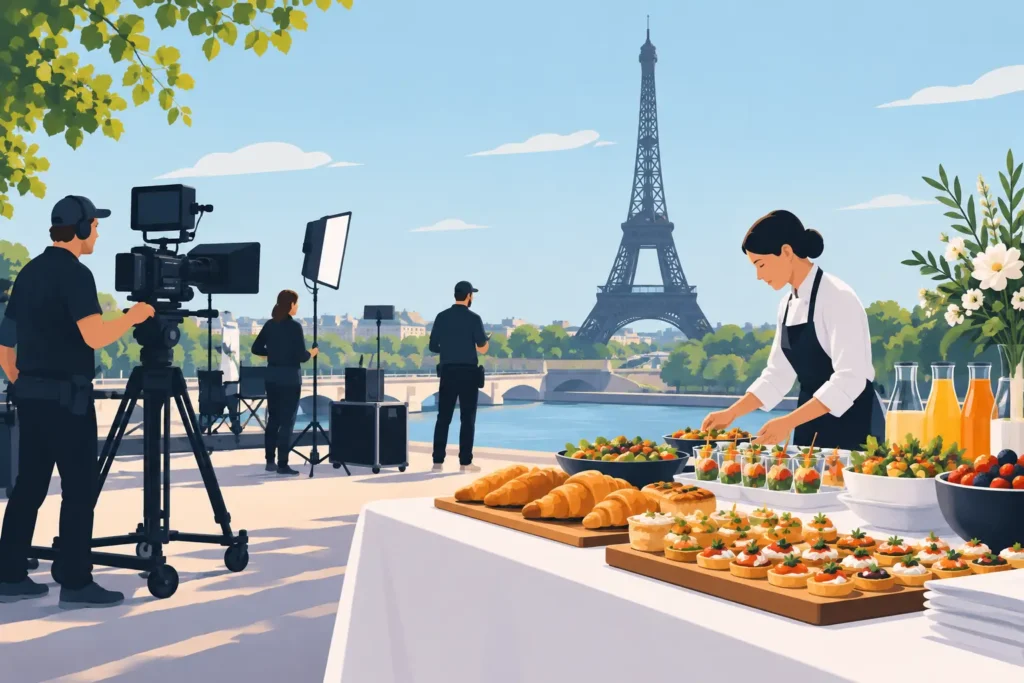
A dawn call in a Paris studio, a night shoot in Provence or a commercial unit moving between locations all have one thing in common: hungry people cannot wait. Exceptional TV and Film Catering in France means providing creative, flavoursome food exactly when cast and crew need it, without placing another problem on the production team’s call sheet.
For line producers, production coordinators and location managers, catering is crew welfare and schedule protection in one. The right food service keeps departments moving, supports long shifts and gives everyone a proper break when time is tight. The wrong service creates queues, missed meal windows and a unit running low on energy just when the pressure builds.
Exceptional TV and Film Catering in France Starts With the Schedule
A production catering plan should be built around the shooting day, not a standard lunch slot. That means understanding the first call, crew arrival times, camera turnaround, artist requirements, night work, travel between units and the point at which a hot meal will make the biggest difference.
For a studio day, a staffed hot buffet may be the right fit, with breakfast available before crew call and fresh lunch served in staggered waves. On a remote location, portable hot boxes, efficient grab-and-go stations and a mobile kitchen can be the stronger option. It depends on access, available power, parking, service space and how quickly the unit needs to move on.
D’Lights Event Catering plans every service around these realities. From an early breakfast for the lighting crew to late-night food for a second unit, the focus is on keeping meals fresh, generous and ready at the agreed time.
Food That Works as Hard as the Crew
Great production food should feel like a welcome break, not an afterthought. A well-balanced menu can include warming breakfasts, colourful salads, hearty hot mains, satisfying vegetarian dishes, lighter options and proper sweet treats for the afternoon dip. Creative global cuisine brings variety to a long shoot, while familiar favourites help when a crew simply needs a dependable, filling plate.
Choice matters, but so does speed. A menu with too many slow-to-serve elements can hold up a busy lunch break. Equally, a basic meal repeated for days can lower morale. The best approach balances flavour, portion size and service pace, with menus shaped around the scale and length of the production.
Planning Catering for French Locations
France offers remarkable locations, from city streets and grand estates to coastlines, vineyards and rural roads. It also brings practical questions that should be answered before the catering team arrives: where can vehicles park, is there a water source, what kitchen facilities are available, and can waste be removed responsibly after service?
Early coordination avoids costly last-minute changes. A catering partner should work with the production office and location team to confirm delivery windows, access instructions, service areas and the catering equipment needed on site. If the day involves a location move, meals and refreshments need to travel safely and remain at the right temperature.
Local sourcing can add real character to menus, particularly when the production wants French seasonal ingredients alongside international crew favourites. However, the menu must still work for the shoot. A beautiful regional dish is not the right choice if it cannot be served efficiently in a field at midnight. Practicality always has a place beside presentation.
Dietary Requirements Need Proper Planning
Dietary needs are not a small add-on at the end of an order. Productions regularly need vegetarian, vegan, halal, gluten-free and allergen-aware choices, often alongside individual cast requirements. These meals should be clearly labelled, properly separated and as appealing as every other dish on the table.
Accurate numbers matter here. Collecting dietary information before the shoot allows the caterer to prepare confidently, minimise waste and prevent the awkward moment when someone discovers there is nothing suitable left. It also supports the health-and-safety standards that every professional production expects.
The Details That Keep Service Moving
Reliable TV and film catering is about more than cooking well. It is timely deliveries at difficult call times, enough tea and coffee for an early unit, chilled refreshments during a hot exterior day, and attentive staff who understand that filming takes priority. Catering teams need to adapt quietly when a scene overruns, a meal break shifts or an additional department appears on the count.
Waste-conscious packaging, efficient portion planning and sensible service layouts all make a difference, particularly on locations with limited facilities. The goal is simple: keep the area clean, the food inviting and the crew fed without creating obstacles for the production.
Bring the call sheet, crew count and location plan into the conversation early. With the right catering support in place, France’s most demanding shoot days can still finish with a well-fed, well-looked-after crew.