
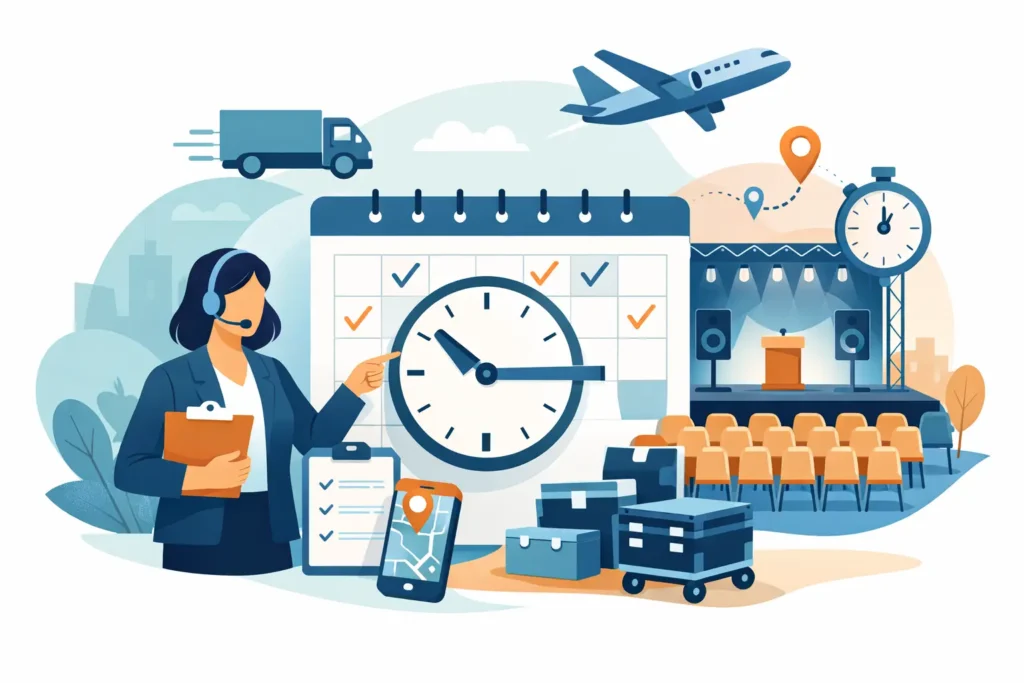
A 6.00am call time, a venue with limited access, 80 crew members arriving in waves and three dietary lists can turn a simple breakfast order into a production-critical operation. That is where event logistics earns its place. Good catering is not only about serving creative, flavoursome dishes. It is about getting the right food, people and equipment to the right place at exactly the right moment.
For a film set, live show, corporate launch or wedding, food service affects energy, morale and the running order. If lunch is late, a shoot loses time. If allergens are handled poorly, the consequences are far more serious than an unhappy guest. If hot food arrives without the space, power or staff to serve it, a beautifully designed menu cannot rescue the experience.
Event logistics starts before the menu
The best catering plans begin with the schedule, not a list of dishes. Before choosing breakfast pastries, a globally inspired buffet or plated dinner, establish the shape of the day. Ask when guests, cast and crew arrive; when they can realistically eat; how long each service window lasts; and whether timings are fixed or likely to move.
Production schedules rarely behave perfectly. A scene overruns, an artist arrives late, a client presentation extends or a ceremony starts after the photographs. The catering plan needs enough structure to protect meal breaks, while retaining the flexibility to respond without creating waste or leaving people hungry.
For crews working across long days, staggered service is often more effective than one large lunch rush. A first wave can eat while another remains on duty, with fresh replenishment ready for the next break. For a corporate event, the priority may be a polished arrival moment followed by food that guests can eat while networking. At a wedding, service needs to fit naturally around speeches, photographs and the couple’s preferred pace.
The key detail is not simply the guest count. It is the number of people who need food at each specific point in the schedule.
Build a site plan that works in real life
A site visit or detailed venue briefing can prevent most avoidable problems. Event spaces look very different on a floor plan once a mobile kitchen, hot holding, service tables, refrigeration, waste stations and staff access are added. On location, the practical questions become even more urgent.
Can a catering vehicle get close enough to unload? Is there a lift, stairs or a long walk from the loading bay? Where can staff wash hands, store chilled items and keep hot food safely held? Is power available and suitable for the required equipment? What happens if the weather changes?
These answers determine the service style. A studio with a catering area may suit a full hot buffet and seated breaks. A remote location with restricted access may need portable hot boxes, insulated delivery and a compact grab-and-go station. Backstage, food must often be accessible without blocking corridors, cable runs or artist movement.
Access, parking and security
London venues can bring tight loading windows, parking restrictions and security checks. Plan these into arrival times rather than treating them as a last-minute inconvenience. A catering team that reaches the gate at the scheduled delivery time may still be 20 minutes away from being ready to serve.
Give suppliers the right contact names, vehicle details, access instructions and loading information in advance. On a busy production, a nominated person should be able to make quick decisions when the original plan changes. It avoids a driver waiting outside while a meal break approaches.
Equipment and staffing are part of the food service
A menu can look straightforward until it reaches the venue. Hot dishes need reliable holding and serving equipment. Canapés require careful finishing and circulation staff. Barista coffee needs power, water and enough hands to prevent a queue. A grazing table needs protection, replenishment and clear allergen information.
Staffing levels should match the desired experience. A delivery of individually labelled meals can work brilliantly for a crew with short, staggered breaks. A formal dinner requires a different level of front-of-house attention, kitchen support and timing. Cutting staff may reduce the quote, but it can also slow service and place more pressure on the organiser’s team.
Plan menus around people, pace and dietary needs
Food should suit the working day as well as the occasion. A heavy lunch may not be right before a physically demanding shoot, while a late-night music crew may need a substantial hot meal rather than snacks alone. Build variety into the menu so there is a dependable option for everyone, from familiar comfort food to colourful dishes inspired by cuisines from around the globe.
Dietary requirements must be collected early, confirmed close to the event and clearly managed on site. Vegetarian, vegan, halal, gluten-free and allergen-aware options should feel like considered meals, not an afterthought placed at the end of the buffet. Clear labelling matters, but separate preparation, storage and service procedures matter more where allergens are involved.
There is also a balance between choice and speed. Too many menu components can create queues and make replenishment harder. For a high-pressure service window, two excellent hot mains, thoughtful sides and a well-stocked salad or grab-and-go option often perform better than an overcomplicated spread.
Protect the schedule with a service timeline
A catering timeline should run alongside the event or production schedule. It covers deliveries, set-up, food preparation, service, clearing, waste collection and collection of hired equipment. It should also include contingency time, because a late access slot or unexpected venue rule can affect everything that follows.
For on-set catering, schedule food around call times and department movement. Breakfast may need to be ready before the full crew arrives. Tea, coffee and snacks should be refreshed before people notice they are gone. Lunch must account for travel from set to the catering area, not just the advertised break length.
For launches and corporate events, consider the moments guests remember. Is there a drink and canapé on arrival? Can food be served without interrupting a speech? Will the service layout encourage guests to explore the room, or create a bottleneck at the entrance? Small decisions in placement and timing can change the atmosphere completely.
Have a plan B for the things that move
Not every contingency deserves the same response. A ten-minute delay may call for holding food safely and adjusting staff positions. A two-hour delay could require a revised refreshment plan, new service times and careful communication with the client. The right approach depends on food safety, guest expectations and the cost of remobilising a team.
Weather, traffic, venue restrictions, power issues and changing numbers are all manageable when they are discussed honestly in advance. The aim is not to pretend nothing will change. It is to know who can approve a decision and how quickly the catering plan can adapt.
Waste, safety and presentation must work together
Professional event logistics includes what happens after service, not only what appears on the table. Waste-conscious packaging, sensible portion planning and accurate numbers help reduce unnecessary disposal. Reusable serviceware may suit a controlled venue, while a location shoot may require practical, secure packaging that travels well and keeps food at the correct temperature.
Health and safety should be visible in the way a service is run, without making guests feel as though they are in a compliance meeting. Clean service areas, sensible queue management, allergen information, safe food temperatures and tidy clearing all build confidence. On a crowded set or backstage space, they also help prevent trip hazards and keep working areas usable.
Presentation still matters. A crew meal can be quick, generous and properly presented. A portable station can feel welcoming. A corporate buffet can look polished without slowing the room down. The best result is food that feels thoughtfully hosted, whatever the setting demands.
Choose a catering partner that thinks like your team
The most useful caterer is not the one who simply asks for numbers and sends a menu. Look for a team that asks about access, schedules, dietary needs, staff roles, equipment, venue rules and the experience you want guests to have. They should be comfortable serving an intimate group one day and a major production the next.
At D’Lights Event Catering, every plan is shaped around the practical reality of the brief, from hot on-set meals and craft catering to weddings, launches and corporate service. That means fresh food is backed by clear coordination, responsive communication and people who understand that a meal break is often the moment that keeps the whole day moving.
Share the schedule, site details and dietary information as early as possible, then let the catering team turn those moving parts into a service your guests, cast and crew can rely on.