
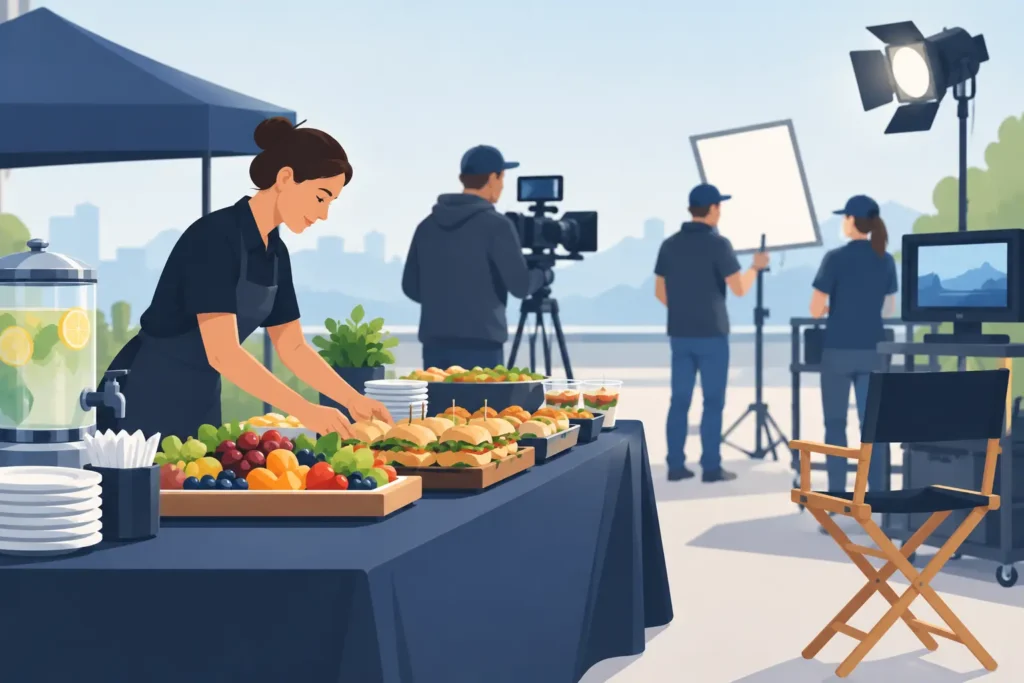
A 06:00 crew call does not mean breakfast can arrive at 06:00. By then, a location team may already be unloading kit, talent may need to be through hair and make-up, and the first setup could be minutes away. Well-planned catering call times give everyone a proper chance to eat without creating a queue, delaying a shot or leaving the last department with cold coffee and no breakfast.
For production and event teams, food timing is part of the running order. It needs the same clear thinking as access, parking, power, unit base and transport. Get it right and the crew stays energised, the schedule feels supported and the day has room to breathe. Get it wrong and even an excellent menu becomes a problem.
What catering call times really mean
A catering call time is the agreed time at which food, staff, equipment or a mobile kitchen must be ready to serve. It is not simply the time a delivery vehicle arrives at the gate. The caterer may need time to check in, unload, set up hot holding, lay out dietary options, complete temperature checks and prepare a service area that is safe and easy for a busy crew to use.
On a studio job, access may be straightforward but service needs to work around stage rules, quiet periods and tightly managed breaks. On a location shoot, the catering team may be dealing with narrow access, mud, stairs, limited power or a walk from the unit base to set. A backstage service has its own rhythm, with artist arrivals, soundchecks, doors and crew changeovers. The catering call time has to account for the real conditions, not just the published schedule.
The most useful question is: when does the first person need food in hand? Work backwards from there. If breakfast service starts at 06:00, a caterer may need access from 05:00 or earlier, depending on the menu, site and number of people. A hot breakfast for 150 crew members needs a different setup window from coffee, pastries and fruit for a 20-person recce.
Build call times around the day, not one meal
The strongest catering plans follow the whole working day. Breakfast, refreshments, lunch, afternoon energy, wrap food and late-night service should connect rather than be booked as isolated drop-offs.
For an early unit call, a substantial breakfast service should usually open before the main crew call. This allows departments with advance duties to eat first and avoids a rush when everyone arrives together. Coffee, tea, chilled juices, fruit and lighter options should be ready immediately, while hot dishes are held and replenished so that late arrivals are not faced with empty trays.
Lunch timing needs even closer coordination. A scheduled one-hour lunch break does not always mean 60 minutes of active food service. If a 200-person crew is released at once, service must be designed for speed. Multiple serving points, clearly labelled menus and a separate dietary collection point can protect the break. If departments break in waves, staggered service can keep food fresh and prevent a bottleneck at the catering tent.
Afternoon food is often underestimated. Long lighting changes, weather delays, night shoots and physically demanding calls can drain a crew quickly. A well-timed hot box, snack station or fresh grab-and-go offering gives people something useful without pulling them away from the work for too long. It does not need to be a second lunch. It does need to be available before energy drops and concentration follows it.
For late finishes, ask whether people need a proper hot meal, a lighter wrap option or individually packed food for travel. The answer depends on the call sheet, journey times and whether departments are wrapping together. A driver facing a long journey home has different needs from a crew member staying for a final reset.
Share the details that change the plan
A caterer cannot plan accurately from headcount and meal times alone. The operational details are what turn a broad brief into a reliable service.
Start with the confirmed first access time, not only the crew call. Explain where the team can park, whether there are height restrictions, how far equipment must travel and whether lifts, stairs or uneven ground are involved. On location, specify whether there is water, power, lighting and cover from the weather. These points affect staffing, equipment and setup time.
Then share the day’s movement. Is the unit travelling between locations? Are background artists arriving later? Is there a split crew, night unit or separate client area? Do cast meals need to be delivered to holding, trailers or a closed set? A single overall number can hide several very different services.
Dietary requirements should be collected early and updated when the final call sheet lands. Vegan, vegetarian, halal, gluten-free and allergen-aware meals should feel considered, not like an afterthought placed at the end of a buffet. Clear labels, sensible separation and a named point of contact make it easier for crew members to eat confidently and quickly.
It also helps to flag the nature of the day. A freezing exterior shoot calls for warming, satisfying food and plenty of hot drinks. A summer location with no shade needs chilled hydration and lighter dishes that travel well. A formal corporate launch may need polished canapé timing and discreet service rather than a crew-style serving line. The food and the service format should match the pressure of the job.
Allow for setup, changeovers and contingency
A common mistake is treating catering as a delivery rather than a live operation. Freshly prepared food needs a safe, practical route from kitchen to guest. Hot food needs correct holding. Cold food needs protection. Waste needs a plan. Staff need room to work without blocking production traffic.
Build a small amount of contingency into every catering call time. London traffic, security queues, last-minute road closures and venue restrictions are realities, particularly when a mobile kitchen or sizeable delivery is involved. Early access is valuable, but it must be authorised. A vehicle that arrives early but cannot enter site is not solving the problem.
Changeovers deserve their own time too. A breakfast station may need to become a lunch service area; a meeting room may need to be reset before guests arrive; a backstage green room may require refreshment top-ups between rehearsals. Discuss these moments in advance so staffing, crockery, disposables and cleaning are covered. Where reusable serviceware is suitable, it can improve presentation and reduce waste, but it also requires collection, washing arrangements and enough time between services.
At D’Lights Event Catering, planning begins with these practical questions because a creative, flavoursome menu only works when it reaches people at the right moment. From hot on-set meals and portable hot boxes to mobile kitchens and full event service, the approach should flex around the production rather than asking production to bend around catering.
Catering call times for different types of jobs
There is no universal call-time formula. A small commercial shoot may need breakfast from 07:00, a rolling lunch window and a compact hot box service after wrap. A feature production might require pre-call breakfast, multiple lunch sittings, craft catering available throughout the day and a late crew meal. The scale is different, but the principle is the same: plan from who needs feeding, where they are and when they can realistically step away.
For weddings and corporate events, service timing is driven less by crew calls and more by guest flow. Even so, the same discipline applies. Caterers need access for setup, enough time to prepare drinks and canapés before arrivals, a clear point for the meal service and a plan for dietary guests. A delayed speech or extended networking session may shift the kitchen’s rhythm, so communication between the event lead and catering manager is essential.
Music and backstage catering can be especially changeable. Timings move, artists arrive at different times and crews may need food while working through doors. Build flexible options into the brief: food that can be refreshed, individually packed meals for people who cannot leave their position and a clear arrangement for artist or VIP service where required.
Make one person responsible for live updates
Even a carefully built schedule can change on the day. A rain hold, a missed shot, a delayed arrival or a venue issue may move lunch by 30 minutes. The key is not to pretend changes will not happen. It is to make sure the right person can communicate them quickly.
Nominate one production contact who can confirm changes to meal breaks, crew numbers, access and wrap. In return, the catering lead should be able to say what is possible, what needs a little notice and where a compromise may be needed. Moving a hot lunch by 15 minutes is often manageable. Moving it by two hours may affect food quality, staffing and the next service. Honest updates protect both the schedule and the meal.
When booking, provide the latest call sheet, site details, expected numbers, dietary information and a contact who will answer their phone on the day. Then agree the key service points in plain language: access time, setup complete time, service open time, break end and collection or wrap time.
A well-fed crew notices the difference, even if they never see the planning behind it. Set your catering call times with enough room for proper preparation, clear communication and a little real-world flexibility, and food becomes one less pressure on an already demanding day.