
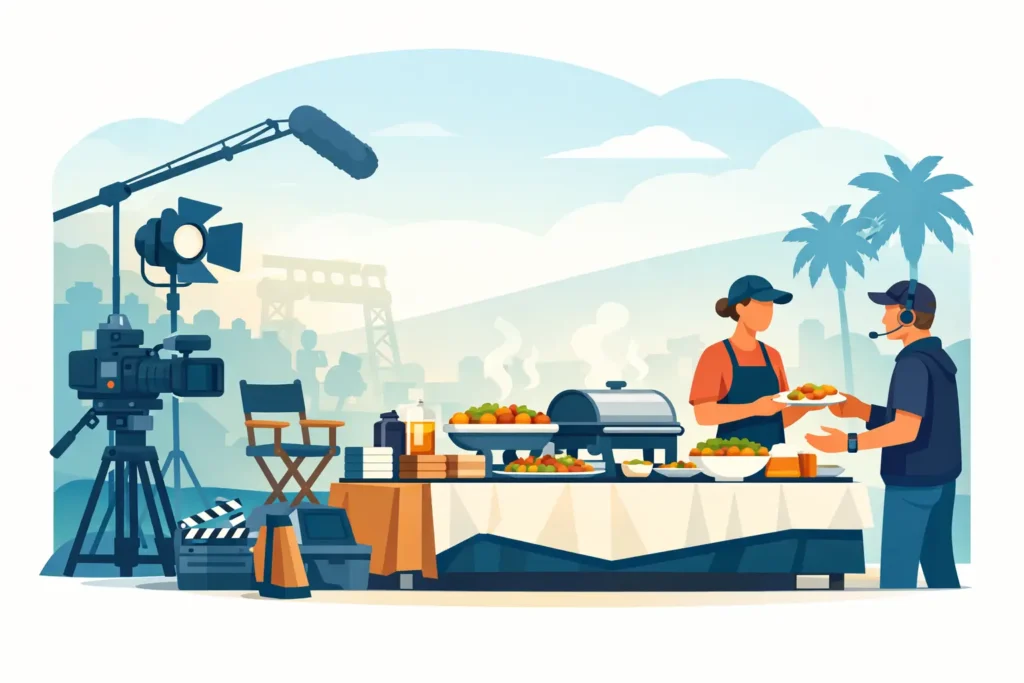
A missed meal break can put far more than hungry people in a bad mood. It can disrupt a tightly planned shooting day, slow departments down and leave cast and crew feeling overlooked. The best crew catering for TV and film is not simply about serving good food. It is a production service built around call times, changing schedules, remote locations and the real needs of the people making the work happen.
For location managers, production coordinators and line producers, the right caterer removes a major pressure point. Meals arrive when promised, the queue moves quickly, dietary requirements are handled properly, and there is enough choice to keep a long day feeling looked after. That is what turns catering from a necessary expense into part of a well-run set.
What the best crew catering for TV and film looks like
A strong catering service understands that no two shoots run alike. A commercial may need a fast breakfast drop before first light and a compact lunch service between setups. A feature shoot may require hundreds of hot meals across staggered breaks, craft tables that stay replenished all day and a late-night service for an extended call. Studio work brings its own access rules and timings, while a rural location can mean limited power, difficult parking and no nearby food options.
The answer is not a fixed menu or a one-size-fits-all package. It is planning that starts with the production schedule. Your caterer should ask about crew numbers, unit base layout, turnaround times, parking, access, service windows, power and water, dietary information, and whether the production is likely to run over. These details determine whether hot boxes, a mobile kitchen, plated service or a flexible grab-and-go station is the right fit.
Food must also be genuinely worth the break. Freshly prepared dishes with flavour, colour and proper variety make a difference on day three, day ten and day thirty. Think warming curries, slow-cooked mains, vibrant salads, filling plant-based dishes, breakfast baps, fresh fruit, homemade cakes and the kind of snacks people can take back to set without creating mess or delay.
Timing is part of the menu
On a shoot, punctuality is as valuable as presentation. The best meal in the world is of little help if it arrives after the crew has been released, or if service takes so long that the afternoon schedule begins to slip.
Crew catering should be built around the reality of the call sheet. That may mean breakfast ready before a 6am call, coffee and pastries waiting as departments arrive, lunch served in clearly managed waves, and a hot supper held back for a crew working into the evening. For split units, second units or multiple locations, delivery plans need to be just as precise.
There is a balance to strike. Food prepared too early can lose its quality; food prepared too late risks holding up service. Experienced production caterers manage this through scheduled preparation, insulated hot holding, sensible menu choices and close communication with the production team. If the day moves, the service needs to move with it.
That flexibility matters most when plans change at short notice. A scene runs long, the weather closes in, a location move is delayed or a larger crew arrives than expected. A capable caterer does not create another problem for the production office. They assess what is possible, adjust staffing or delivery arrangements, and keep people fed.
Hot meals, craft catering and food that travels well
Crew food has to suit how people actually work. A camera operator may only have ten minutes. A makeup team may need a quiet breakfast before talent arrives. A construction crew setting up unit base may need something substantial well before the main lunch service. Good catering covers these different moments without treating every meal as the same event.
Hot on-set meals give a proper reset during demanding days. They should include balanced portions, familiar favourites and globally inspired options, with enough rotation to avoid menu fatigue on longer productions. A comforting main with a fresh side, a filling vegan dish and a well-made dessert can lift the atmosphere of a crew break quickly.
Portable hot boxes are particularly useful where there is no room for a full kitchen setup or when meals must reach several working areas. They keep food at the right temperature while allowing the production to serve in a controlled, practical way. For remote shoots, they can be the difference between a proper hot lunch and an expensive, disappointing last-minute workaround.
Craft catering has a different job. It keeps energy levels steady between meals, especially where departments cannot leave their positions easily. The best craft stations have quality coffee, tea, cold drinks, fruit, sweet treats and savoury snacks, alongside options with more staying power. Protein-rich bites, wraps, yoghurt pots and fresh alternatives help avoid the sugar crash that follows a table full of biscuits alone.
Grab-and-go service is equally valuable when the schedule is tight. Individually packaged breakfast pots, sandwiches, salads and snack bags can be distributed quickly and taken to location. The packaging should be practical, clearly labelled and as waste-conscious as the service allows. Convenience should not mean anonymous, uninspiring food.
Dietary requirements need proper control
Every production has dietary requirements. The issue is not whether they exist, but whether they are collected early and managed with care. Vegan, vegetarian, halal, gluten-free, dairy-free, nut-free and allergy-sensitive meals should never feel like a reluctant afterthought served in a smaller, less appealing portion.
A professional caterer creates menus where choice is built in from the start. That makes service quicker and more inclusive, while reducing the risk of someone being left without a suitable meal. Individual meals should be clearly labelled, and allergy requests need to be discussed before service rather than guessed at on the day.
There are important limits here. Severe allergies require honest communication about ingredients, preparation areas and cross-contamination controls. No responsible caterer should make assurances they cannot safely meet in a temporary or complex kitchen environment. Clear information protects the crew and gives the production team confidence that welfare has been taken seriously.
The site matters as much as the food
A London studio, a city-centre location, a country estate and a night shoot in a car park all need different catering plans. Access restrictions, noise limits, lifts, vehicle size, generator availability, weather, waste collection and the distance between unit base and set can all affect what is possible.
This is where production experience shows. Catering may need to arrive through a particular gate at a specific time, be carried up stairs, operate beneath a gazebo in heavy rain or serve quietly around a live take. The team should know where food will be prepared, where crew will eat, how the queue will flow, and how rubbish will be cleared without leaving the location in a poor state.
Health and safety is not paperwork sitting in the office. It is safe temperature control, clean service areas, allergen awareness, sensible handling of hot equipment and a setup that does not block walkways or create hazards. When a caterer is organised behind the scenes, the production barely has to think about any of it.
Choosing a catering partner that can handle pressure
Price matters, but the cheapest quote is rarely the full cost if poor service delays the day, creates complaints or forces the production team to source emergency food. Compare proposals on what they actually include: food quality, portions, staffing, equipment, delivery, hot holding, dietary meals, service times, clearing down and contingency planning.
Ask direct questions before booking. Can they cater for your call time? Have they worked on a comparable location? How do they handle staggered lunches? What happens if the crew count changes? Can they provide hot food without an on-site kitchen? How are dietary meals labelled and separated? The answers will tell you more than a polished menu ever could.
D’Lights Event Catering plans every service around the people, place and pace of the production. From mobile kitchens and hot crew meals to portable hot boxes, craft catering and tailored menus, the focus is simple: creative, flavoursome food delivered exactly where it is needed, when it is needed.
The right crew catering gives people a real break, not just something to eat. When the food is fresh, the logistics are covered and the team knows service is in safe hands, cast and crew can return to set ready for the next setup.