
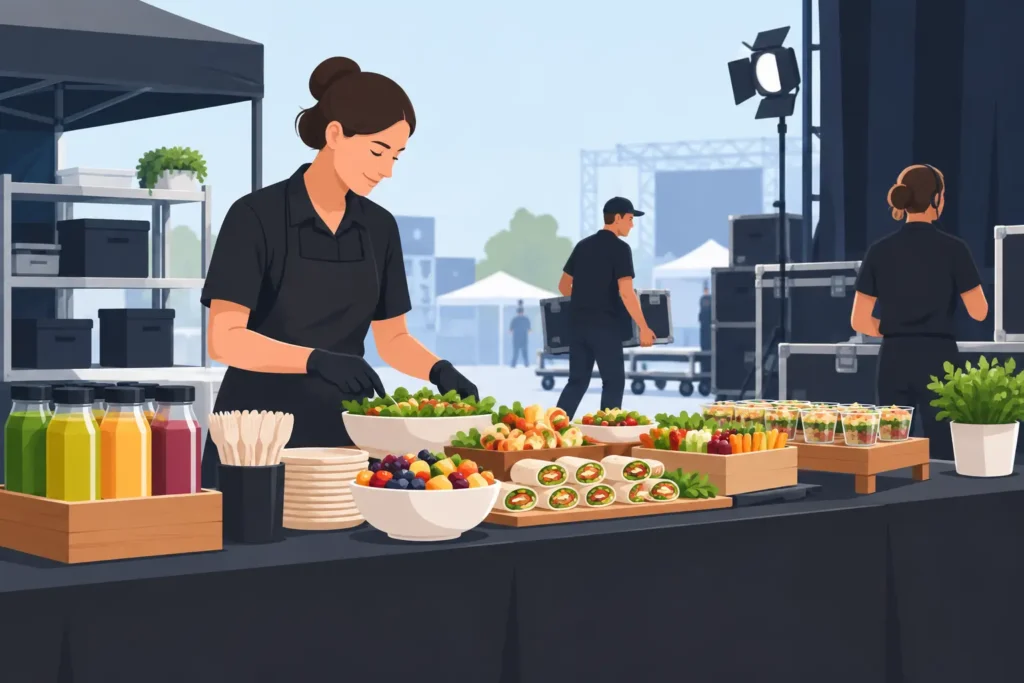
A backstage meal is no longer a simple tray laid out between soundcheck and doors. It is part of how artists, touring teams, production crews and venue staff stay focused through long calls, quick turnarounds and constantly moving schedules. The backstage catering trends 2026 point towards food that is faster to access, better suited to individual needs and planned with the same care as lighting, transport and technical schedules.
For London productions and live events, the shift is practical. A brilliant menu still matters, but it must arrive at the correct gate, remain hot when the crew can actually eat, and work for people grabbing food at different times. The best catering plans are becoming more flexible, more inclusive and more conscious of waste, without losing the generous, flavoursome feel that makes a meal a genuine morale boost.
Backstage Catering Trends 2026: Crew Welfare Takes Centre Stage
Crew welfare is moving from a welcome extra to a serious production priority. People working early calls, overnight builds, rehearsals and back-to-back show days need proper fuel, not just a table of pastries and crisps. In 2026, organisers are placing greater value on balanced hot meals, substantial plant-based choices, fresh fruit, hydration points and snacks that sustain energy between service windows.
That does not mean every backstage menu needs to look like a health retreat. Comfort food remains essential, especially on cold location days or after a difficult load-in. The difference is choice. A warming curry, slow-cooked stew or rich pasta bake can sit alongside colourful salads, grilled proteins, grain bowls and lighter portions. Crews should be able to choose food that fits the work ahead, rather than settle for whatever is left at the end of a rushed service.
Timing is equally important. A single lunch break is not realistic for every department. Camera, sound, security, runners, drivers and artist teams may all be released at different points. Staggered service, labelled hot boxes and well-stocked grab-and-go stations help protect the schedule while ensuring no one misses out. For production managers, this is one of the clearest ways catering can reduce pressure rather than create another issue to solve.
Food designed for real call times
The move towards flexible service is particularly strong across film, TV and music. Early breakfasts need to be ready before the first crew arrive. Late-night crews need more than leftover sandwiches. Touring parties often need food held safely for arrivals affected by traffic, delayed travel or a show running over.
This is where operational planning matters as much as the menu. Mobile kitchens, insulated hot boxes and carefully timed deliveries allow caterers to serve quality food in studios, arenas, car parks and remote locations. It depends on the site: a compact backstage room may need individually packed hot meals, while a larger production base can support a staffed buffet with rolling replenishment. There is no one-size-fits-all answer, and that is precisely why the briefing stage matters.
Global Flavour Without Slowing Down Service
Backstage menus are becoming more adventurous, with creative and flavoursome dishes from around the globe taking the place of repetitive beige buffets. Think fragrant Middle Eastern-style rice dishes, Caribbean-inspired chicken and plantain, Mediterranean salads, vibrant Asian noodle bowls and British comfort classics done properly. Variety matters when crews are fed for several days, and it gives artists’ teams a menu with genuine personality.
The practical challenge is keeping this variety easy to serve at pace. Dishes that travel well, hold their quality and can be portioned quickly are becoming firm favourites. Build-your-own bowls, hearty one-pot dishes and composed salad boxes offer flexibility without slowing a busy service line. They also make it easier to provide distinct dietary options without turning the backstage area into a maze of separate tables.
There is a trade-off. A menu with too many components can become difficult to deliver consistently in a tight venue or during a short changeover. Smart catering is not about adding complexity for its own sake. It is about choosing dishes that feel generous and exciting while remaining dependable when 150 hungry people arrive at once.
Dietary Inclusion Is Now a Core Requirement
By 2026, a plant-based main, allergen information and considered free-from options should be standard backstage practice, not an afterthought added the night before. Teams expect caterers to accommodate vegan, vegetarian, gluten-free, dairy-free, halal and other requirements with food that looks and tastes like a proper meal.
The strongest menus avoid treating dietary food as a compromise. A vegan curry should be as rich and satisfying as its meat-based counterpart. A gluten-free meal should not be limited to a plain salad unless that is what the guest has requested. Clear labelling is vital, particularly where allergens are concerned, but so is careful preparation and separation to reduce cross-contamination risks.
Production coordinators can make this far easier by collecting dietary information early, then updating the caterer as names and numbers change. The goal is not to over-order every specialist option. It is to build a sensible buffer into the plan and communicate clearly. Last-minute additions happen backstage, but a caterer who understands the call sheet can respond far more effectively.
Low-Waste Service Becomes More Practical
Sustainability is no longer only about choosing recyclable packaging. Backstage teams are looking more closely at portions, service formats and what happens to surplus food after the final encore. The most useful waste-conscious approaches begin with accurate numbers, realistic timings and a menu built around how people will actually eat.
Pre-ordering can work well for smaller artist teams or tightly controlled production days, while open buffets may suit a large crew with changing appetites. Individually packed meals reduce handling and make staggered eating easier, but they can create more packaging. Reusable serviceware cuts single-use waste where washing facilities and collection arrangements allow it. The right choice depends on venue access, hygiene requirements, security rules and how mobile the operation needs to be.
Good forecasting also makes a tangible difference. Monitoring uptake across multi-day shoots or tours helps adjust quantities before food is repeatedly overproduced. Where safe and appropriate, surplus food plans should be discussed in advance rather than improvised at wrap. Waste-conscious catering works best when it is built into the production plan, not presented as a last-minute gesture.
Backstage Presentation Still Matters
The backstage area may be functional, but it should not feel forgotten. A clean, attractive catering setup gives tired teams a place to reset, whether it is a television green room, a festival production office or a temporary space behind an arena stage. Freshly prepared food, clear signs, organised stations and attentive staff all signal that the people doing the work are valued.
In 2026, presentation is increasingly about making service intuitive. Separate queues for hot food and drinks, visible allergen labels, easy access to cutlery and condiments, and sensible placement near crew routes can save valuable minutes. Small details such as chilled water, quality coffee and replenished snack stations often make the biggest impression during a 14-hour day.
For artist hospitality, the standard may be more tailored, but the principle is the same. Dietary preferences, privacy, preferred service times and familiar comfort foods should be agreed early. A well-planned rider does not have to be extravagant to feel thoughtful. It needs to be accurate, well executed and available when it is needed.
The Catering Brief Is Becoming More Detailed
The best backstage catering in 2026 starts long before the first pan is heated. Organisers are sharing call times, access instructions, service windows, crew splits, power availability, parking constraints and dietary lists earlier in the process. This gives caterers the chance to recommend the right combination of mobile kitchen, delivery, hot boxes, staffed service or grab-and-go food.
It also protects the budget. A clear brief prevents unnecessary staffing, unsuitable equipment and food that cannot be served correctly on site. D’Lights Event Catering plans around the reality of each production, from intimate artist areas to major crew feeds, because great food only works when the logistics are equally strong.
When you are planning a shoot, show or live event, treat catering as a working part of the schedule. Share the pressure points, the changing call times and the non-negotiable dietary needs early. Then give your cast and crew food worth looking forward to, right where they need it.