
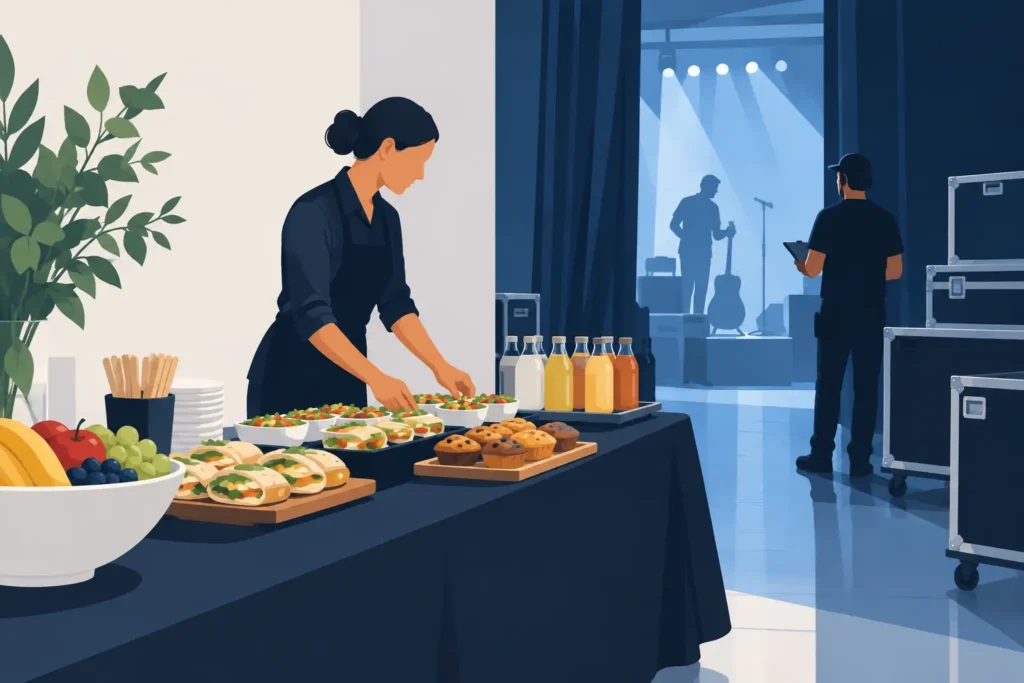
A backstage artist catering case study is rarely just about what was on the menu. When an artist team arrives between soundcheck, interviews, wardrobe changes and stage calls, food has to be ready at the right moment, clearly labelled and genuinely good. A late meal, an overlooked allergen or a cluttered backstage area can quickly become a problem for the whole production.
This representative London live-event case study shows how production-aware catering can support artists, touring personnel and venue crews without adding another moving part for the organiser to manage. The details have been anonymised, but the pressures will be familiar to any production coordinator, artist liaison or event planner working to a tight running order.
The brief: feed an artist team around a moving schedule
The event involved a headline artist, supporting performers, management, technical crew and local production staff at a large London venue. The original guest count looked straightforward on paper, but the service plan was not. The artist party had a separate arrival time, the crew needed an earlier hot meal before doors opened, and several people were due to eat in short gaps between rehearsals and interviews.
There were dietary requirements across the group, including vegan, gluten-free and dairy-free meals, alongside preferences that needed to be handled discreetly. The client also wanted food that felt considered rather than generic. Backstage guests may need speed, but that does not mean they should be handed a tired sandwich and a packet of crisps after a ten-hour day.
The brief called for creative, flavoursome dishes from around the globe, served in a way that worked around the show rather than competing with it. The catering team needed to protect access routes, keep the green room presentable and make sure hot food remained hot for those whose call times shifted at the last minute.
Planning starts with the running order
The most useful document for backstage artist catering is often not a menu. It is the schedule. Before planning quantities or equipment, the caterer needs to understand load-in, soundcheck, artist arrival, doors, stage times, changeovers and final curfew. That information determines when food can be delivered, where it can be set up and whether a buffet, plated service, hot boxes or grab-and-go station is the sensible choice.
For this event, the plan was divided into three services. Crew catering was scheduled first, giving the technical team enough time to eat before audience access. The artist and management service followed in the backstage area, with a flexible holding window rather than one fixed sitting. Finally, portable late-service options were prepared for personnel who would not be free until after the headline set.
That split mattered. One large service may appear cheaper or simpler, but it can create queues, waste and frustration if half the group cannot attend at the same time. Staggered catering takes more coordination, yet it often gives a better result where live production schedules are involved.
Menu choices built for energy and ease
The menu needed to feel generous without being overly heavy before performance. A balanced hot selection included a comforting protein dish, a vegan main with real substance, seasonal vegetables, fresh salads and filling sides. Individual dietary meals were packed and labelled separately, reducing the risk of confusion in a busy green room.
For the artist party, the team also provided lighter options that could be picked at between calls: fresh fruit, dips, crudités, baked snacks and clearly marked refreshments. This was not about restricting choice. It was about recognising that a vocalist preparing to perform, a dancer in costume and a stage manager running cues may all need something different from the same catering point.
Allergen control was managed from the planning stage. Dietary information was confirmed in advance, separate utensils and labels were used at service, and individual requirements were not left to guesswork. Where severe allergies are involved, the right approach depends on the venue kitchen, preparation space and the client’s medical guidance. Clear communication is essential, and so is being honest about what can be safely accommodated.
The operational challenge: no room for disruption
Backstage spaces can be surprisingly tight. Corridors become cable runs, dressing rooms become workspaces and every spare table may be needed for wardrobe, equipment or production paperwork. Catering has to fit the space, not take it over.
The service area was positioned away from key entrances and technical routes, with hot food equipment selected to suit the available power and ventilation. The team arrived within the agreed access window, completed set-up efficiently and kept packaging, boxes and waste out of sight. Food presentation still mattered, but practicality came first. Beautifully arranged catering is of little use if it blocks a fire exit or prevents a musician getting to stage.
Timing was monitored throughout the evening. When part of the artist team was delayed, their meals were held correctly and refreshed for service rather than left out. When crew members arrived earlier than expected, the catering lead could respond without disrupting the next planned wave. This is where experienced backstage catering earns its place: not in a perfect timetable, but in the calm response when the timetable changes.
What made the service work
The strongest result was that catering became almost invisible to the wider operation. People ate well, dietary needs were covered and the production team did not need to chase updates or solve food-related issues during a busy show.
That outcome came from several practical decisions working together:
- Menus were designed around performance demands, dietary requirements and the actual service windows.
- Food was prepared for staggered arrival times, not simply delivered in one large batch.
- Individual meals were labelled clearly, while shared dishes had ingredient and allergen information available.
- The catering footprint was planned around backstage access, equipment and health-and-safety requirements.
- A responsive point of contact stayed aligned with the production team as timings changed.
None of these actions is complicated in isolation. The value comes from joining them up before the event begins. A caterer who understands food but not call sheets can create avoidable pressure. A team that understands the schedule but compromises on quality can leave tired artists and crew underfed. Backstage service needs both disciplines.
Lessons for production teams booking backstage catering
First, share the running order early, even if it is provisional. A good caterer expects timings to move, but an early outline makes it possible to plan equipment, staffing, delivery slots and food holding safely.
Second, collect dietary information in a consistent format. A message that says someone is “dairy-free-ish” is difficult to act on safely. Confirm whether a requirement is an allergy, intolerance, medical need or preference, then communicate it to the catering team before final menus are locked.
Third, think beyond the headline artist. Tour managers, drivers, security, local crew and support acts can all be working long hours. A thoughtful catering plan accounts for who is on site, when they can eat and whether they have somewhere suitable to do so.
Finally, give catering a named production contact on the day. This avoids mixed messages when access changes, the artist arrives early or a room is reassigned. Quick decisions keep the service moving and protect the show schedule.
Backstage artist catering case study: the real measure of success
The real measure of successful backstage artist catering is not how many trays were served. It is whether the artist team feels looked after, the crew has the energy to deliver, and the organiser can focus on the event rather than chasing lunch.
At D’Lights Event Catering, that means bringing fresh, well-planned food together with the practical control live events demand. From early crew call times to late hot boxes after the final encore, the right catering plan should make a demanding day feel more manageable. Share the schedule, the guest numbers and the non-negotiables early, and the food service can be built around the show from the first call to the last pack-down.