
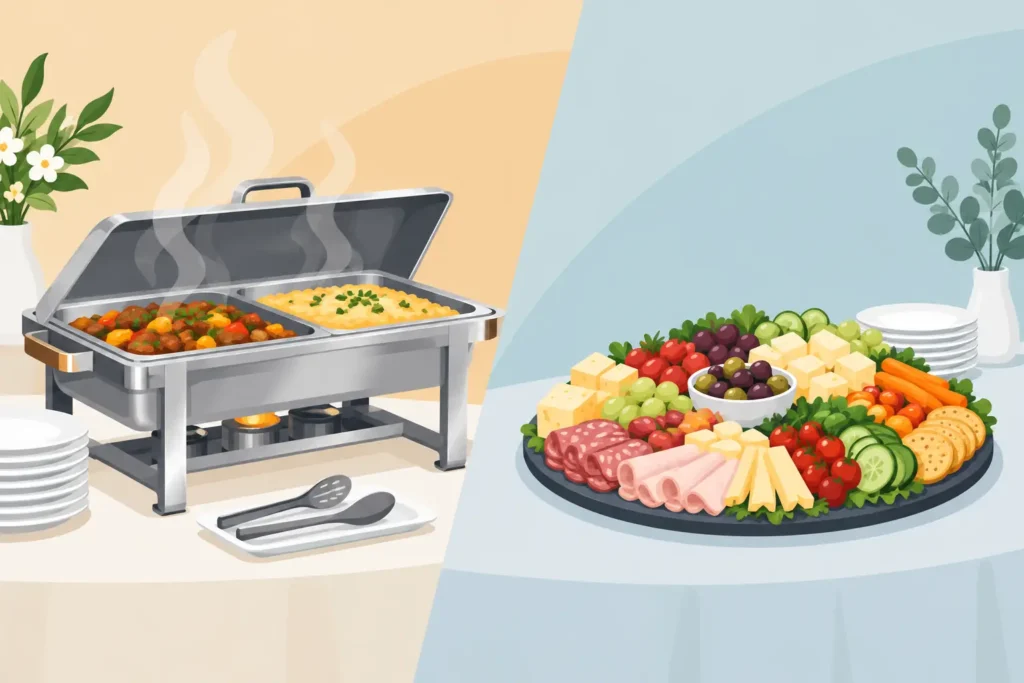
A buffet table can look generous, but the wrong format can slow a shoot, leave wedding guests queuing between speeches, or send a corporate audience back to the room distracted by hunger. The decision between hot meals versus cold platters is not simply about preference. It is about your schedule, setting, guest expectations and the practical reality of serving excellent food at the right moment.
For a production team working to a tight call sheet, a proper hot meal may be the reset that keeps energy high through a long day. For a fast-moving product launch with guests arriving in waves, beautifully presented cold platters may keep the conversation and the event moving. Both can be creative, flavoursome and satisfying. The best choice is the one that works as hard as your event plan does.
Hot Meals Versus Cold Platters: Start With the Schedule
Timing should lead the conversation. A sit-down dinner, planned crew break or evening celebration gives hot catering room to shine. Guests know when they will eat, there is a defined service window, and warm dishes bring a sense of occasion that is difficult to replicate. Think fragrant curries with rice and fresh accompaniments, slow-cooked mains, grilled vegetables, comforting pasta dishes or globally inspired bowls built around fresh, bold flavours.
Hot food is particularly valuable when people have been working, travelling or standing outdoors. On a winter location shoot, a hot breakfast and substantial lunch are not a luxury. They are part of crew welfare. The same applies to backstage teams loading in before doors open, or delegates arriving after an early train into London. A well-timed hot meal tells people they have been considered.
Cold platters are often the stronger option when there is no single break time. They are easy to put out for staggered arrivals, short breaks and informal grazing. A polished selection might include colourful salads, filled wraps, artisan sandwiches, crudités, seasonal fruit, deli-style proteins and plant-based dishes that hold their quality during service. Guests can pick up what they need without waiting for a plated course or a serving station to open.
If your day is divided into strict shooting blocks, a hot meal can be delivered at a scheduled turnaround. If talent, clients and crew are moving at different times, cold catering gives greater flexibility. There is no universal winner. There is only the service style that protects your timetable.
What Guests Expect From the Occasion
Food sets the temperature of an event. At a wedding, a hot main course can create a natural pause in the celebration, bringing everyone together after the ceremony and before the evening party. It feels generous, celebratory and memorable, especially when the menu reflects the couple, their families and the season.
For corporate dinners, awards evenings and formal client hospitality, hot food often supports the level of polish expected. It can be served plated, family-style or from attended buffet stations, depending on the room and the atmosphere you want. The result feels considered without being stiff.
Cold platters lend themselves to events where people need their hands free and the energy needs to stay social. A gallery-style launch, networking reception, press day or studio meeting may benefit from food that guests can enjoy standing up, between conversations or while reviewing a display. Presentation matters here. Fresh, varied platters should look as inviting at the end of the service as they do at the beginning.
That does not mean cold food has to feel casual. With the right menu, styling and service, it can be refined and generous. Equally, hot food does not have to mean a formal three-course meal. Hot boxes, individual bowls and mobile kitchen service can feed a busy team efficiently without taking over the day.
The Venue and Equipment Change the Answer
A venue with a working kitchen, reliable power, space for service and a clear loading route makes hot catering easier to deliver at its best. A mobile kitchen or professional hot-holding equipment can also make hot meals possible in places that do not have fixed facilities, from studios and warehouses to remote locations. But this needs planning. Access, power, ventilation, parking, set-up time and the service area all need to be checked before menus are confirmed.
Cold platters generally require less on-site infrastructure, but they are not logistics-free. Food still needs to be transported safely, kept at the correct temperature and refreshed with care. On a hot summer day, a platter left in direct sunlight is not a catering plan. Nor is placing food where guests cannot reach it without creating a bottleneck.
For filming locations, space is frequently the deciding factor. A compact crew room with limited power may be better suited to individually packed chilled lunches, while a base with a dedicated dining area can support a full hot service. On a large production, the answer may be both: breakfast pastries and grab-and-go options at call time, cold snacks available through the day, then a satisfying hot lunch at staggered sittings.
Dietary Requirements Need More Than Labels
Whether food is hot or cold, dietary needs should be planned from the first menu conversation, not added as an afterthought. Vegan, vegetarian, halal, gluten-free and allergen-aware meals should be just as appealing and substantial as the rest of the offer. Nobody should be left with a sad side salad while everyone else enjoys the main event.
Hot catering can make it easier to build complete dietary alternatives, such as a rich plant-based curry, gluten-free grain bowl or halal grilled dish served as a full meal. Cold platters can work brilliantly too, provided portions are clearly separated, labelled and protected from cross-contact. This is especially important on busy buffets where guests are serving themselves.
Ask for dietary information early, including the level of allergen control required. Then consider the service environment. A tightly packed backstage corridor, for example, may call for individually labelled meals rather than shared platters. A relaxed office lunch may comfortably accommodate a well-organised buffet with clear signage.
Budget Is About More Than the Price Per Head
Cold platters can be cost-effective because they often need fewer service staff, less equipment and less on-site preparation. They can also reduce pressure where an event has a short set-up window. For a daytime meeting or informal gathering, that may be exactly the right balance of quality and value.
Hot meals may carry additional costs for chefs, hot-holding equipment, mobile kitchen provision, staffing and longer service periods. Yet they can deliver stronger value when the food needs to replace a proper meal, sustain a crew or make an occasion feel special. Cutting back on a hot lunch during a twelve-hour production day can be a false economy if it affects morale, energy and the ability to keep to schedule.
The clearest way to compare quotes is to look beyond the menu headline. Check what is included in delivery, set-up, service staff, crockery or disposable packaging, equipment, clearing down and waste handling. A lower initial price can quickly become less attractive if key operational elements are missing.
When a Mixed Menu Is the Smartest Choice
Many successful events do not choose one side. They use hot and cold food at different points in the day. This is particularly effective for productions and large-scale events where people are not all available at once.
A practical combination might start with coffee, breakfast baps and fruit at an early call time. Cold platters, snacks and drinks can remain available for people coming off set or arriving late. A hot lunch then becomes the central welfare moment, followed by afternoon sweet treats or portable savoury options for the final push.
For weddings and launches, you might welcome guests with elegant cold canapés before moving into hot sharing dishes or a plated evening meal. The mix creates variety, manages appetite across a longer event and gives you more control over where people gather at each stage.
D’Lights Event Catering plans this around the reality of your event, from guest flow and call times to menu preferences, dietary needs, access restrictions and the pace of service. The aim is not to force every brief into one format. It is to make sure nobody is waiting, wandering or wondering where their meal is.
A Quick Decision Check Before You Book
Before settling on hot food, cold platters or a combination, confirm four practical details: when people will actually be free to eat, whether the venue can support hot service, how long food must remain available, and what experience guests should take away from the occasion.
If the event calls for warmth, comfort and a clear meal break, choose hot food and build enough time to serve it properly. If flexibility, movement and quick access matter most, choose cold platters that stay fresh and look generous throughout the service. Where the schedule is demanding, use both and let every part of the menu do a specific job.
The right catering format should make your event feel better organised from the first bite. Share your timings, venue details and guest requirements early, then build a menu that keeps your people fed, focused and ready for what comes next.