
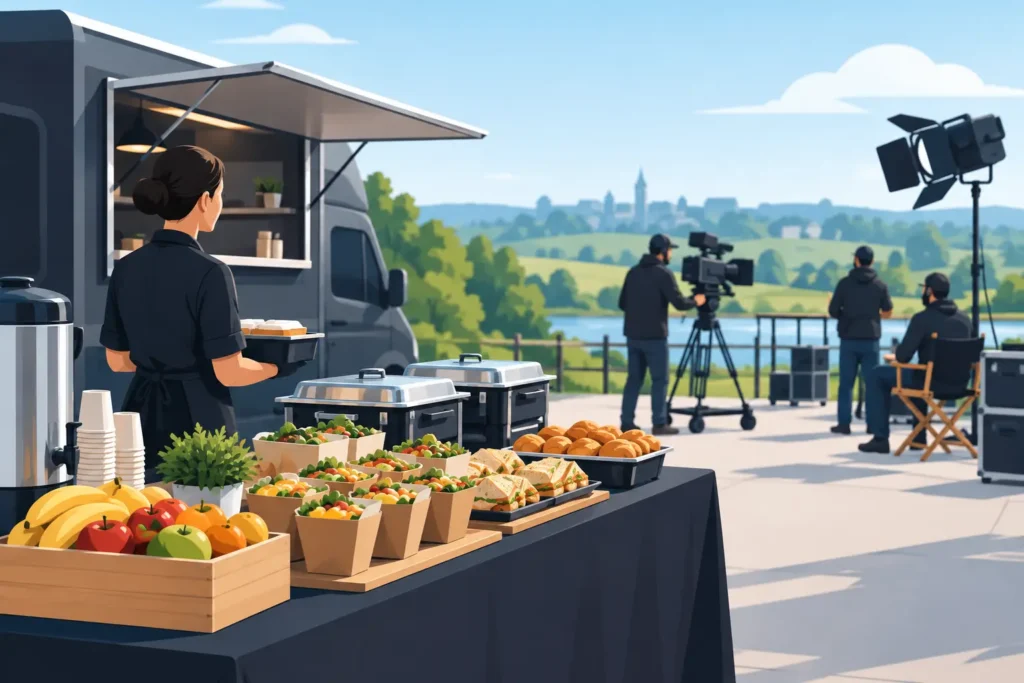
A missed meal break can put far more than lunch behind schedule. When you book TV and film catering Surrey for TV productions, you need a team that can work around an early call, a moving unit base, a late wrap and a crew with very different dietary needs – without turning food service into another production problem.
Surrey offers everything from studios and stately homes to rural lanes, private estates and busy town locations. That variety is excellent for the screen, but it makes catering logistics more demanding. Access may be tight, power may be limited, parking may need arranging and the nearest shop may be miles away. The right production caterer plans for all of it, then serves food that gives people a proper reason to look forward to the break.
What TV production catering in Surrey needs to handle
Great food matters, but timing matters just as much. A production day rarely follows a neat lunch schedule. Call sheets change, scenes overrun, supporting artists arrive in waves and a key department may not be able to leave set at the same time as everyone else. Catering has to flex with the day while still keeping service controlled, hot food hot and the queue moving.
That means agreeing the practical details before the first pan is on the hob: crew numbers, call times, likely break windows, unit-base access, dietary requirements, serving space and the contingency plan if the schedule shifts. It also means choosing a service style that suits the shoot rather than forcing the shoot to suit the caterer.
For a compact commercial crew, hot boxed meals and a well-stocked craft table may be the sensible answer. For a long-running studio day, a staffed hot buffet with breakfast, lunch, afternoon snacks and drinks can keep the whole operation running comfortably. A remote location may call for a mobile kitchen, self-contained equipment and packaging that travels well without compromising the meal.
Fresh meals that keep a crew going
Crew catering should feel generous, familiar and energising, not like an afterthought wrapped in foil. The best menus balance satisfying mains with lighter choices, plenty of vegetables and food that remains appealing after a demanding morning on set.
Creative, flavoursome dishes from around the globe give production teams real choice. Think slow-cooked curries, grilled chicken, hearty pasta bakes, fragrant rice dishes, colourful salads, jacket potatoes, fresh wraps and warming soups when the weather turns. The exact menu depends on the season, the location and the crew. A winter exterior shoot needs a different lunch from a summer studio day, and a night shoot may benefit from substantial hot food followed by lighter options later on.
Breakfast deserves the same attention. Early calls are easier when there is proper hot food alongside fruit, pastries, porridge, cereals, good coffee and grab-and-go options. For departments unloading kit before daylight, that first service can set the tone for the entire day.
Dietary requirements are part of the plan
Vegetarian, vegan, halal, gluten-free and dairy-free meals should never be treated as a last-minute side plate. Production coordinators need confidence that dietary requirements are recorded clearly, prepared safely and labelled properly at service.
There is a practical balance to strike. Individual dietary meals may be necessary for allergies or medical needs, while inclusive menu design can make service quicker and more enjoyable for everyone. A caterer should ask the right questions in advance, avoid cross-contamination risks and make sure each crew member has something satisfying to eat.
Catering formats for different Surrey shoots
No two productions have the same footprint. The catering solution should match the location, crew size and how much time people realistically have away from their roles.
Hot on-set meals and staggered service
Where departments cannot all break together, staggered service keeps food available without leaving set uncovered. Hot meals can be held and refreshed across an agreed window, allowing camera, lighting, sound, art and production teams to eat when their work permits.
This approach is especially useful for television drama, factual programmes and studio shoots where the day is driven by a packed shooting schedule. It requires close communication with the production office, but it prevents the frustrating choice between a cold meal and a missed meal.
Mobile kitchens for location work
A mobile kitchen brings proper cooking capability to places where there is no suitable venue kitchen. On countryside locations, estates or unit bases with limited facilities, it can be the difference between a basic delivered lunch and freshly prepared hot food.
Before arrival, practical checks are essential. Can the vehicle access the site? Is there a level, safe area for service? What are the site rules for generators, gas, waste and water? Good location catering is not only about arriving with equipment. It is about arriving ready to work safely and respectfully within the location’s restrictions.
Craft catering and grab-and-go stations
Craft catering keeps departments fuelled between meal breaks. Fresh fruit, biscuits, snacks, cold drinks, tea, coffee and smarter grazing options can reduce the energy dip that hits during a long afternoon or overnight call.
For fast-moving teams, grab-and-go stations work well. Filled rolls, wraps, salad pots, yoghurt, fruit and individually packed snacks allow people to eat without a lengthy stop. Packaging should be selected with the location in mind, favouring practical, waste-conscious options and clear disposal arrangements wherever possible.
Why planning protects the production day
The cheapest catering quote is not always the most cost-effective option. If food arrives late, there are not enough portions, dietary meals are missing or the set-up blocks a key access route, the impact reaches far beyond catering. Time is lost, crew morale drops and the production team is left firefighting.
A detailed brief avoids that pressure. Give your caterer the working crew count and a realistic contingency number, not just the headline number from an early schedule. Share the address, access instructions, parking arrangements, service times, contact details for the location manager and any restrictions around noise, waste or open-flame cooking.
Budget also needs an honest conversation. Full-service catering with chefs, front-of-house staff, a mobile kitchen and all-day craft service will cost more than delivered hot boxes, but it offers more flexibility and support. For a short shoot with a small crew, delivery may be exactly right. For a large production over several days, investing in a properly staffed service often saves stress and keeps standards consistent.
Choosing a Surrey TV and film caterer
When comparing providers for TV and film catering Surrey for TV productions, ask how they manage the conditions of a real shoot, not only what appears on a sample menu. Can they work to early call times? Can meals be delivered to a remote unit base? How do they handle a sudden increase in crew numbers? What is their process for allergens, hot holding and site waste?
Look for clear answers and a team willing to tailor the service. You want caterers who understand that a location move, weather delay or revised call sheet is not an exception – it is part of the job. Experience across studios, backstage environments and location work brings a calm, practical approach when the plan changes at short notice.
D’Lights Event Catering builds each package around the production rather than offering a fixed, one-size service. From portable hot boxes for a small unit to fresh hot meals, mobile kitchens and craft catering for larger crews, the focus is on serving food where and when it is needed.
A well-fed crew works with more focus, more patience and better energy. Share your call sheet, crew numbers, location details and menu requirements early, and book catering that is ready to meet the pace of your Surrey production.