
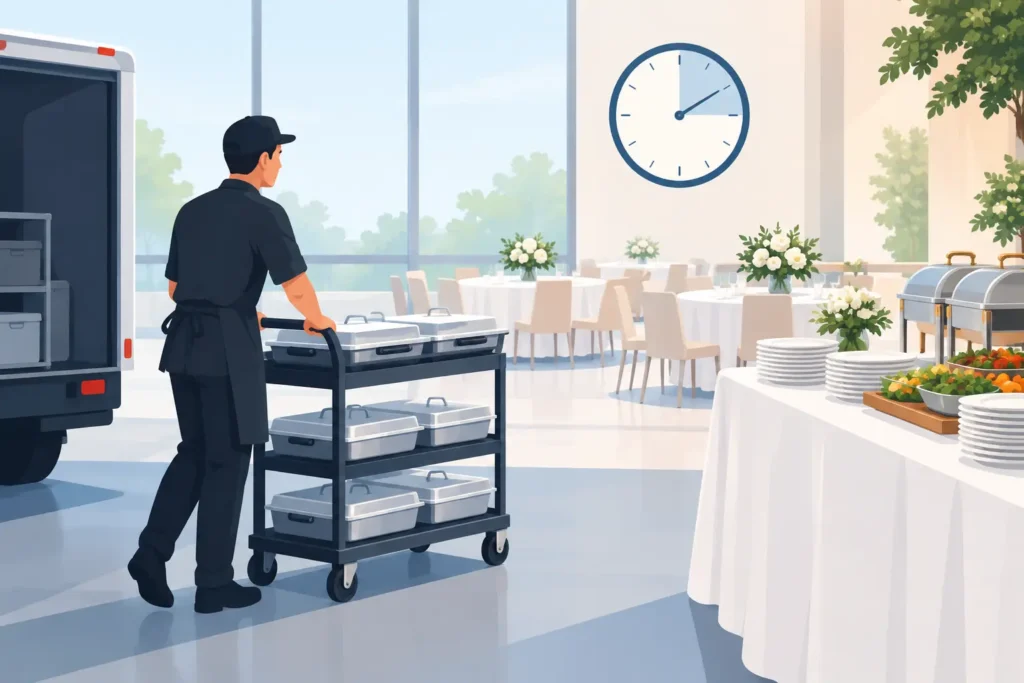
A hot meal arriving at the exact moment guests sit down can sound ideal. On a real production or live event, it can create a queue, leave no room for a schedule slip and put pressure on the service team before anyone has picked up a plate. When should event meals arrive? The best answer is: early enough to check, set up and protect quality, but not so early that food spends too long waiting.
For London shoots, corporate events, weddings and backstage catering, arrival time should be planned around the service window, venue access, menu, equipment and the consequences of a delay. A meal is not simply delivered, then served. It needs a safe handover, the right holding conditions and a team ready to feed people at the moment they actually become available.
When should event meals arrive before service?
For most catered events, meals should arrive 30 to 60 minutes before the first planned service time. This usually gives the catering team time to unload, complete food-temperature checks, set out service equipment and make the space presentable without holding hot dishes for longer than necessary.
That is a useful starting point, not a fixed rule. Individually boxed hot meals for a crew may need less setup time than a plated wedding breakfast. A buffet with hot mains, sides, dietary labels and front-of-house staff may need more. At a venue with difficult loading access, security sign-in or a long route from the loading bay to the room, the caterer may need to arrive earlier simply to get food into position.
For a standard corporate lunch served at 1pm, an arrival between 12pm and 12.30pm is often sensible. For a wedding meal served at 4pm, the catering team may need access much earlier to prepare tables, coordinate with the venue and finish service details. For film and TV, a 1pm crew lunch might mean a mobile kitchen is on site well before midday, particularly where cooking, staggered breaks or multiple units are involved.
Plan backwards from the real serving time
The most reliable catering plans start with the question: when can people genuinely eat? Not when the schedule says they should eat, but when the room, crew or guests will be ready.
A production call sheet may show lunch at 1pm, but a scene running over, a company move or a late reset can push the break back. At a corporate launch, speakers may overrun and guests may still be networking when canapés are due. At a wedding, photography, speeches and travel between ceremony and reception can move the meal by half an hour without warning.
Build an arrival plan around these realities. Confirm the planned service time, then allow for setup and create a sensible buffer for change. The buffer should not mean cooking food far in advance and hoping for the best. It means having the right hot-holding equipment, finishing plan and service team in place so the food can remain appetising if the schedule shifts.
A good caterer will ask whether meals need to be ready to serve at one fixed time, held for a staggered release, or available across a wider window. That distinction matters. A 200-person sit-down meal has a very different delivery timetable from a grab-and-go station supporting a crew taking breaks in waves.
Arrival times for productions and location shoots
On-set catering runs to call times, not conventional lunch reservations. If the first unit starts at 6am, breakfast may need to be ready before crew parking, security and sign-in are complete. If lunch is tied to a complicated shoot day, the catering team needs clear communication with the production office and location manager from the start.
For hot crew meals, arrival is often best planned 45 to 90 minutes before the expected meal break, depending on whether food is prepared on site, delivered in hot boxes or served from a mobile kitchen. The earlier end can work for a straightforward delivery to a studio with easy access. The longer lead time is safer at a remote location, a large unit base, a stadium or a site where power, parking and welfare facilities need to be assessed.
Staggered meals are particularly useful where departments cannot all stop at once. Camera, lighting, art, talent, runners and drivers may need different break times, while artists and key cast may need meals delivered to green rooms or holding areas. In that case, the food should arrive in a format built for the schedule: replenished buffet service, hot boxes, labelled individual meals or a mix of each.
Never assume a location can accommodate a catering vehicle at the last minute. Tight London streets, restricted loading bays, venue curfews and unit-base changes can all affect access. Confirm vehicle details, arrival routes, parking permissions, lift access and the named person who will receive the delivery. These small details protect the meal break.
The menu changes the timing
Not every dish responds well to a long holding period. Crispy items lose their texture, delicate fish can dry out and some salads are best dressed close to service. Slow-cooked curries, braises, rice dishes and hearty global menus can be excellent for controlled hot holding when prepared and managed correctly.
This does not mean choosing food only for convenience. It means matching creative and flavoursome dishes from around the globe to the practical demands of the event. A menu for a formal dinner can be finished and plated close to service. A menu for an outdoor music event may favour dishes that travel well, remain satisfying in a service station and can be replenished quickly.
Dietary requirements also affect arrival planning. Vegan, vegetarian, halal, gluten-free and allergen-aware meals should be clearly labelled, protected from cross-contact and easy for guests or crew to identify. If individual special meals are needed, allow time to check numbers, names and delivery points before service begins. Nothing slows a busy lunch faster than searching through unlabelled containers while a crew waits.
Give the caterer the information that prevents delays
The best arrival time cannot be set from guest numbers alone. Share the operational picture as early as possible: venue address, service time, access time, guest or crew count, layout, menu style, dietary requirements, parking arrangements and contact details for the person on site.
It also helps to agree what happens if the schedule moves. Can the caterer hold food safely for 20 minutes? Will service be brought forward if the meeting ends early? Is there a microwave, power supply or kitchen space available, and is it suitable for use? Who has authority to make that call on the day?
For larger events, a short catering schedule is worth having. It can set out vehicle arrival, load-in, setup completion, first service, replenishment, final collection and clear-down. This is particularly valuable when venue staff, production teams, decorators, security and suppliers are all working around one another.
Avoid the two timing mistakes
The first mistake is asking food to arrive too late. Even if traffic is kind, a late delivery leaves no time for checks, setup or a solution if a lift is out of order, a loading bay is blocked or the guest count changes. It turns a manageable issue into a visible one.
The second is bringing everything too early without a food-quality plan. Hot food must be held at safe temperatures, cold food must remain chilled, and presentation still matters. Guests notice tired canapés and drying rice just as much as they notice a late buffet.
The right approach is controlled flexibility. For high-pressure events, D’Lights Event Catering plans around the full service operation, from call-time delivery and menu labelling to hot holding, staffing and the realities of the venue. That gives organisers room to focus on the event rather than chasing lunch.
A practical rule for your next booking
Set the requested meal service time first. Then ask your caterer how much setup the menu and venue require, and agree an arrival window rather than a single hopeful minute. For simple deliveries, that may be 30 minutes ahead. For productions, weddings, large buffets and challenging locations, allow 60 minutes or more and make sure the food has a proper holding and finishing plan.
The strongest catering schedule leaves enough time for calm, not just enough time for food to appear. Give your caterer the call times, access details and likely pressure points early, and your guests, cast or crew will receive a meal that feels freshly made, properly organised and right on cue.