
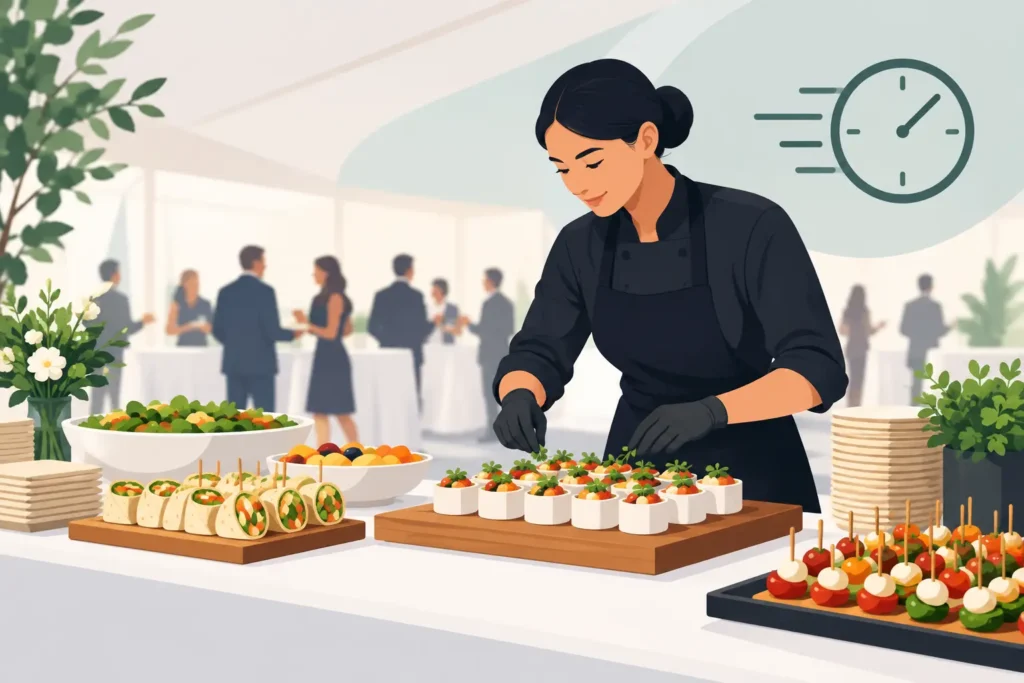
A 6am call time, a delayed artist arrival or a last-minute venue change can turn a beautiful menu into an operational problem fast. The most useful event food trends are not simply the ones that look good on social media. They are the ones that give guests, cast and crew genuinely flavoursome food while keeping service punctual, safe and easy to manage.
For London productions, live events, launches and weddings, food now has to do more than fill a plate. It needs to reflect the brief, work around a schedule, welcome every dietary requirement and arrive in a format that suits the space. Here are the trends worth building into an event plan – and the practical details that make them successful.
Event Food Trends Built for Real Schedules
Global flavour with a familiar point of entry
Guests are increasingly looking for more than standard event fare. Bright Middle Eastern flavours, Caribbean-inspired mains, Asian street-food favourites, Mediterranean sharing dishes and regional Indian cooking bring colour and energy to a menu. The strongest approach is not to make food unfamiliar for the sake of it. It is to pair an exciting flavour profile with dishes guests instantly understand.
Think slow-cooked jerk chicken with rice and peas, fragrant vegetable curries with fresh breads, Korean-style glazed chicken bowls, or harissa-roasted cauliflower with vibrant salads. These dishes are generous, satisfying and adaptable across service styles.
For a product launch, a live station can make that global influence feel theatrical. For a film crew working to a tight turnaround, the same flavours may work better as a hot boxed meal that can be collected quickly and eaten between setups. The trend is the flavour. The format must follow the schedule.
Plant-forward menus that satisfy everyone
Plant-based catering has moved beyond the single vegan option at the end of the menu. Well-planned event menus now make vegetables, pulses, grains and bold sauces central to the plate, giving every guest a choice that feels considered rather than secondary.
That does not mean every event needs to be entirely meat-free. It means the vegetarian and vegan dishes should stand on their own. A smoky aubergine main, a properly spiced dhal, roasted squash with grains and herbs, or a rich mushroom dish can be as popular as any meat option when it is cooked with confidence.
This approach also helps when numbers change. At a corporate lunch or a busy shoot, plant-forward dishes offer flexibility for mixed dietary groups without creating a separate service line for every preference. The key is clear labelling, sensible portion planning and accurate allergen information. A vegan dish is not automatically suitable for every guest with an allergy, so menu planning needs care from the first conversation.
Individual bowls, boxes and hand-held food
The move towards flexible portions is one of the most practical event food trends. Bowl food, hot boxes and premium grab-and-go options work particularly well where guests are moving between meetings, stages, sets or locations.
A well-designed bowl can deliver a complete meal without slowing service: a protein or plant-based centrepiece, grains or potatoes, fresh vegetables and a sauce that holds its flavour. Hot boxes give crew members a reliable meal when staggered breaks make a buffet impractical. Hand-held options can keep a backstage team fed without sending them far from their position.
Convenience should not mean compromise. Food still needs to be hot when it should be hot, crisp when it needs texture, and packed so that it travels safely. Some dishes simply do not perform well after an hour in a box. Choosing menus with the journey, holding time and eating location in mind protects the quality guests actually experience.
Experience-Led Service Without the Queue
Interactive stations with a clear purpose
Live cooking and finishing stations remain popular because they create atmosphere. A chef carving, building bowls, finishing tacos or serving a fresh dessert adds theatre to a wedding, party or brand event. Guests see the food being prepared, which makes the offer feel generous and personal.
But an interactive station has to earn its space. If 300 people need to eat in a 30-minute window, one small service point will create a queue, however impressive it looks. Multiple stations, pre-portioned elements and an experienced service team keep the energy high without holding up the event.
For larger guest counts, it can be smarter to offer a fast main service with one interactive element for impact. This gives the event its moment without putting the whole catering operation at risk. The right choice depends on the venue layout, available power, guest flow and the amount of time people genuinely have to eat.
Grazing, but with structure
Grazing tables and abundant sharing displays still appeal because they make a room feel welcoming before the first guest has taken a seat. Fresh breads, cheeses, colourful fruit, dips, charcuterie, salads and small sweet treats can become part of the event design as well as the menu.
The operational detail matters, especially for longer events. Food must be replenished in controlled quantities, kept at the right temperature and presented with serving utensils and clear allergen notices. In busy environments, smaller refreshed displays may be safer and fresher than one oversized table left out for hours.
A structured grazing offer also reduces waste. Rather than putting every item out at once, caterers can monitor what guests are actually choosing and refresh accordingly. That keeps the display looking plentiful while avoiding trays of untouched food at the end of the night.
Low-Waste Catering Is Now Part of Good Planning
Sustainability is no longer just about swapping plastic cutlery for wooden alternatives. Clients are rightly asking where food comes from, how much is likely to be wasted and whether packaging works for the setting. The answer needs to be practical, not performative.
Seasonal ingredients can bring better flavour and a more sensible supply chain. Menu choices can also reduce waste before service begins. Dishes with overlapping ingredients, realistic portion sizes and menus tailored to the audience are easier to manage than an oversized offering created from guesswork.
For location shoots and crew catering, waste-conscious packaging must still protect temperature, hygiene and transport. A compostable container is only useful if it is suitable for the meal, the venue has the right disposal arrangements and the food arrives in excellent condition. Sometimes reusable serviceware is the better answer; sometimes secure single-portion packaging is essential. The right solution depends on the location.
Comfort Food Is Being Given Better Treatment
There will always be a place for food that feels familiar, filling and comforting – especially after a long day on set or during a cold-weather event. The difference now is that comfort food is being treated with more care. Think properly slow-cooked dishes, quality ingredients, fresh salads alongside richer mains, and desserts that feel like a reward rather than an afterthought.
For crews, a hot meal can have a real effect on morale. It is also a welfare consideration. A menu needs enough substance for physical work, sensible options for those avoiding certain ingredients, and a service plan that ensures the final person in the queue receives the same standard as the first.
This is where catering experience matters. Feeding 20 people in a boardroom is different from serving 200 crew members across staggered breaks, or providing backstage meals around changing performance times. The food may be creative, but the delivery has to be disciplined.
How to Choose Trends That Fit Your Event
Before selecting a menu, start with the pressure points. Ask when guests will actually eat, whether they will be seated or moving, what equipment the venue permits, and how service will interact with the production schedule. A brilliant menu that clashes with call times is not a brilliant menu.
Then consider the audience. A brand launch may need visual impact and shareable details. A studio production may prioritise hot, nourishing meals delivered to exact timings. A wedding may call for a generous dining experience that feels personal to the couple. Each brief can use current food ideas, but no two should be treated the same.
D’Lights Event Catering plans menus around those realities, from global, freshly prepared dishes to portable crew meals and fully staffed event service. The aim is simple: food that feels exciting when it reaches the plate and dependable long before that point.
The best trend for your event is the one guests remember for the right reason: it was delicious, it suited the occasion, and it was there exactly when they needed it. Share your timings, guest numbers, venue details and dietary needs early, then build the menu around the day you are actually running.