
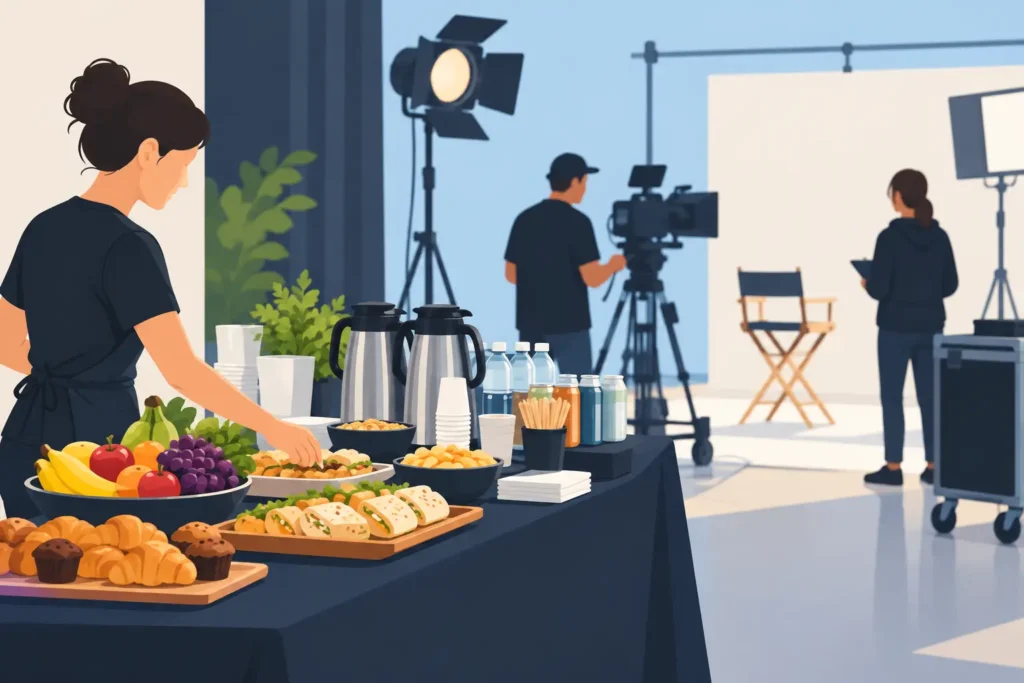
A camera crew has been called for 5.30am. Rain has closed in on the location, the nearest shop is miles away, and the schedule has no room for a hungry lighting team. This is where people quickly understand what is craft service and why it matters. It is not a luxury table of biscuits. Done properly, it is a reliable, well-managed source of food and drink that keeps cast and crew comfortable, alert and ready to work.
For film, television, commercial, music and live-event teams, craft service is part of crew welfare and production logistics. It fills the gap between main meals, responds to changing call times and gives people something accessible when they cannot leave their department. The best craft catering feels effortless to the crew because somebody has planned every detail behind the scenes.
What Is Craft Service?
Craft service, often called craft catering or simply craft, is the ongoing provision of snacks, hot and cold drinks, light refreshments and easy-to-eat food during a production. Its purpose is to keep people fuelled throughout the working day, particularly between breakfast, lunch and wrap.
A craft service station may be set up in a studio green room, beside unit base, backstage at a music event or under a gazebo on a remote location. The format changes, but the principle stays the same: provide convenient, appealing refreshments where the team needs them, without interrupting the work.
On a smaller shoot, that could mean quality coffee, tea, fruit, pastries, chilled soft drinks and individually wrapped snacks. On a major production, it can mean multiple stations, fresh sandwiches and wraps, hot savoury options, soup, cakes, dietary alternatives, ice, water deliveries and a dedicated team replenishing stock from first call to wrap.
The word “craft” can confuse people outside the industry. It does not refer to arts and crafts, nor does it only mean artisan food. In production language, it refers to the department or service looking after the day-long refreshments that help cast and crew do their jobs.
Craft Service vs Production Catering
Craft service and production catering work alongside each other, but they serve different needs. Production catering provides planned meals at set times – for example, breakfast before shooting, a hot lunch break, and sometimes a later dinner for extended days or night shoots. These meals are designed to feed the full crew efficiently, safely and satisfyingly.
Craft service is more flexible. It is there when a runner has missed breakfast while collecting kit, when an artist needs a light bite before going on stage, or when the sound department cannot step away during a complex setup. It prevents the long stretch between formal meal breaks from becoming a drain on energy and morale.
Neither replaces the other on a busy day. A snack table cannot substitute for a nutritious hot meal on a twelve-hour shoot, and a lunch service alone will not support a crew working through staggered breaks. The right balance depends on crew size, access to local facilities, call times, budget, weather and the demands of the schedule.
What Should a Good Craft Table Include?
The strongest craft service is varied, fresh and easy to use. It should offer familiar comfort as well as sensible choices for people working physically demanding or long shifts. Nobody wants a table of tired crisps by mid-afternoon, but nor does every crew need an elaborate spread that creates waste.
A well-planned station often includes a mix of fresh fruit, breakfast items, snacks, cakes or biscuits, sandwiches, wraps, salads and hot savoury choices. Tea, proper coffee, chilled water, juices and soft drinks should be readily available. On cold locations, a hot drink can make a real difference. In summer, plentiful cold water, ice and refreshing options become a practical health-and-safety consideration.
Dietary provision must be built in from the start, not treated as an afterthought. Vegan, vegetarian, gluten-free, dairy-free, halal and allergen-aware items need to be clearly labelled, stored carefully and replenished in a way that avoids confusion or cross-contact. A separate utensil or sealed individual portion is often the safer option, especially when a table is busy.
Freshness matters as much as choice. Food left out too long is neither appetising nor safe. A professional craft team manages temperature control, allergen information, hand hygiene, cleaning and waste throughout the day. This is particularly important when the service is operating outside, in a temporary unit base or at a venue without a fully equipped kitchen.
The menu should fit the working environment
A studio production with a controlled schedule may benefit from a full, beautifully presented station that is refreshed at regular intervals. A fast-moving location shoot may need portable hot boxes, easy-grab items and drinks that can travel safely between unit base and set.
For backstage and touring crews, service may need to work around soundchecks, performance windows and restricted access. For commercials, the challenge can be a small team with intensive days, visiting clients and a need for polished presentation. There is no one-size-fits-all craft table – the operation has to be designed around the people and the pace of the day.
Why Craft Catering Keeps Productions Moving
Food affects far more than hunger. A crew that has access to good refreshments is better placed to maintain concentration, mood and stamina through early starts, delayed resets and late finishes. It is a straightforward investment in welfare, but it also protects the working rhythm of the production.
Without accessible refreshments, people leave the location to find coffee or food. That can mean missed cues, longer turnaround times and avoidable frustration. A well-positioned craft station reduces those interruptions while giving departments a place to take a brief breather.
There is also a hospitality element. Clients, contributors, artists and visiting executives notice how they are looked after. Fresh, flavoursome food and a welcoming station help set the tone, whether the job is a television drama, a brand launch or a stadium show. The aim is not excess for its own sake. It is considerate service that makes everyone feel properly supported.
Planning Craft Service for Your Shoot or Event
The most useful question is not simply, “What snacks do we need?” It is, “How will this team work today?” Start with the call sheet, crew numbers and service window. Then consider where people will actually be able to collect food and drink, how far that point is from set, and whether there are separate areas for cast, crew or clients.
Discuss dietary requirements before the day begins and allow for reasonable contingency. Crew numbers can rise, call times can shift, and weather can change appetites quickly. A cold, wet exterior day generally calls for more warming food and hot drinks than a summer studio day. Night shoots need a different rhythm again, with substantial options available when local food outlets are closed.
Access and power deserve attention too. A craft setup may require tables, urns, refrigeration, lighting, shelter, water supply and safe waste collection. If the location has narrow access, stairs, parking restrictions or limited loading time, those details must be factored into delivery and setup plans. The food may be the visible part of the service, but smooth logistics are what make it dependable.
Budget should be discussed honestly. A lean production can still provide thoughtful, good-quality craft service by focusing on the essentials and replenishing intelligently. Larger budgets allow for wider choice, hot food, specialist dietary menus, branded presentation or multiple service points. What matters is matching the provision to the real needs of the production rather than ordering a generic package that does not suit the day.
When Should You Book Craft Service?
Book as early as possible when you have confirmed dates, approximate headcount and locations, especially for multi-day shoots, remote sites or complex dietary requirements. Early planning gives your caterer time to build a menu, arrange equipment, schedule staff and prepare for location-specific challenges.
That said, experienced production caterers know that schedules move. A useful partner can adapt to revised call times, added crew, split units and last-minute requests without losing sight of food safety or service quality. D’Lights Event Catering plans craft catering around the reality of the production day: fresh food, practical setup, dietary confidence and the flexibility crews need when the schedule changes.
When you are building your next call sheet, treat craft service as part of the day’s working infrastructure, not an optional extra. Give your team accessible food, good coffee, cold water and a caterer who understands the pressure of set – then let them get on with making the work happen.