
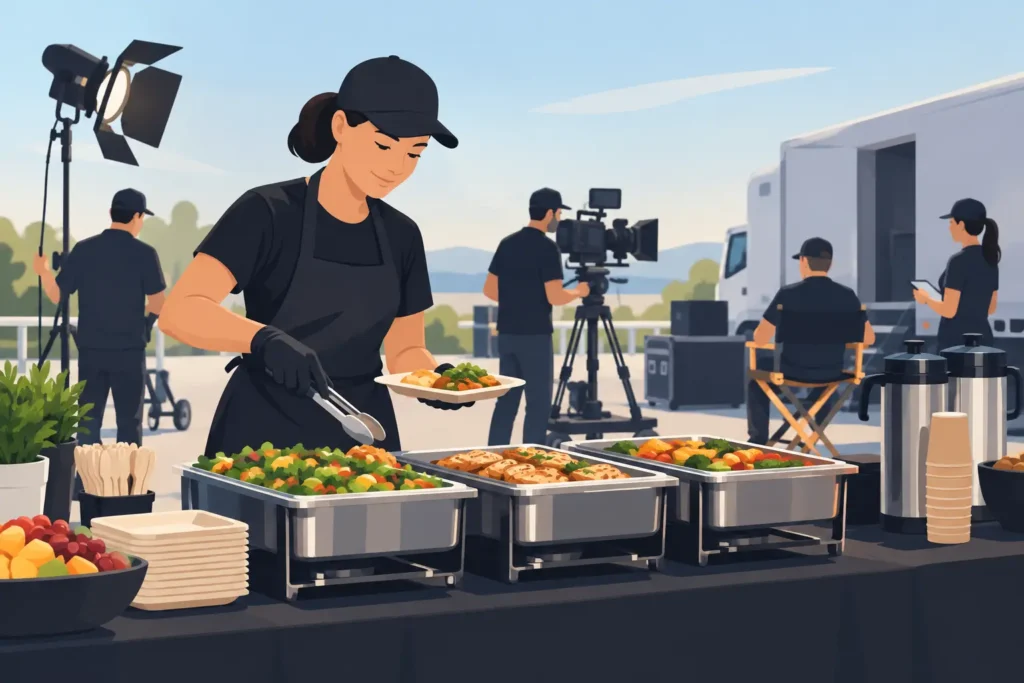
A call sheet can change before sunrise. A location can lose power, a scene can overrun, and a crew that expected lunch at 1pm may still be working at 3pm. That is why film caterers are far more than food suppliers. They are a vital part of keeping a production calm, energised and ready for the next setup.
For line producers, production coordinators and location managers, the right catering partner removes pressure rather than adding another moving part to manage. Great food matters, of course. But on a working set, timing, access, dietary confidence, safe service and clear communication matter just as much.
What Film Caterers Need to Get Right
A film set is not a conventional event. There may be a unit base in a muddy field, a studio crew working through the night, talent on a tightly managed call time, or a city-centre location with limited parking and no usable kitchen. Food has to arrive ready, stay at the right temperature and be served without disrupting the schedule.
The strongest film catering is planned around the day as it will actually run, not as it looked when the first call sheet was issued. That means discussing crew numbers, access restrictions, service windows, shooting hours, holding areas and likely schedule pressure before menus are finalised. It also means having a practical response when the day changes.
A caterer should be able to provide hot on-set meals, portable hot boxes, grab-and-go options and craft catering that works around departments coming off set at different times. A single lunch rush is not always realistic. Staggered service can keep the crew fed while protecting the pace of filming.
Fresh food is crew welfare, not an afterthought
Long days demand food that gives people proper energy. A plate of freshly prepared, flavoursome food can lift a crew after an early call, a wet exterior shoot or a difficult night turn. The menu should feel generous and varied, with creative dishes from around the globe alongside familiar, comforting options.
Variety should not create confusion. Clear labelling, sensible portions and an organised service point help crew members make quick choices and return to work on time. Breakfast baps, hot lunches, warming soups, salads with real substance, afternoon snacks and well-stocked drinks stations all have a place, depending on the schedule.
There is also a commercial reason to take crew meals seriously. Hungry people lose focus, morale drops and breaks become harder to control. A well-fed crew is not a luxury line in the budget. It supports the working day.
Planning Film Catering Around the Call Sheet
Good planning starts with direct questions. How many people need feeding? Are there separate cast, crew and client areas? Is the production on days, nights or split shifts? Is there power and water on site? Can a mobile kitchen be positioned nearby, or is delivery and hot holding the more practical solution?
These details shape the service. On a compact studio job, a scheduled delivery of hot meals and a tidy craft station may be exactly right. For a large location shoot, a mobile kitchen with experienced catering staff can offer more flexibility, especially when crew breaks are staggered. For a moving unit, individual hot boxes can be the sensible answer.
It depends on the production. A small commercial may need a polished breakfast and lunch for a focused crew of 25. A feature, drama or major music production may require multiple service points, continual refreshments and a reliable evening meal for a unit working late. The best package is the one that matches the real conditions on the ground.
Before service begins, a capable catering team will have a clear plan for:
- arrival and set-up times that work around access and security
- safe hot and cold holding, plus clean service equipment
- dietary meals that are separated, labelled and easy to identify
- waste-conscious packaging and a sensible clear-down plan
- a named point of contact for production changes on the day
This level of organisation protects more than the lunch break. It gives the production office confidence that catering will not become the next issue requiring a radio call.
Dietary Requirements Need Proper Attention
Every production has dietary requirements, and they cannot be treated as a last-minute side note. Vegan, vegetarian, halal, gluten-free and allergen-aware meals must be as appealing and satisfying as the main service, not an uninspired alternative put aside in a plain container.
Accurate information is essential. Productions should provide dietary details as early as possible, including severe allergies and any requirements for named cast meals. Caterers can then plan suitable dishes, avoid cross-contact where required and label everything clearly. If a new requirement comes through late, the response should be helpful and honest about what can safely be accommodated.
There are trade-offs. The more specialised the menu, the more planning and kitchen separation may be needed. But that is precisely why early communication pays off. A practical caterer will guide the menu rather than simply agreeing to a list that cannot be delivered safely or well.
Craft catering keeps the day moving
Craft catering earns its place between formal meal breaks. It gives cast and crew access to quality snacks, fruit, baked treats, hot drinks, cold refreshments and lighter options without sending people away from the unit base. On long shoots, this can make a noticeable difference to energy and mood.
The key is to keep it fresh, presentable and replenished. A craft table that looks tired by mid-morning sends the wrong message. One that is thoughtfully stocked, clean and tailored to the day feels like genuine care for the people doing the work.
Choosing Film Caterers for London Locations
London offers remarkable filming locations, but it also presents practical complications. Parking restrictions, loading windows, narrow access, busy streets, permit conditions and limited space are familiar challenges. A caterer with production experience understands that the route, arrival time and equipment choice may be as important as the menu.
Ask how the team handles difficult access and changing schedules. Can they deliver before call time? Can they work from a mobile kitchen? What happens if lunch shifts by an hour? How do they manage waste when a location has no obvious disposal point? Clear answers are a good sign that the caterer understands location work.
Presentation still matters, even under pressure. Food service for a client-facing commercial, artist backstage area or high-profile cast should look professional as well as function efficiently. The right team can balance both: smartly presented food, welcoming staff and an operational setup that does not crowd the production.
D’Lights Event Catering brings this production-aware approach to TV, film, music and live-event crews across London. From call-time breakfast through hot meals, mobile kitchens and late-night service, the focus is on fresh food and dependable coordination when the schedule is demanding.
Build a Better Brief Before You Book
A useful catering brief saves time for everyone. Include the shoot dates, locations, crew numbers, anticipated meal times, dietary information, access notes, available facilities and the budget range. If numbers may change, say so. If there is a key scene that cannot be interrupted, flag it early.
It is also worth discussing the atmosphere you want to create. Some productions need fast, no-fuss service with meals ready to collect. Others want a warmer hosted lunch that gives a team a genuine reset. Both can work brilliantly, provided the service fits the production rather than forcing the production to fit the service.
The most reliable film caterers will ask the questions that reveal potential problems before they become problems. They will advise on menu balance, portioning, service timing and the equipment needed to make the plan work. That support is especially valuable when a production is juggling multiple suppliers and a schedule that refuses to stand still.
When you are planning a shoot, choose food service with the same care you give to transport, power and kit. Give your caterer a clear brief, share changes early and book a team prepared for the realities of set life. Good meals served at the right moment can keep the whole production moving forward.