
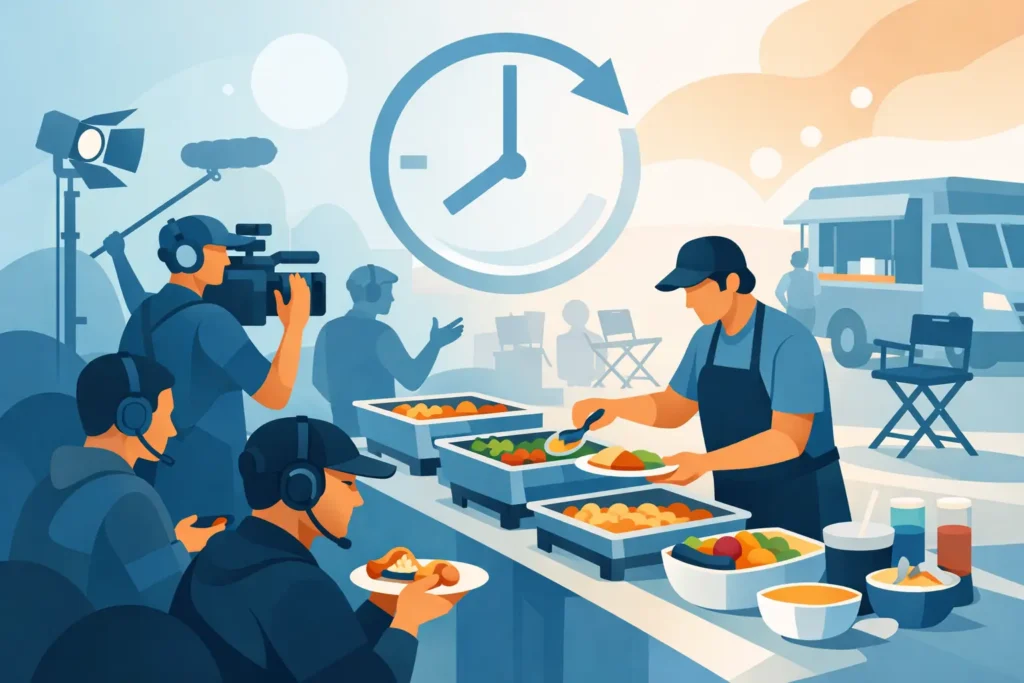
A missed meal break does not just create a few hungry faces. It slows departments down, drains concentration and puts extra pressure on an already tight shooting day. Knowing how to feed film crews means treating catering as part of the production plan, not a last-minute order placed when everyone is already on location.
The best crew food is generous, fresh and ready precisely when people need it. It also has to work around call times, changing schedules, limited access, dietary requirements and the simple fact that a camera crew cannot always stop at once. From a compact commercial shoot to a large-scale drama, smart catering protects morale and keeps the day moving.
Start with the schedule, not the menu
Before choosing dishes, map the food service around the running order. Ask when crew call begins, where the first set-up is, when cast are available, whether there are unit moves, and how realistic the planned lunch break actually is. A 1 pm meal service is not much use if the lighting team are halfway through a complicated reset and cannot leave until 1.40 pm.
Build in food at the points where energy drops: arrival, mid-morning, lunch, mid-afternoon and, where needed, a proper evening meal. Early calls need more than a pastry box. Hot breakfast baps, porridge, fruit, yoghurt and good coffee give people a useful start without holding up prep. On long days, a second hot meal can be the difference between a focused crew and a tired one counting down to wrap.
Schedules change, of course. That is normal on a shoot. Your catering plan should allow for staggered service, held hot food and portions that can be packed for departments working away from the main unit base.
How to feed film crews with the right service style
There is no single set-up that suits every production. The right option depends on crew numbers, location access, facilities, budget and how long the unit will stay in one place.
For studio work or locations with a usable base, a staffed hot buffet gives crews choice and keeps the meal feeling like a genuine break. Offer a hearty main, a vegetarian or vegan alternative, filling sides and a fresh salad option. This works particularly well when departments can come through in waves rather than all appearing at once.
At a tight location with little room, portable hot boxes are often the practical answer. Individually portioned meals can be labelled by dietary requirement and collected quickly, reducing queues and confusion. They are also valuable for cast in holding, drivers, security, runners and anyone unable to reach the main catering point at the scheduled time.
Remote shoots may call for a mobile kitchen or a self-contained catering operation with power, water and safe waste management considered from the outset. A beautiful menu is not useful if it cannot be transported safely down a farm track, served in wet weather or kept hot during a delayed unit move.
Craft catering fills the gaps between main meals. A well-stocked station with fruit, biscuits, savoury snacks, cold drinks, tea and coffee helps people keep going without relying on sugary pick-me-ups. Add substantial grab-and-go options such as wraps, protein pots, soup, flapjacks or freshly made sandwiches when the day is physically demanding.
Get crew numbers and dietary information early
The headcount on a call sheet is a starting point, not the final figure. Confirm how many people will be present for each meal, including cast, agency staff, drivers, location support and late arrivals. Ask whether a separate crew is coming in for a night shift or whether a second unit needs food at another address.
Dietary information needs the same discipline. Collect requirements in advance and record them clearly: vegetarian, vegan, halal, gluten-free, dairy-free, allergies and any medical needs. Then make sure those meals are not simply an afterthought at the end of the table.
A good menu gives everyone a proper plate of food. A vegan crew member should receive a flavoursome meal with protein, texture and substance, not a side salad while everyone else has a warming curry. Think aromatic vegetable tagines, lentil dhal, roasted cauliflower, herby grain salads, chicken trays, slow-cooked stews and colourful global dishes that travel well and satisfy a hungry unit.
Labelling matters too. Clearly identify meals and allergens, and keep special dietary portions separate until collection. For severe allergies, agree the handling process with the individual and production team rather than making assumptions.
Plan food that holds, travels and still tastes great
Film catering has to survive the real world: stairs, security checks, rain, traffic, lifts that are out of action and a lunch break pushed back by 45 minutes. Choose dishes that retain their quality in hot holding and can be served quickly without losing their appeal.
Saucy, slow-cooked and oven-baked dishes tend to perform well. Curries, braises, pasta bakes, roasted vegetables, rice dishes and hearty salads can be kept at the right temperature and portioned efficiently. Delicate fried food, food that must be plated at the last second, or menus with too many components may look impressive on paper but create avoidable pressure on location.
That does not mean food should feel repetitive. Rotate cuisines and textures across a multi-day shoot. A vibrant Caribbean-inspired lunch, a comforting British-style hot meal and a fragrant Middle Eastern spread can all work brilliantly when balanced with familiar sides and dietary alternatives. Variety shows crews that their welfare has been considered, particularly when they are working several long days in a row.
Protect the break without slowing the production
Lunch is a welfare moment, but it is also a logistical operation. Position service where people can reach it easily without crossing active set areas or blocking access for equipment. If the location is spread out, arrange a satellite snack point or deliver meals directly to a department that cannot leave its post.
Queues waste time and make people frustrated. For larger crews, run two service points, stagger departments or use a combination of buffet service and pre-packed meals. Keep drinks replenished and ensure cutlery, napkins, bins and handwashing arrangements are ready before the first person arrives.
Health and safety belongs in the plan from the beginning. Food must be transported, stored and served at safe temperatures, with allergen controls and clean working areas in place. At challenging locations, discuss power supply, access times, parking, loading restrictions and waste removal well before shoot day. These details are rarely glamorous, but they are what allow the food service to feel effortless for the production team.
Budget for quality where it counts
It is tempting to cut the catering budget when costs are moving elsewhere, but low-cost food that arrives late or leaves people hungry creates a false economy. The aim is not extravagance. It is dependable, well-portioned food that meets the demands of the day.
Be clear with your caterer about your available budget, expected numbers and non-negotiables. A straightforward hot menu delivered at the right time can be more valuable than an overcomplicated spread that stretches resources. If budget is limited, prioritise a strong lunch, reliable hot drinks, all-day water and filling snacks over unnecessary extras.
Also plan for sensible contingency. A small number of spare portions, extra coffee, weather-appropriate drinks and snacks for an overrun can solve problems before they become complaints. On a freezing exterior night shoot, hot soup and tea can lift the whole unit. During a summer location day, chilled water, fruit and light lunch choices matter just as much.
Choose a caterer who understands production pressure
A production caterer should ask detailed questions, not just send a menu. They need to understand the call sheet, location constraints, dietary list, service windows, access route and what happens if the day moves faster or slower than planned. The most useful partner is calm when plans change and practical when the venue has no kitchen, no parking and barely enough space for a table.
D’Lights Event Catering plans film and TV food around the reality of each shoot, from hot on-set meals and portable hot boxes to craft catering, mobile kitchens and creative, flavoursome dishes from around the globe. The focus is simple: fresh food, safely delivered and ready when cast and crew need it.
Feed people well and they feel looked after. When the next set-up is demanding and the day is running long, that care comes back as better energy, better focus and a crew ready to make the next shot happen.