
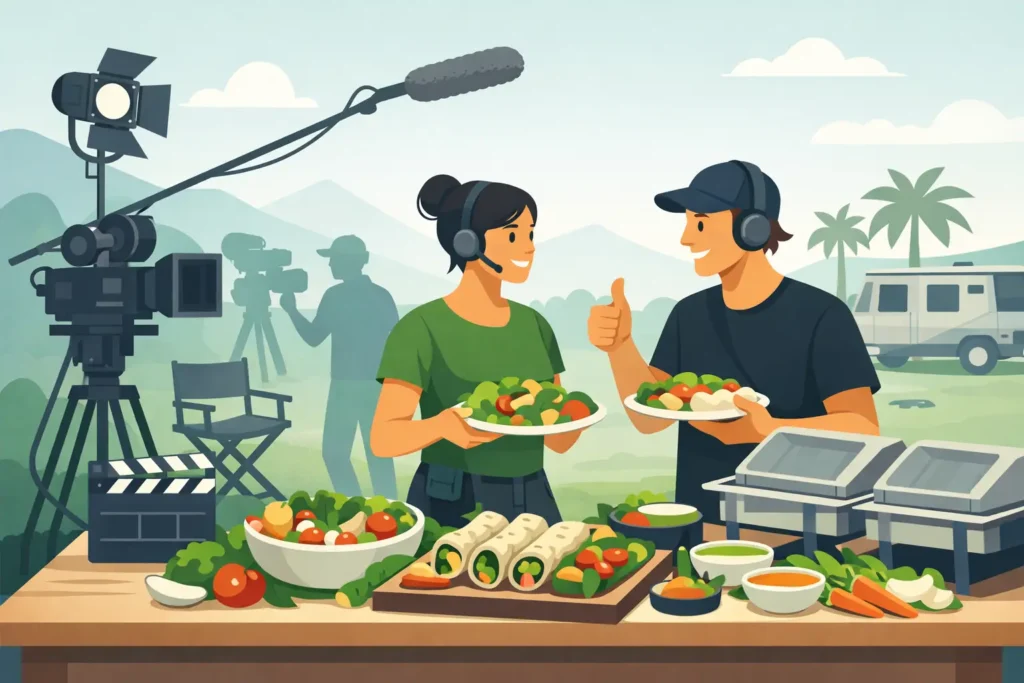
A 5.30am call time, a rain-soaked unit base and a crew facing a long night shoot are not the moment for a sad vegan sandwich. Vegan catering for film crews has to do more than tick a dietary box. It needs to arrive on time, stay hot where required, travel well, provide proper energy and give every department a meal they genuinely want to eat.
For production teams, this is about crew welfare and keeping the day moving. A well-fed crew is more focused, more comfortable and less likely to lose precious time queueing for food that does not meet their needs. The right plant-based menu can sit confidently alongside any production catering plan, whether you are feeding a compact commercial crew in central London or supporting a major television or film unit on a remote location.
What Film Crews Need From Vegan Catering
Film catering works to a different rhythm from a standard event. Service may need to happen before first light, between set-ups, after a delayed company move or during a tightly managed turnaround. There is rarely room for guesswork. The food has to be ready at the agreed time, clearly presented and practical to eat in the real conditions of a working shoot.
A strong vegan offer begins with filling food, not substitutions that leave people hungry an hour later. Slow-release carbohydrates, quality proteins, colourful vegetables and satisfying sauces matter. Think warming chickpea and aubergine tagine with herbed couscous, smoky plant-based chilli with baked potatoes, Thai green vegetable curry, or a layered roasted vegetable lasagne finished with a rich dairy-free béchamel. These are full meals with flavour, texture and the substance to carry camera, lighting, art and production teams through demanding days.
Breakfast deserves the same attention. Early call times call for options such as breakfast burritos with scrambled tofu, grilled mushrooms and salsa; overnight oats with berries and seeds; warm porridge pots; fresh fruit; and pastries selected with dietary requirements in mind. For a grab-and-go station, clearly labelled wraps, salad pots, energy bites and fruit can prevent the mid-morning dip without holding up the schedule.
The menu should also reflect the production. A winter night shoot may need generous hot bowls and proper puddings. A high-pressure studio day may benefit from fast, individually packed lunches that can be collected in waves. On a summer location, vibrant grain salads, chilled noodles and fresh fruit can work beautifully, provided they are held and served safely.
Vegan Catering for Film Crews Requires Proper Planning
The best plant-based catering starts well before the first delivery vehicle reaches unit base. Production coordinators and location managers need a caterer that asks the useful questions: What is the crew count by meal period? Are cast and crew eating separately? Where is the nearest access point? Is there power, running water and covered service space? Will meal breaks be staggered? Which allergies, intolerances and faith-based requirements must be managed alongside vegan food?
Vegan is not automatically allergen-free. Nuts, soya, gluten, sesame and celery can all feature heavily in plant-based cooking, so clear menu planning and labelling are essential. The kitchen team must understand whether an individual needs a vegan meal, a gluten-free vegan meal, or food prepared with particular cross-contact controls. This is where detailed dietary information from production makes a real difference.
Portion planning matters too. A crew working physically demanding roles outdoors may need heartier servings than a small office-based production team. There is no one-size-fits-all answer. A line producer balancing budget will want value and reliable quantities, while a location manager may be more concerned with limited access, noise restrictions and a service area that has to disappear quickly once lunch is over. Good catering adapts to both.
At D’Lights Event Catering, that planning is built around the call sheet, location conditions and the way your unit actually works. A mobile kitchen may be the right answer for one shoot, while hot boxes, a staffed buffet or a tightly organised drop-off service may make more sense for another. The goal stays the same: fresh, flavoursome food served without creating another problem for the production team to solve.
Hot Meals, Hot Boxes and Mobile Kitchens
The format of service is as important as the menu. Hot on-set meals are ideal when the crew has a defined break and there is suitable space to serve. They create a proper reset in the day, with generous portions and the choice that helps everyone find something appealing.
Portable hot boxes can be a smart solution for satellite units, night shoots and locations with restricted facilities. They allow hot vegan meals to reach the crew where they are working, rather than expecting a busy department to leave position and search for food. For a small cast holding area or a late finish, this can be more practical than setting up a full catering operation.
Mobile kitchens bring flexibility to more complex jobs. They are particularly useful where there is no workable kitchen on site, the unit is far from local facilities or the schedule calls for food cooked and served close to the action. The trade-off is that access, parking, power and site permissions need to be considered early. A reliable caterer will flag these details before they become a last-minute obstacle.
Make Plant-Based Food Part of the Whole Crew Offer
A vegan menu should never feel like an afterthought placed at the end of a buffet table. When plant-based dishes are creative and satisfying, they often become favourites across the whole crew. This can simplify service, reduce the need for separate meal streams and offer more variety to everyone, including those who are not vegan.
That does not mean every production needs an entirely vegan menu. It depends on the crew, client preference and the brief. A mixed menu with a substantial vegan main, clear labelling and equal care in preparation is often the best fit. For a fully plant-based shoot, the opportunity is even stronger: build a menu around global dishes that naturally deliver comfort and flavour rather than trying to imitate everything.
Global cooking gives vegan catering real range. Fragrant dhal with basmati rice and roasted cauliflower, jerk-spiced sweet potato bowls, Mediterranean roasted pepper and lentil dishes, miso-glazed tofu with sesame greens, and Mexican-style black bean bowls all bring bold flavours to the table. Add fresh salads, crunchy toppings, breads and bright dressings, and the meal feels generous rather than restrictive.
Dessert and afternoon service should not be forgotten. Brownies, fruit crumbles, coconut rice pudding, doughnuts and dairy-free cakes can lift morale during a long shift. Paired with quality tea, coffee, cold drinks and fruit, a well-stocked craft catering point gives departments somewhere to refuel between takes without leaving site.
Practical Details That Protect the Shoot Day
A good meal can still become a catering failure if it is late, unclear or difficult to serve. Production-grade vegan catering needs disciplined timing, safe holding temperatures, allergen information, suitable equipment and staff who understand that the schedule can change without warning.
Packaging deserves a practical conversation as well. Individually packed meals can be useful for fast-moving units and controlled distribution, but they can create more waste and may not suit a crew that has time for a proper buffet. Reusable serviceware or waste-conscious packaging can reduce the impact, provided site facilities and collection arrangements support it. The right choice depends on location rules, meal timing and how the crew will eat.
Clear communication on the day is equally valuable. If lunch moves by 20 minutes, the caterer needs to know. If the unit grows, dietary requirements change or a second location is added, quick updates allow the food plan to adjust. Catering teams that are used to film and television work understand that flexibility is not a bonus. It is part of the service.
When you are booking vegan catering for a film crew, look beyond the menu description. Ask how the food will reach the location, how hot meals will be held, how allergens will be labelled, what happens if the schedule shifts and who is coordinating service on the day. Those answers tell you whether your caterer can support the production under pressure.
Give your crew food they can look forward to, not just food they have to make do with. Share your dates, call times, location and dietary brief early, and the right catering plan can keep the whole unit energised from first set-up to final wrap.