
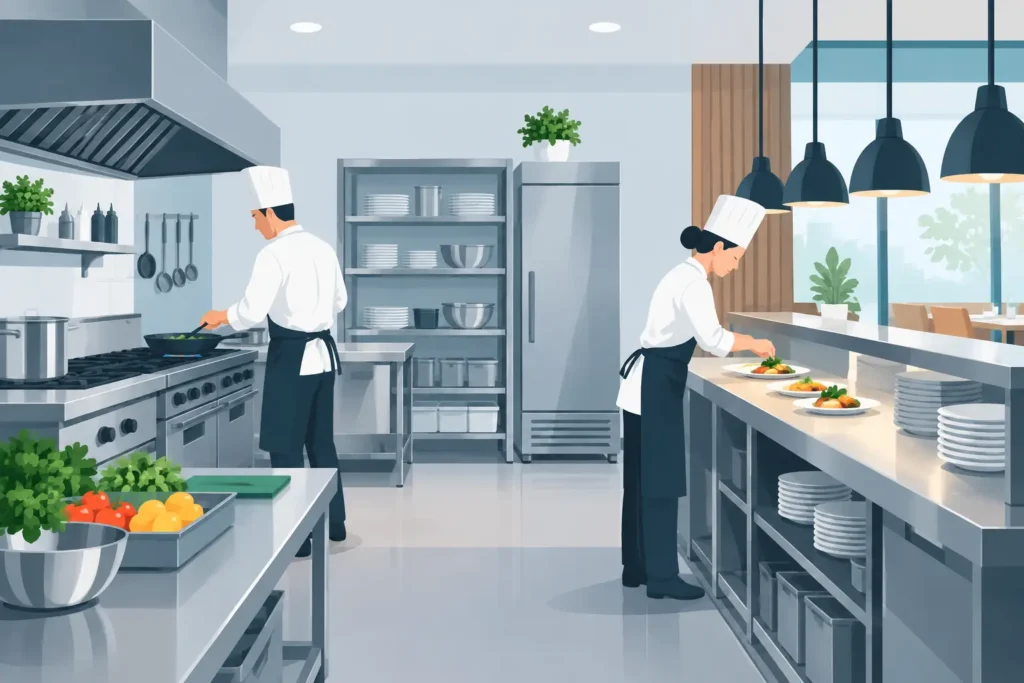
A beautiful venue can still become a difficult catering job if the kitchen is an afterthought. Venue kitchen requirements affect everything: whether hot food reaches guests at the right temperature, how quickly a crew can be fed between takes, and whether service holds steady when the schedule changes at short notice. For a wedding breakfast, corporate launch or live production, the practical detail behind the pass matters as much as the menu.
At D’Lights Event Catering, we plan around the reality of the site – not an ideal version of it. A fully fitted commercial kitchen gives a caterer one set of options. A church hall with a domestic oven, a blank-canvas warehouse or a remote filming location calls for a different plan, often including mobile kitchen equipment, hot boxes, additional staff and carefully timed deliveries.
Venue kitchen requirements start with an honest site check
The first question is not simply, “Does the venue have a kitchen?” It is, “Can this kitchen support the food, guest numbers and service style you have planned?” A compact prep area may be perfectly suitable for a drinks reception with canapés. It may not support a plated dinner for 180 guests, three dietary menu variations and a late-night crew meal.
A proper site check looks at capacity as well as facilities. Caterers need to know where food can be unloaded, stored, prepared, held hot or cold, plated, collected and cleared away. If these stages overlap in a cramped room, service can slow down quickly. On a production, that delay can affect a call time. At an event, it can leave guests waiting while the room loses momentum.
Ask for current photographs, a floorplan and the kitchen specification before confirming the menu. A site visit is even better, particularly where access is tight, the event is large or the timetable has little room for recovery. The detail often reveals the solution: a separate prep tent, an extra refrigeration unit, a satellite serving station or a revised service sequence.
Power, water and ventilation
Electricity is one of the most common pressure points. Ovens, induction hobs, hot cupboards, refrigeration and coffee equipment all draw power, while lighting, sound, staging and production departments may be using the same supply. A domestic socket circuit is not designed to carry a commercial catering operation.
Confirm the available load, socket locations and whether the kitchen has dedicated circuits. If generators are required, they need to be specified early and positioned with safe cable routes in mind. It is far easier to arrange suitable power before the build than to discover tripped electrics as guests arrive.
Clean running water, hot water and drainage are equally essential. Caterers need hand-washing facilities, equipment-washing space and enough water pressure for the job. Where a venue has limited plumbing, portable hand-wash stations and a controlled washing plan may be needed. No one should be improvising hygiene arrangements during service.
Ventilation deserves the same attention. Cooking aromatic, flavoursome food in an enclosed room without extraction can trigger fire alarms, create uncomfortable working conditions and leave a lingering smell in the event space. Some venues restrict frying, grilling or open-flame cooking altogether. Those rules do not prevent great food, but they shape the menu and the method of finishing it on site.
Kitchen access can make or break the service
A kitchen may look excellent on paper but be difficult to reach from the loading bay. Consider the whole route: vehicle access, parking, lift size, corridor width, door thresholds, stairs and the distance from kitchen to dining area. Heavy hot boxes and refrigerated supplies need a safe, clear path, particularly in busy central London venues where loading slots are fixed and parking is limited.
For film, TV and music work, access needs to match the production schedule. A crew may need breakfast before first call, lunch in staggered sittings and hot food held ready for a late wrap. If the only loading access is available during a narrow window, deliveries and equipment installation must be planned around it. The best catering teams arrive prepared, but venues and production departments still need to coordinate security, passes, goods-in instructions and vehicle timing.
Service routes also matter once doors open. Staff should not need to cross a guest-facing area repeatedly with waste, dirty equipment or replenishment trays. A separate back-of-house route protects the presentation of the event and helps service stay calm when demand rises.
Match the menu to the kitchen, not the other way round
Ambitious menus are possible in unusual places, but the menu must respect the kitchen available. A venue with generous refrigeration, extraction and plating space can support a wider range of cooked-to-order dishes. A smaller site may be better suited to food prepared fresh off-site, transported safely in temperature-controlled equipment and finished or served efficiently on arrival.
This is not a compromise in quality. It is an operational choice. Slow-cooked dishes, vibrant curries, hearty crew favourites, salads, grain bowls, wraps and carefully designed buffet menus can travel and hold exceptionally well when produced and managed properly. By contrast, dishes that depend on last-minute frying, delicate garnishes or a large hot pass may require more equipment and labour than the venue can offer.
Guest numbers matter, but so does how guests eat. A seated dinner requires plating space, plate storage and a controlled route to tables. A grab-and-go station needs clear signage, fast replenishment and enough points of collection to avoid queues. For an on-set lunch, portable hot boxes may be the right answer when the crew cannot leave the working area. The right format keeps people fed without holding up the day.
Dietary requirements should be built into the kitchen plan from the start. Vegan, vegetarian, halal, gluten-free and allergen-aware dishes need more than a label at the point of service. They require ingredient checks, clear communication, safe storage and, where necessary, separate preparation and utensils to prevent cross-contact. A final guest list delivered the evening before service makes this harder, so organisers should collect dietary information early and share updates promptly.
Food safety, waste and working space
Every venue kitchen needs safe working practices, whether it is a polished events space or a temporary unit at a location shoot. Food must be kept at safe temperatures, allergens managed carefully, surfaces cleaned properly and waste removed without blocking access or attracting pests. The kitchen should have enough room for raw and ready-to-eat food to remain separate, with refrigeration that can be monitored rather than guessed at.
Waste arrangements are often overlooked until bins become full. Check where food waste, cardboard, glass, cooking oil and general rubbish will go, along with collection times and any venue recycling rules. A well-planned catering operation uses sensible quantities, avoids unnecessary single-use packaging where the site allows, and keeps the back-of-house area presentable throughout the event.
Staff welfare belongs in the plan too. Catering teams working a long production day need a place to take breaks, store personal belongings and work safely without being squeezed into an unsuitable corner. For large events, the kitchen may also need a clear briefing area so chefs, front-of-house staff and event coordinators can respond quickly to changes.
A practical pre-event conversation
Before booking, give your caterer the venue contact, access times, kitchen details, expected guest count, service schedule and any restrictions on cooking or equipment. Be candid about budget as well. It helps the team recommend the most effective route, whether that is full on-site cooking, a mobile kitchen, delivered hot meals or a mixed service model.
It also pays to name one decision-maker for the day. When a location manager, venue coordinator and caterer all know who can approve a change, problems are solved faster. A delayed delivery, a last-minute dietary request or an earlier lunch break does not need to become a drama.
The best venue kitchen is not always the biggest or most expensive. It is the one that has been assessed properly, equipped for the menu and connected to a catering plan that respects the schedule. Give the kitchen the same attention as the guest list and the food has every chance to be remembered for the right reasons.