
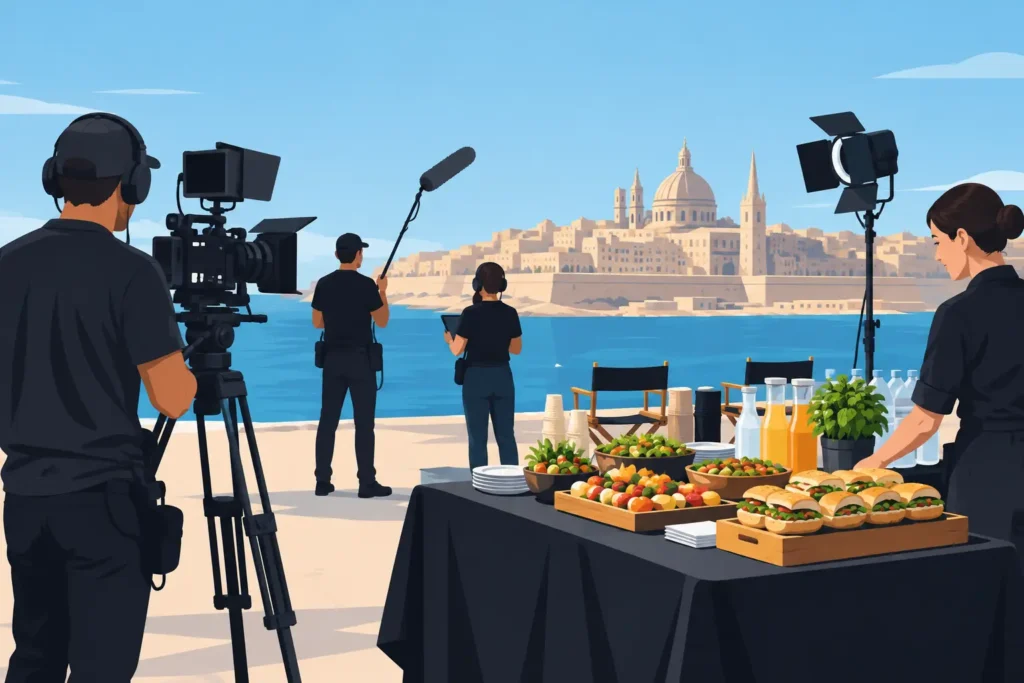
A Malta call sheet can move fast: a pre-dawn unit base, a midday exterior on exposed coastline, then a night sequence with no room for a delayed meal break. TV and film catering Malta productions need is not simply good food. It is a production-ready service that keeps cast and crew fed, focused and ready for the next setup, wherever that setup happens.
The island offers a remarkable screen backdrop, from historic streets and harbours to open water and sun-baked rural locations. Those same qualities create practical catering pressures. Access can be tight, shade can be limited, parking can disappear quickly and schedules can change without warning. The right catering plan turns those variables into a well-run service rather than another problem for the production office to solve.
Start with the schedule, not the menu
A strong food service begins with the shooting day. Before choosing dishes, the caterer needs to understand call times, unit movements, expected meal breaks, split shifts, late finishes and the number of people expected at each service. A 40-person commercial shoot with a fixed studio day needs a very different approach from a feature unit moving between locations with 180 crew members.
Hot breakfast may be required before first light, followed by substantial lunch that can be served in waves rather than in one crowded queue. On long days, a second hot meal or carefully planned evening service can make a real difference to morale. For night shoots, timing matters just as much as temperature. Serving a heavy lunch at the wrong point in the night can leave a crew flat when the most demanding work is still ahead.
This is why production catering should be built around the call sheet. A flexible team will plan for staggered service, hold food safely, refresh dishes when breaks slip and communicate clearly with the location manager or assistant director. The aim is simple: feed people properly without slowing the set.
Hot food that travels well and still feels generous
Crew meals have to do more than look good on a menu. They must remain fresh, appetising and safe through transport, holding and service. That does not mean settling for repetitive trays of beige food. Creative, flavoursome dishes from around the globe can be designed for the realities of a working location.
Think slow-cooked mains, fragrant curries, grilled chicken, roasted vegetables, hearty grain salads and pasta dishes that hold their quality. A balanced buffet can offer comfort as well as choice, with satisfying proteins, fresh salads, vegetables and proper sides. When conditions are particularly hot, lighter lunch options may be better received, provided there is enough substance to sustain a physical crew through the afternoon.
Portable hot boxes are particularly useful where a full kitchen setup is impractical or the unit needs meals delivered to a precise point. For larger or longer-running productions, a mobile kitchen can give the team greater control over cooking, replenishment and service. The choice depends on access, crew size, available power, the distance from the base and how fixed the schedule is.
Craft service is crew welfare, not an afterthought
A well-stocked craft table keeps the day moving between formal meal breaks. It should be more considered than a pile of biscuits and a coffee urn. Fresh fruit, pastries, wraps, yoghurt, savoury snacks, cold drinks, tea, quality coffee and practical grab-and-go choices help people maintain energy through resets, company moves and overtime.
On a hot Malta location, hydration requires particular attention. Chilled water, soft drinks, electrolyte options and regular replenishment should be planned from the start. This is not just a comfort issue. Crew welfare, concentration and wellbeing can suffer quickly in heat, especially for departments working outdoors, lifting equipment or wearing costume for extended periods.
The craft setup should also match the space. A discreet station may be right for a compact set, while a larger unit base can support a more generous all-day service. Where filming is taking place in a public or heritage-sensitive location, the catering footprint needs to stay tidy, contained and respectful of the surroundings.
Dietary requirements need proper planning
No production should leave dietary requirements to a last-minute conversation on the day. Vegan, vegetarian, halal, gluten-free, dairy-free, nut-free and allergen-aware meals must be identified in advance, clearly labelled and prepared with appropriate care. The same applies to individual cast requirements, which may need delivery at a different time or service away from the main crew buffet.
The best approach is to create menus where dietary dishes feel like a genuine part of the offering, not a lesser alternative placed at the end of the table. A vibrant plant-based main, for example, should be satisfying enough that any crew member would happily choose it. This makes service more inclusive while reducing the risk of separate meals being missed or mixed up.
Clear communication remains essential. Production coordinators should provide the latest dietary list before each shooting day, and catering teams should flag any menu changes early. When numbers or requirements shift, it is far easier to adjust before food is prepared and loaded for dispatch.
Location logistics make or break TV and film catering in Malta
Beautiful locations can come with complicated access. A narrow historic street may not accommodate large delivery vehicles. A coastal base may require equipment to be carried from a designated parking area. A remote site may have limited water, waste facilities or shelter. These details should be checked during location planning, not discovered when breakfast is due.
A production-savvy caterer will ask practical questions: Where can vehicles unload? Is there a safe route to the service area? Is power available? What happens if wind, heat or rain changes the plan? Is there space for hot holding, handwashing and waste segregation? Who is the on-site point of contact when the unit moves?
Health and safety needs to work alongside speed. Food must be transported and held at safe temperatures, service areas must stay clean, and allergen procedures must be understood by the team serving the meal. Waste-conscious packaging is also worth specifying, particularly when the production is working in scenic or environmentally sensitive areas. Reusable serviceware may suit some base setups, while responsibly chosen disposable packaging may be the more practical option for a moving unit.
Scale the service to the production, not the other way round
There is no single catering model for every shoot. A small stills or music-video crew may need early breakfast delivery, portable lunch boxes and an efficient craft station. A television drama can require daily hot meals, dietary coordination, a staffed serving line and late-night food for second unit. A major feature may need several feeding points, separate cast arrangements and enough flexibility to support changes across departments.
Budget is part of the conversation, but value comes from preventing disruption. Under-ordering food, relying on unsuitable delivery options or leaving no allowance for overtime can create expensive problems later in the day. A tailored package gives the production control over what is essential: the number of meals, menu style, staffing, equipment, service hours and contingency for schedule changes.
The strongest catering partners do not force a standard package onto a complex shoot. They listen to the brief, build a workable plan and remain responsive when production reality changes.
Book catering early enough to protect the shoot
As soon as locations, provisional dates and crew numbers are taking shape, catering should be part of the conversation. Early planning gives more choice on menus, equipment and staffing, and it allows time to assess site access and dietary needs properly. It also creates a clear chain of communication between the production office, location team and caterer.
For TV and film catering Malta productions, the real test is not whether lunch arrives. It is whether the whole food operation supports the day: hot meals at the right moment, cold drinks when the heat rises, clear dietary provision, clean service areas and a crew that feels looked after. Book a catering team that understands the pace of production, then let food become one less thing your crew has to worry about.