
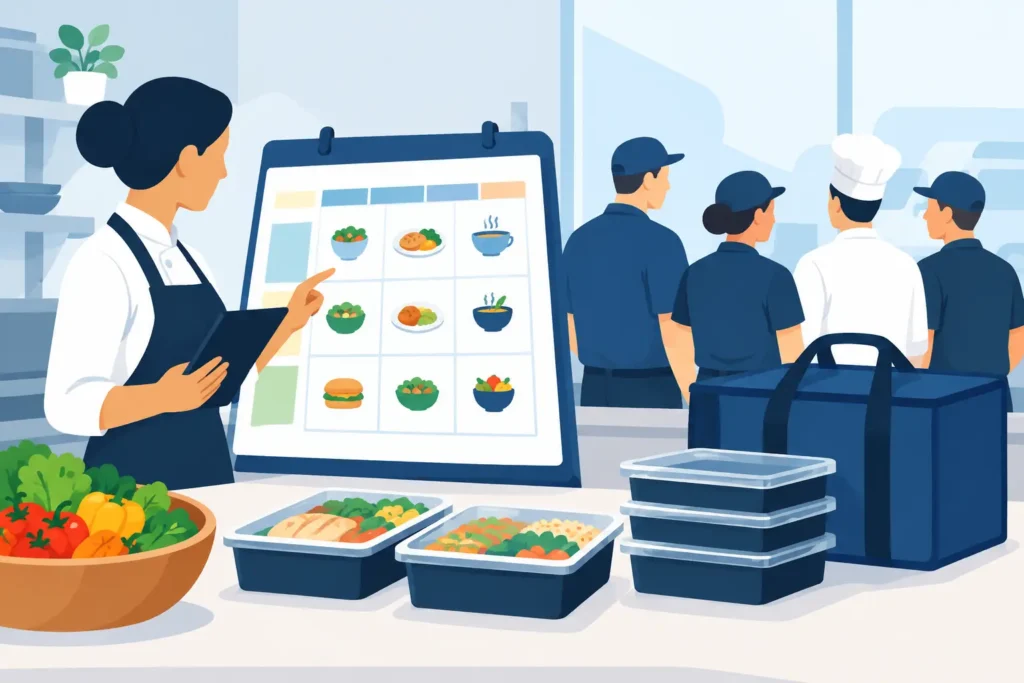
A missed meal break can throw more than lunch into chaos. When a crew is waiting for food, a location is about to be lost, or a client is due on set in 20 minutes, production meal scheduling becomes part of the day’s critical path. Done properly, it keeps cast, crew and guests fed with creative, flavoursome food exactly when they need it – without holding up the schedule.
For TV, film, music, live events and corporate productions, catering cannot work to a generic lunchtime. It has to work to call times, unit moves, turnaround pressure, talent requirements and the practical realities of the venue. That means a schedule built around your production, not a menu dropped into it.
Why production meal scheduling matters on set
A 7am call time, a midday exterior scene and a 3pm company move create very different catering requirements. The food may be excellent, but if it arrives after the crew has been released for a break, it has not done its job. Equally, bringing everyone through one serving point at once can create queues, cold plates and lost minutes when the floor needs to be ready.
Good production meal scheduling protects crew welfare and keeps departments moving. It gives the assistant director, production coordinator and location manager a clear plan: what is being served, where it will be served, when each group can eat and how dietary meals will be identified. It also lets the catering team prepare the right equipment, staff and transport for the job.
There is no one-size-fits-all service time. A small commercial shoot in a studio may need breakfast set out before call, a fast hot lunch at a fixed break and an afternoon grab-and-go station. A feature location shoot may need breakfast from a mobile kitchen, staggered hot boxes for departments on different rotations, and a late wrap meal for a crew travelling back to base. The right approach depends on the shooting schedule, access, headcount and how far people can realistically step away from their work.
Start with the day, not the menu
The most useful catering brief begins with the production timetable. Before deciding between jerk chicken, fragrant curries, pasta bakes or colourful plant-based bowls, establish the points at which people can actually eat.
Share the call sheet or working schedule as early as possible. A caterer needs to know first crew call, cast call, planned shooting breaks, company moves, vehicle access times, hard out times, studio rules and anticipated wrap. If timings are likely to change, say so. Production days move, and a capable catering team plans for that rather than treating the first schedule as fixed.
It also helps to separate meal moments by purpose. Breakfast needs to be quick, warming and easy to eat before departments disperse. Lunch is the main refuel, so it needs proper choice, clear dietary provision and enough service capacity to feed everyone within the available window. Afternoon food should keep energy up without making people sluggish. A late meal may need to travel well and be ready immediately after wrap.
Build in realistic service windows
A 30-minute meal break is not a 30-minute catering window. People need time to walk from set, wash hands, choose food, eat and return. If 120 people arrive at one counter at once, a single-service layout can quickly use up the entire break.
This is where staggered service earns its place. Departments can be called in waves, or food can be set across separate stations for hot meals, salads, dietary dishes and desserts. On larger productions, an additional serving point or a mobile hot box drop for a remote unit may be more practical than expecting everyone to return to one base.
The trade-off is staffing and space. Multiple stations need more setup, equipment and people to keep food hot, presentable and replenished. But on a tight shooting day, that investment can cost far less than a delayed reset or a hungry crew waiting in a queue.
Match the food to the production environment
A menu should be appetising, but it also needs to survive the journey from kitchen to crew. A plated-style lunch may suit a corporate launch or wedding venue with a defined service area. For a muddy field location, backstage corridor or busy studio, generous hot boxes, individually packed meals or a well-managed buffet can be the better choice.
Food that travels and holds well is essential when access is restricted or timings are uncertain. Think slow-cooked curries, roasted chicken dishes, rice, seasonal vegetables, substantial salads and comforting sides that remain delicious through service. Freshly prepared global cuisine gives crews variety across a long shoot, while familiar options can be reassuring on demanding days.
Avoid planning the menu in isolation from the set. Strong aromas may be unsuitable beside a costume department or close to a sound stage. Delicate foods can struggle in poor weather. Meals that require cutlery and a table may not work for technicians grabbing ten minutes between tasks. A good caterer will ask these questions early, then recommend a format that fits the location.
Dietary meals must be planned, not improvised
Dietary requirements are not an add-on at the end of the order. Vegan, vegetarian, halal, gluten-free and allergen-aware meals need clear numbers, practical labelling and safe handling from preparation to service. For cast and crew with serious allergies, confidence comes from a specific conversation, not a vague promise that there will be an alternative.
Collect requirements ahead of time and update the catering team when the crew list changes. Make sure dietary meals are visibly labelled, protected from cross-contact and available at the same time as the main service. Nobody should have to wait until everyone else has eaten to find out whether their food has arrived.
Choice still matters. A vegan crew member should receive a complete, satisfying meal, not a side dish passed off as lunch. The same standard applies across the menu: filling portions, balanced flavours and food that looks as good as it tastes.
Plan for movement, weather and changing numbers
Location catering is often a logistics exercise before it is a food service. A narrow access road, limited parking, stairs, no running water, a distant unit base or a last-minute move can all affect the meal plan. Mobile kitchens, insulated hot boxes and carefully timed deliveries make it possible to feed people well in places that were never designed for catering.
Give the catering team accurate access information. Include gate times, contact names, loading restrictions, parking arrangements, lift access and any rules around generators, gas, waste or power. If a lorry cannot reach the location, smaller vehicles or a different drop point may be needed. If there is no covered service area, weather protection and food-holding equipment need to be considered well before the first rain shower.
Headcounts deserve the same attention. Production numbers change, particularly on commercials, music shoots and events with invited guests. Build in an agreed process for confirming numbers and flagging late additions. Ordering too little creates an immediate welfare problem; ordering far too much wastes food, budget and packaging. The best balance is based on an honest forecast, with sensible contingency for the nature of the job.
Keep communication live throughout the day
The schedule on paper is the starting point, not the whole plan. One named production contact and one catering lead should be able to speak directly as the day develops. If lunch moves forward, a unit splits, rain delays the exterior setup or an actor’s call time changes, the caterer needs to know quickly enough to respond.
Short, practical updates work best: “Lunch now likely at 13:30”, “Second unit needs 25 hot meals at the gallery”, or “Talent meal required at 12:45 in the green room.” This level of clarity allows food to be held safely, transported appropriately and served in the right place.
At D’Lights Event Catering, that production awareness shapes every stage of the service, from the first menu conversation to the final collection. Whether the brief calls for hot on-set meals, backstage craft catering, portable crew boxes or full event service, the aim is simple: excellent food, properly timed, with the logistics handled.
A practical checklist before catering is confirmed
Before confirming your catering plan, make sure the brief covers these essentials:
- Call times, proposed meal breaks, wrap time and any likely schedule changes.
- Total headcount, department splits, guest numbers and realistic contingency.
- Dietary requirements, allergen information and how meals will be labelled.
- Location access, parking, power, water, weather cover and available service space.
- Service format, from buffet and mobile kitchen to hot boxes and grab-and-go stations.
- A named on-site contact authorised to confirm timing changes on the day.
When these details are clear, catering becomes one less moving part for production to chase. The crew gets food worth looking forward to, the schedule has room to breathe, and you can focus on getting the day made. Share the running order early, request a menu that suits the job, and book catering that is ready to move at production speed.