
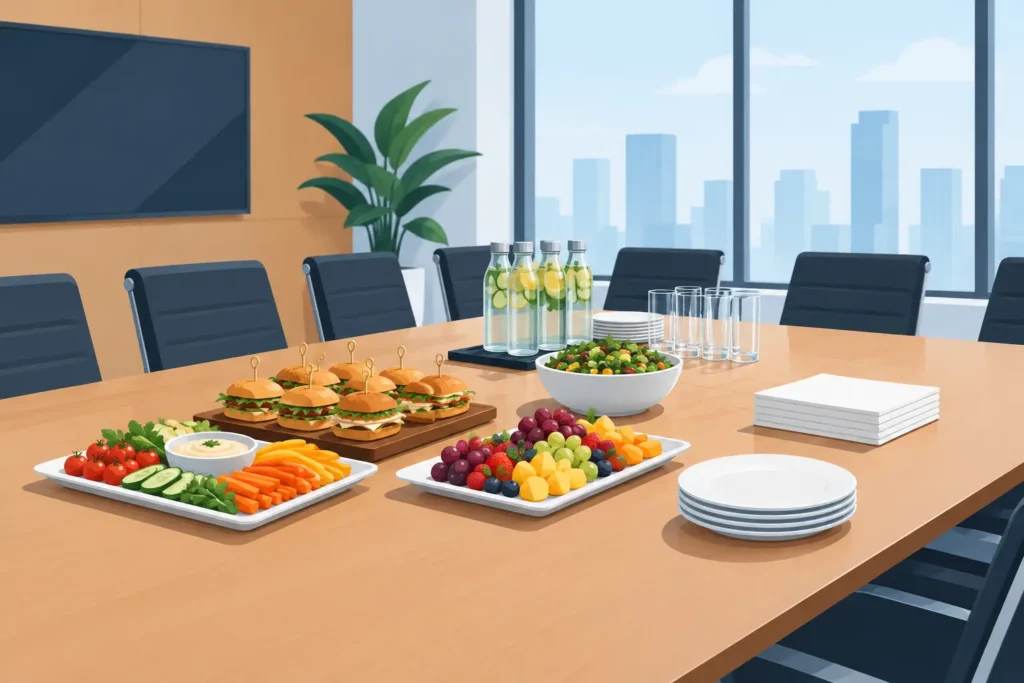
A boardroom meeting can lose momentum surprisingly quickly. The morning pastries arrive late, the coffee runs cold, or half the room cannot eat the only lunch on the table. Strong boardroom catering ideas prevent those distractions before they become part of the agenda, giving guests food that feels considered while keeping the meeting firmly on schedule.
For London businesses, the brief is rarely just ‘provide lunch’. You may be welcoming senior clients, briefing a production team between call times, hosting an all-day strategy session or presenting a product to people whose first impression matters. The food needs to look polished, taste excellent and be simple to serve without interrupting the conversation.
Boardroom catering ideas built around the meeting
The best menu depends on the room, the timing and what attendees are expected to do afterwards. A breakfast briefing has different demands from a contract negotiation at lunchtime, and a creative workshop needs more flexible food than a formal board presentation. Start with the run of the day, rather than choosing dishes in isolation.
Ask when guests arrive, whether they will be seated throughout, how much time is actually available for a break and whether anyone needs to leave promptly. If the meeting is scheduled from 9am until midday, a full hot breakfast can feel heavy and create unnecessary clearing during the first hour. Fresh pastries, fruit, yoghurt pots, breakfast wraps and proper barista-style coffee are often a smarter fit.
For an afternoon session, the challenge is energy. A sugar-heavy spread may look generous at 2pm but can leave the room flat by 3pm. Pair a small sweet option with savoury bites, fresh fruit and chilled soft drinks. Good catering should support concentration, not compete with it.
Breakfast that feels prepared, not picked over
A neat continental breakfast remains a reliable choice for early meetings, particularly when attendees arrive in stages. Freshly baked viennoiserie, seasonal fruit, granola pots and yoghurt give people a choice without filling the table with packaging. Add savoury breakfast rolls or vegetarian wraps where the meeting runs into lunch, especially for guests travelling across London before they arrive.
Presentation matters here. Individual portions can be more practical than shared platters when time is tight or guests are joining remotely at different points. However, a shared display may suit a smaller leadership meeting where a more relaxed, host-led atmosphere is the aim. It depends on the formality of the room and the level of interaction you want to encourage.
Working lunches without a desk-dining feel
Sandwich platters are familiar for a reason, but they do not need to be predictable. The difference is quality, variety and balance: generously filled artisan sandwiches alongside vibrant salads, warm savoury items and something light to finish. Think roasted vegetables with herb dressings, chicken with bright citrus notes, smoked salmon, spiced falafel, seasonal slaws and flavourful plant-based options that stand on their own rather than feeling like an afterthought.
A boxed lunch can be ideal when the session cannot pause. It keeps each portion contained, makes dietary labelling clear and avoids a queue forming in the corridor. For a less formal workshop, a grazing-style spread of wraps, salad bowls and handheld bites lets people take a short break when the agenda permits.
Hot food can be the right call for an all-day meeting, but only if the venue and timetable allow it. A fragrant curry, warming pasta dish or globally inspired bowl food lunch brings real comfort and can make an important session feel properly hosted. It also requires sensible coordination: serving equipment, enough space, a clear break window and a team ready to keep food at the correct temperature.
Choose food that suits the room
Boardrooms are not restaurant dining rooms. They often have limited preparation space, expensive technology, documents on every surface and little tolerance for spills, strong lingering aromas or noisy service. The most effective choices are easy to eat neatly with a fork, napkin or small plate.
Avoid building the entire menu around anything overly saucy, difficult to cut or likely to drip onto laptops. That does not mean bland food. It means using flavour with intention: glazed skewers rather than messy ribs, individual salad pots rather than a large bowl requiring serving spoons, and delicate desserts that can be eaten in two or three bites.
Four menu elements tend to work particularly well in professional boardroom settings:
- Fresh breakfast pots, pastries and savoury morning bakes for arrivals and short briefings.
- Premium sandwich, wrap and salad selections for working lunches with limited downtime.
- Hot bowls, skewers and substantial canapés for longer meetings or client-hosting occasions.
- Mini desserts, fruit and afternoon cakes for a controlled lift later in the day.
The key is not to serve every category at once. A crowded table can make a private meeting look unmanaged. Select the food that matches the pace, then replenish discreetly if the service runs across several hours.
Dietary requirements are part of the brief
There is no room for guesswork when catering for a senior group. Vegetarian, vegan, halal, gluten-free and allergen-aware choices should be planned from the outset, not added as a separate plate moments before service. Guests should be able to identify what is suitable quickly and feel that their meal has received the same attention as everyone else’s.
Collect requirements when invitations go out, then confirm them before the event. Clear labelling is essential, particularly where nuts, sesame, dairy or gluten may be present. If a guest has a serious allergy, their food should be packed, transported and presented with careful separation. This is both good hospitality and good health-and-safety practice.
There is a commercial benefit too. When clients see that every attendee has been considered, it reflects well on the organiser. A well-planned menu quietly communicates that the same care will be brought to the meeting itself.
Do not underestimate drinks and timing
Coffee is often the most requested item and the most quickly overlooked. For an hour-long meeting, an arrival service may be enough. For a half-day session, arrange a refresh halfway through. For a full-day board meeting, plan coffee, tea, still and sparkling water, plus a mid-afternoon option before anyone asks for it.
Make the refreshment point easy to access without forcing people to squeeze past the presenter. In a compact boardroom, service can be set just outside the room, ready for breaks. In a larger private venue, an attendant can refresh jugs, clear used crockery and keep the space looking composed without disrupting discussion.
Punctual delivery matters as much as the menu. Catering should arrive early enough to be checked, laid out and ready before the first guest walks in. Where building access, security sign-in, lifts or loading restrictions are involved, those details need to be agreed in advance. A caterer used to working around call times, production schedules and restricted locations will understand why a ten-minute delay is not a small issue.
Match the service level to the occasion
Not every boardroom needs staff in the room, but some meetings benefit from it. Drop-off catering is efficient for internal meetings with a clear agenda and a capable office team. It keeps costs focused on the food while still providing a professional spread.
For investor presentations, executive dinners, press events or a client session where impressions carry more weight, staffed service gives the host freedom to focus on guests. Trained catering staff can manage drinks, clear plates, replenish food and deal with small changes before they become interruptions.
D’Lights Event Catering plans both the food and the practical details around the occasion, from arrival times and venue access to menu presentation, equipment and dietary needs. That production-aware approach is particularly valuable when a boardroom meeting sits inside a wider launch, shoot, conference or high-pressure event day.
Make the menu feel like part of the welcome
Food is not simply a line item on the meeting budget. It sets a standard before introductions begin and gives people a reason to feel looked after during demanding conversations. Choose fresh, flavoursome dishes, allow enough time for service and give every dietary need proper attention. When the catering is planned with the same care as the agenda, the room can focus on the decisions that brought everyone there.