
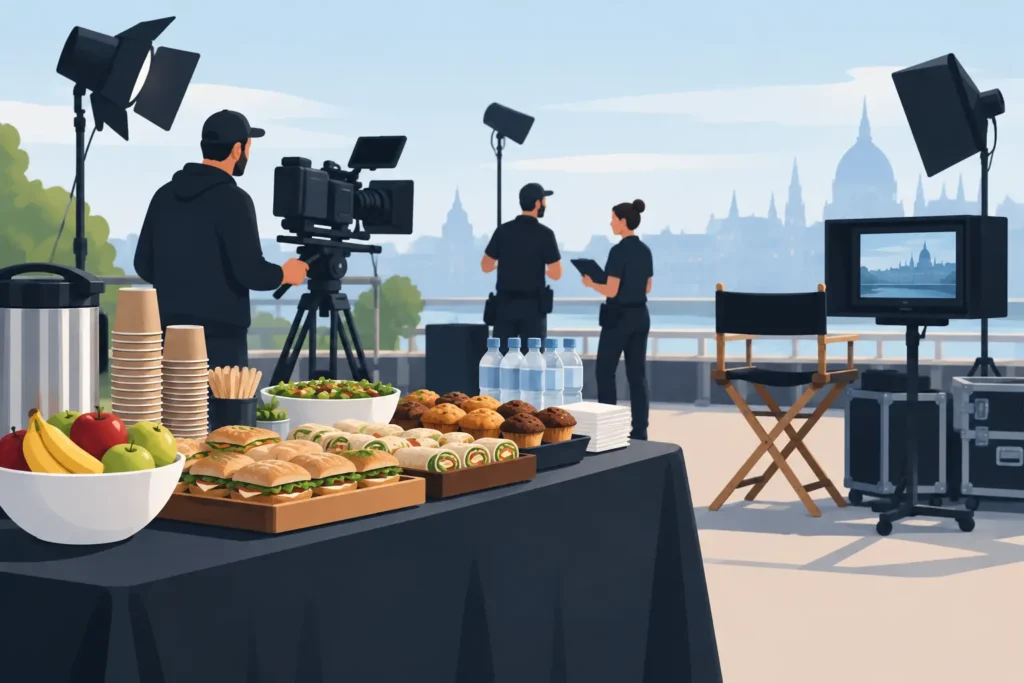
A delayed meal break is rarely just a catering problem. It can affect turnaround, morale, concentration and the pace of an entire shooting day. Professional TV and film catering teams in the UK have to work around the production, not ask the production to work around lunch. That means fresh, satisfying food ready at the right call time, served safely in the right place, whether the crew is in a London studio, a city-centre location or halfway across a muddy field.
For production coordinators, line producers and location managers, the right caterer brings more than a good menu. They bring calm under pressure, clear communication and a practical plan for feeding everyone from a compact commercial crew to a large unit with cast, drivers, production office staff and visiting clients.
TV and Film Catering UK Built Around the Shoot
Every call sheet creates its own catering challenge. An early unit may need breakfast before first light, while a late-running scene can push the main meal service back without warning. A studio shoot may offer a dedicated dining area and loading access; a location shoot might have limited power, no kitchen and a narrow window for vehicle access.
This is why production catering begins with the schedule. A capable team will ask about crew numbers, unit bases, planned meal breaks, access restrictions, parking, power, service areas and likely changes to the day. Those details shape the menu, staffing, transport and equipment required. They also prevent the familiar last-minute scramble when a shoot moves location or a second unit suddenly needs feeding.
At D’Lights Event Catering, the focus is on putting fresh, creative and flavoursome food where it is needed, when it is needed. That can mean a fully staffed hot meal service, portable hot boxes sent to separate departments, or a mobile kitchen prepared to serve a large crew on location.
Call Times Need More Than a Delivery Slot
Production days do not run on standard restaurant hours. Breakfast may begin at 5.30am, while a night shoot needs proper hot food at a time when most kitchens have closed. Catering must be planned around the working day, including set-up before the crew arrives and replenishment during periods when people can only step away for a few minutes.
Timing also needs flexibility. The ideal service window can disappear when a scene overruns, weather changes the plan or talent is held elsewhere. Meals should remain in good condition, with service adjusted quickly where possible, rather than becoming an additional concern for the assistant director or production team.
Food That Keeps Cast and Crew Going
Crew meals need to feel like a real break, not an afterthought in a foil tray. Long days call for generous, balanced dishes that are enjoyable enough to lift the room but sensible enough to sustain people through physical work, changing weather and irregular hours.
A strong production menu usually combines familiar comfort with variety. Think warming curries, slow-cooked mains, grilled chicken, vibrant salads, pasta dishes, rice bowls, roasted vegetables and freshly made sides, alongside proper desserts and refreshments. Creative global cuisine gives crews choice without making the service complicated.
The best format depends on the day. A seated hot buffet suits a studio or unit base where people can rotate through a designated dining space. Individually packed hot meals may be more practical when departments are spread across a large site or breaks must be staggered. Grab-and-go stations can keep camera, art, costume and production teams supplied with wraps, fruit, pastries, snacks and cold drinks between set-ups.
Craft Catering Is Not Just Snacks
Craft service is a constant support point for busy productions. It gives cast and crew access to quality tea, coffee, water, fruit, biscuits, savoury bites and lighter options throughout the day. Done well, it is stocked thoughtfully, kept clean and refreshed often, rather than left unattended after breakfast.
For demanding schedules, craft catering may need to include substantial options such as filled baguettes, protein pots, soups, yoghurt, energy bars and fresh salads. Night shoots benefit from an equally considered offer. A late crew still deserves hot drinks, satisfying snacks and food that is not simply leftover from daytime service.
Dietary Requirements Need Proper Planning
A production can include vegan, vegetarian, halal, gluten-free, dairy-free and allergen-sensitive requirements, often with additions arriving close to the shoot. These are not side notes. They are part of crew welfare and must be handled with care.
Good catering planning starts by collecting requirements early, then confirming quantities and clearly labelling food at service. Separate preparation and packaging arrangements may be needed for severe allergies or particular dietary protocols. It depends on the requirement, the kitchen set-up and the service style, which is why a quick conversation before the shoot is far better than assumptions on the day.
There is also a difference between offering one token alternative and giving everyone a meal they genuinely want to eat. A well-designed menu makes dietary dishes feel considered, colourful and filling. Plant-based curries, roasted vegetable grain bowls, hearty salads and flavour-packed sides can sit confidently alongside the main service.
Location Logistics Separate Good Catering From Great Catering
Film and television work is rarely served from an ideal venue kitchen. Unit bases can be car parks, warehouses, country estates, studios, town halls or temporary structures. Access may be restricted, loading times tightly controlled and the available space shared with generators, costume rails and production vehicles.
Professional film and TV production catering accounts for those realities before the first meal is cooked. The catering team should understand where vehicles can stop, how equipment will be moved, what water and electricity are available, and where food can be served without blocking the working site. Where facilities are limited, mobile kitchens, insulated hot boxes and carefully planned delivery runs keep the operation moving.
Health and safety matters just as much as flavour. Food must be transported, held and served at appropriate temperatures, with clean working practices maintained in busy environments. Waste also needs managing responsibly. Sensible packaging choices, clear recycling arrangements and accurate ordering can reduce unnecessary waste without compromising the crew’s experience.
Scaling Service Without Losing Quality
Feeding 25 people on a one-day branded shoot requires a different approach from feeding several hundred people across a multi-day drama production. The principles remain the same, but the logistics, equipment and staffing change significantly.
For a smaller crew, a carefully timed hot delivery and a stocked craft table may be the most efficient route. For a large-scale production, a full-service catering operation with chefs, front-of-house staff, mobile kitchen equipment and staggered meal service may be essential. When cast, crew and client groups need different service areas or timings, the plan should reflect that from the outset.
Budget matters too, and practical caterers are open about the choices available. More menu variety, extensive staffing and complex location access naturally affect cost. The goal is not to strip back the service until it becomes unreliable. It is to build a package that protects meal quality, punctuality and dietary coverage while meeting the realities of the production budget.
Questions Worth Settling Before You Book
A catering brief becomes much stronger when the essentials are agreed early: expected headcount, call and meal times, location details, parking and access, dietary requirements, service style, budget range and the person authorised to make changes on the day. Productions evolve, so numbers may still move, but having these foundations in place gives everyone room to respond without panic.
It also helps to discuss the less obvious details. Will meals be eaten standing up or in a dining tent? Are there separate cast requirements? Does the location have handwashing facilities? Does a night unit need a second service? These answers determine what a caterer brings and how smoothly service will run.
Catering That Supports the Whole Production
Great food creates a welcome moment in an intense day, but its real value is operational. Well-fed crews are better equipped to focus, departments lose less time searching for food, and production teams are not diverted into solving avoidable service issues. A caterer who understands the pressure of set life becomes part of the support structure behind the camera.
Whether you need early breakfasts, hot on-set meals, portable crew boxes, mobile kitchen catering or an all-day craft service, the right plan starts with your shoot rather than a fixed package. Share the call sheet, the location constraints and the food needs early, then let the catering team build a service that keeps everyone ready for the next take.