
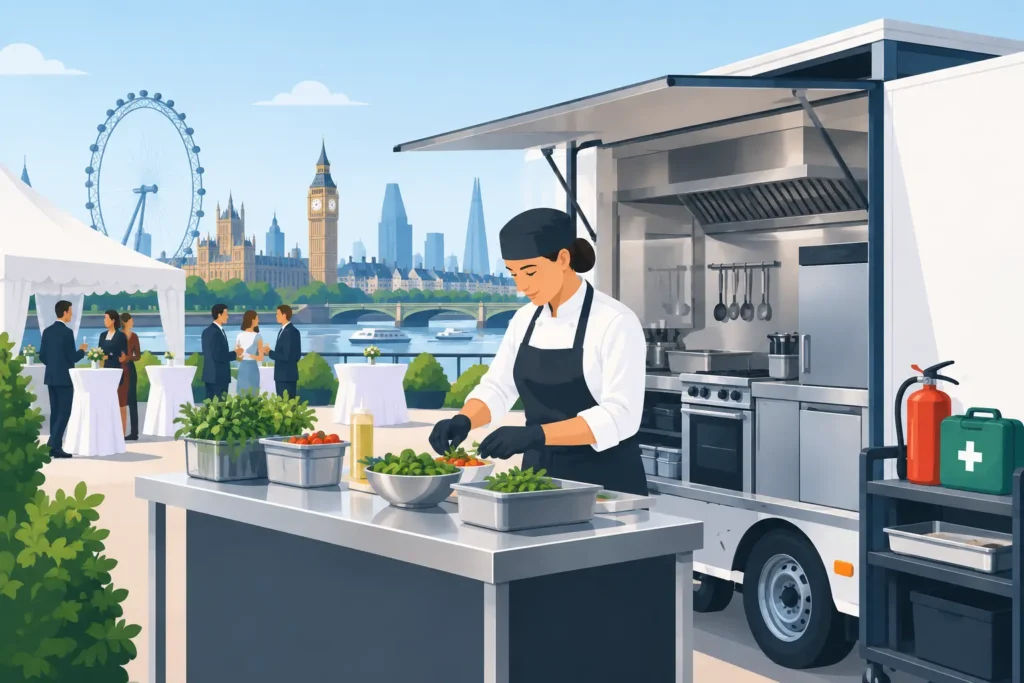
A mobile kitchen can turn an empty loading bay, studio yard or field into a proper meal service in a matter of hours. That flexibility is invaluable when call times are tight and crews need hot food without leaving site. But portable kitchen safety cannot be treated as an add-on once the menu has been agreed. It must shape the site plan, equipment choice, staffing and service schedule from the first production meeting.
For location managers, producers and event planners, the aim is straightforward: keep people safe, keep food at the right temperature and keep service moving without creating a bottleneck around the unit. Good planning protects the crew, the venue and the production day itself.
Start portable kitchen safety with the site
A portable kitchen needs more than enough room to park. Before equipment arrives, assess the full working area: vehicle access, ground conditions, lighting, drainage, overhead hazards, nearby traffic and the route from cooking space to service point. A unit positioned too close to a busy vehicle route or an unprotected public walkway can create unnecessary risk before the first pan is on.
Ground matters more than people expect. A level, firm surface helps prevent appliances, hot boxes and serving tables from shifting during service. On grass, gravel or uneven backlot ground, suitable levelling and protected walkways may be needed. In wet weather, cable routes and entrance points need particular attention, as mud and standing water quickly become slip hazards.
The location also needs enough separation between cooking, food storage, waste and guest or crew queues. A compact site may require staggered meal times, a separate grab-and-go station or runners taking pre-ordered meals to departments. It depends on the headcount and available footprint, but the principle stays the same: do not let a hungry queue cross the working kitchen route.
Build a clear service flow
The safest kitchens have an obvious one-way flow. Deliveries enter through one route, food is stored and prepared in its designated area, hot meals travel to the pass, and used packaging or waste leaves by another route. This reduces cross-contamination and prevents staff carrying hot trays through a crowd.
For film and television work, service flow should be coordinated around the shooting schedule rather than a fixed restaurant-style lunch. If departments break in waves, the catering layout must support that. Hot food should be replenished in controlled batches, not left out in the hope that everyone arrives at once.
Power, gas and heat need professional control
Portable catering depends on power and heat, whether the set-up uses electric ovens, induction equipment, generators, LPG or a combination of systems. These are not areas for improvisation. Equipment must be suitable for commercial use, maintained correctly and operated by trained people who understand the site conditions.
Electrical cables should be protected, routed away from wet areas and kept clear of pedestrian routes wherever possible. Where they must cross a route, use proper cable protection rather than tape and good intentions. Loading must be planned too. A generator or venue supply has limits, and switching on several high-demand appliances at once can interrupt service or create a more serious issue.
Gas equipment requires equally careful positioning, ventilation and checks. Cylinders must be secured upright, stored away from ignition sources and handled by competent staff. The team should know where shut-off controls are located and what to do if a flame fails, a smell of gas is detected or equipment behaves unexpectedly.
Heat creates its own pressures during a fast service. Pan handles should not project into walkways, hot liquids need stable carrying routes, and staff should have the right gloves and tools for lifting trays and hot boxes. A well-run catering team works quickly, but it never asks someone to rush a scalding tray through a congested corridor.
Food safety does not pause for a remote location
A remote unit still needs the same disciplined food handling as a fixed professional kitchen. That means reliable chilled storage, hot holding, temperature monitoring, handwashing facilities and separation between raw and ready-to-eat food. The location might be a car park in East London, a stately home in Hertfordshire or a backstage compound, but the standard remains the same.
Cold food needs to stay properly chilled from dispatch through storage and service. Hot dishes need to be cooked, held and served at safe temperatures, with checks recorded according to the catering operation’s procedures. If the schedule changes and a meal break is delayed, the solution is not simply to leave food on the counter. The menu, batch size and holding plan need to adapt.
Menus should also be chosen with transport and holding in mind. A beautifully plated dish that deteriorates after twenty minutes in a hot box may not be the best choice for a staggered shoot day. Slow-cooked curries, fragrant rice dishes, hearty stews, roasted vegetables and properly managed plated meals can travel brilliantly. Delicate fried items or lightly dressed salads may need a different service method. Great event catering balances flavour, presentation and food safety rather than sacrificing one for another.
Handwashing and allergen control
Handwashing cannot rely on a nearby toilet block or a bottle of sanitiser on a folding table. Portable kitchens need appropriate handwashing provision with clean water, soap, drying facilities and clear staff routines. Separate cleaning arrangements for utensils and equipment are just as important.
Allergen information must travel with the menu, not live only in one person’s memory. Production teams often have changing crew lists, visiting talent and last-minute dietary requests. The catering lead should receive accurate dietary information early, while service staff need to know which dishes contain key allergens and how to prevent cross-contact.
For a guest with a severe allergy, a verbal reassurance is not enough. Their meal needs clear identification, controlled preparation and a confident handover. This is where detailed pre-event communication pays off, particularly for vegan, gluten-free, halal, dairy-free and allergy-aware requirements.
Protect the people working around the kitchen
Food service can be one of the busiest areas on a production, especially when a long morning shoot breaks all at once. Keep the public and crew away from cooking hazards without making the experience feel unwelcoming. Clear signage, sensible barriers and a dedicated serving point make a major difference.
Staff welfare matters too. Catering teams work around heat, sharp equipment, heavy containers and tight turnaround times. Rotas should allow for breaks, sensible lifting and enough trained hands during set-up and peak service. One person trying to unload, cook, replenish and serve for a large crew is not an efficient solution. It is a risk.
Waste needs its own plan. Bags and bins should be positioned away from food preparation, removed regularly and secured so they do not obstruct exits or attract pests. Waste-conscious packaging can reduce the volume generated, but it must still be suitable for hot, saucy or substantial meals. Flimsy packaging that leaks through a crew member’s lap is neither sustainable nor practical.
Prepare for the problems that change the day
The best portable kitchen safety plan includes contingencies. Weather can turn, access can be blocked, a generator can fail or a director can call an unexpected delay. Caterers and organisers should agree practical responses before they are needed: alternative serving areas, backup power arrangements, safe holding capacity, revised meal windows and a clear contact chain.
A short pre-service briefing brings the plan to life. Confirm who is responsible for site access, power, fire procedures, dietary meals, queue management and escalation if something goes wrong. On a busy location, people should not be searching through a call sheet to find out who can authorise a change.
D’Lights Event Catering plans portable hot-box and mobile kitchen services around these real production pressures, combining creative, flavoursome dishes with the operational detail that keeps a service steady. When the kitchen is safe, organised and ready for the unexpected, your cast, crew and guests can focus on the reason they are there: getting the day done well and enjoying a proper meal along the way.