
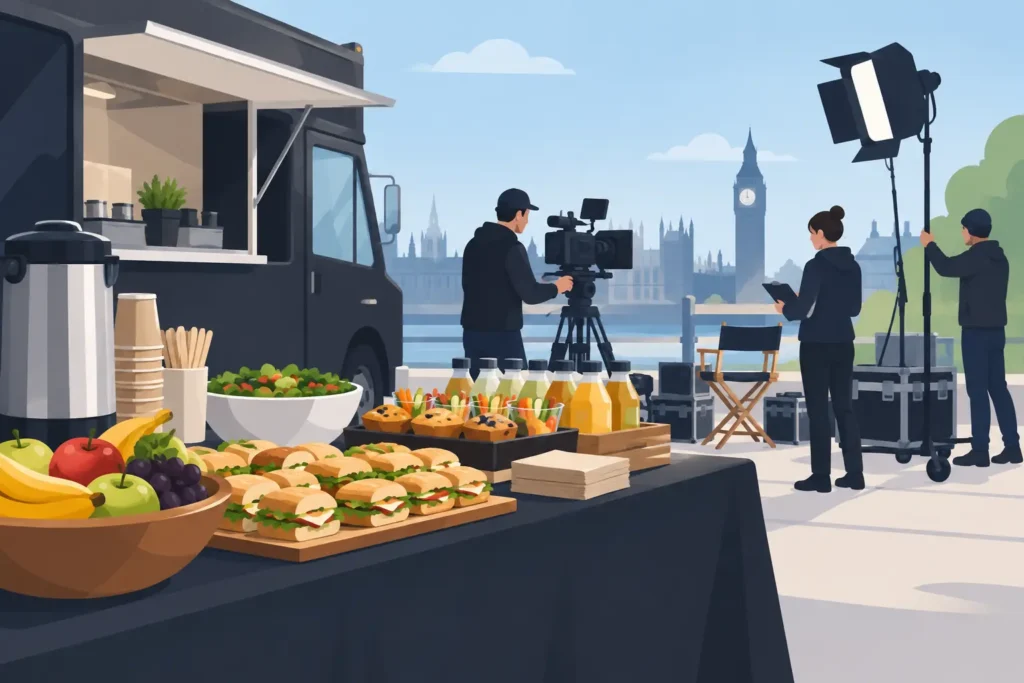
A 5.30am call time, a rain-soaked unit base and a crew working through a complicated company move are not the moment for a standard buffet. The best film catering examples are built around the real rhythm of a shoot: who needs feeding, where they are working, how long they have, and what will keep energy high without holding up the schedule.
For line producers, location managers and production coordinators, catering is crew welfare and logistical support in one. A properly planned service gets hot food to the right place at the right time, keeps dietary requirements clear, and gives cast and crew a welcome reset during a demanding day. Here are 12 practical approaches that work across London studios, unit bases, remote locations and fast-moving commercial shoots.
Film Catering Examples That Work on Set
1. Early call-time breakfast stations
An early breakfast needs to be quick, warming and easy to eat before departments split off. Think bacon or vegetarian breakfast baps, scrambled eggs, grilled mushrooms, hash browns, fresh fruit, pastries and proper tea and coffee. For a location with limited space, individually packed breakfast rolls and hot drink urns can be more practical than a full service line.
The trade-off is choice versus speed. A wide cooked breakfast is ideal when the whole crew is based in one place, while a tighter menu is often better for a 6am arrival with staggered call times.
2. Hot boxed meals for crews on the move
Hot boxes are a strong option when a camera team, art department or runners cannot return to base. A balanced boxed meal might include jerk chicken with rice and peas, a warming vegetable curry with flatbread, or Mediterranean grilled vegetables with herby couscous. Add a clearly labelled dessert or fruit pot and a drink, and the meal is complete without creating extra work for the recipient.
Packaging matters here. Boxes need to retain heat, travel securely and remain manageable in a vehicle or tight filming location. Waste-conscious packaging is also worth discussing before the shoot begins.
3. A rolling craft table for long days
Craft catering is not a substitute for a meal break. It is the reliable in-between service that stops people reaching the point where concentration drops. A well-run table can include fresh fruit, yoghurt, crisps, nuts, biscuits, flapjacks, vegan snacks, cold drinks and quality coffee throughout the day.
For a night shoot, add more substantial options later on: soup in insulated dispensers, toasted sandwiches, noodles, hot chocolate and fresh bakes. The key is replenishment. An abandoned table at 4pm sends the wrong message to a crew still working until wrap.
4. Crew lunch with global flavour
A crew lunch should feel generous without leaving everyone sluggish for the afternoon. This is where creative, flavoursome dishes from around the globe earn their place on set. A menu could pair chicken tagine with fragrant couscous, roasted cauliflower with chickpeas and harissa, vibrant salads, warm flatbreads and a citrusy dessert.
Buffet-style service suits a studio or unit base where people can be released in groups. It offers variety and makes it easier to cater for mixed preferences, but it requires enough serving points to avoid a queue eating into the turnaround.
5. Staggered service for a working set
Not every department can break at once. On a live set, sound, camera, lighting, transport and production may need different release windows. Staggered catering sets out food in timed waves, with hot holding and staff ready to serve each group promptly.
This is one of the most useful film catering examples for a tightly scheduled commercial or drama shoot. It takes more coordination than a single lunch call, but it protects both meal quality and the shooting plan.
6. Separate cast dining with discreet service
Cast requirements can vary significantly, from timed meals around hair and make-up to privacy needs and individual dietary instructions. A separate cast service might include made-to-order salads, grilled fish or chicken, fresh juices, lighter sides and a choice of comforting hot dishes.
Discretion is as valuable as presentation. Clear communication with the assistant director, cast team and production office helps ensure meals arrive at the agreed time and dietary details stay accurate without becoming a public discussion.
7. A fully vegan or plant-forward menu
A plant-forward service is no longer a niche request. It can be a brilliant choice for an entire crew, particularly when the menu is designed as satisfying food rather than a collection of substitutes. Consider slow-cooked lentil dhal, roasted aubergine with tahini, mushroom stroganoff, colourful grain salads and warm spiced vegetable wraps.
The planning point is protein and substance. A salad-only offering may look healthy but will not necessarily sustain a grip team loading kit in the rain. Good vegan catering should be filling, clearly labelled and just as inviting as every other dish on the table.
8. Allergen-managed individual meals
Some dietary requirements require more than a label beside a buffet tray. Severe allergies, coeliac needs, medically necessary restrictions and religious dietary requirements may call for separately prepared and individually sealed meals.
Production should provide details as early as possible, ideally alongside final crew numbers. The caterer can then plan ingredients, preparation areas, labelling and handover procedures properly. Last-minute changes can often be accommodated, but early notice always gives more menu choice and reduces risk.
9. Remote-location mobile kitchen service
A field, warehouse, country estate or city street may not offer a usable kitchen, power supply or shelter. A mobile kitchen brings the cooking operation to the location, allowing fresh hot meals to be prepared where the crew needs them.
This approach is especially useful when travel back to a central unit base would waste too much time. It does, however, need site planning: vehicle access, parking, water, power, waste handling, weather cover and health-and-safety considerations all affect the final setup.
10. Grab-and-go for company moves
A company move can turn a straightforward lunch into a race against the clock. Grab-and-go catering keeps people fed while transport, kit and departments relocate. Good options include substantial wraps, filled focaccia, protein pots, fresh salads, fruit, traybakes and bottled drinks.
The food should be easy to carry and genuinely filling. Delicate plated dishes are rarely the right fit when the crew is climbing into minibuses or working from a pavement between setups.
11. Late-night supper for night shoots
Night work changes appetites. A second hot meal can be a major morale boost, particularly around midnight or in the early hours when energy starts to dip. Hearty but balanced choices work well: chilli with rice, chicken pie with seasonal vegetables, baked pasta, soup with crusty bread, or a vegetarian curry.
Avoid serving something overly heavy if the crew still needs to stay alert and work safely. A good caterer will plan portions and menu timing around the actual shooting schedule, not simply repeat daytime lunch at an inconvenient hour.
12. Wrap food for a final push
On the final day, a wrap table can be simple and still feel celebratory. Fresh pizzas, sliders, loaded wedges, salads, doughnuts and soft drinks offer an easy finish once equipment is being packed down. For a larger production, a themed menu can give the crew a proper thank-you without creating a complicated formal event.
This is also a useful moment to plan around access. If the unit base must be cleared immediately after wrap, food may need to be served earlier, boxed for onward travel or set up in a nearby approved space.
What Turns a Good Menu Into Reliable Production Catering?
The menu is only half the job. Reliable film catering depends on a detailed brief covering crew numbers, service times, location access, dietary needs, parking, power, waste arrangements and the person authorised to make changes on the day. A menu that looks excellent on paper will fail if it arrives late, cannot be served safely, or does not suit the pace of the unit.
D’Lights Event Catering plans each package around the production rather than forcing every shoot into the same format. That can mean hot on-set meals, a mobile kitchen, portable hot boxes, an all-day craft table or a combination of services across changing locations.
Planning Questions to Ask Before Booking
Before confirming catering, establish whether everyone will eat at once or in waves, whether food must travel to set, and whether there is enough room for service and seating. Confirm dietary requirements in writing, including allergens, and share updated headcounts as soon as possible.
Budget also deserves an honest conversation. The lowest per-head price may not include the staffing, equipment, delivery timing or hot holding needed for the day to run properly. It is often better to simplify the menu and protect the operational essentials than choose a more elaborate meal that cannot be delivered reliably.
The strongest catering plan is the one your crew barely has to think about. They know there will be good food, it arrives when promised, and every person has something they can confidently eat. That leaves production free to focus on the work in front of them – exactly where it should be.